Fishermen, dry-fish workers and coastal communities in Cox’s Bazar have demanded grant-based climate financing instead of loans, calling for climate justice and greater investment in renewable energy.
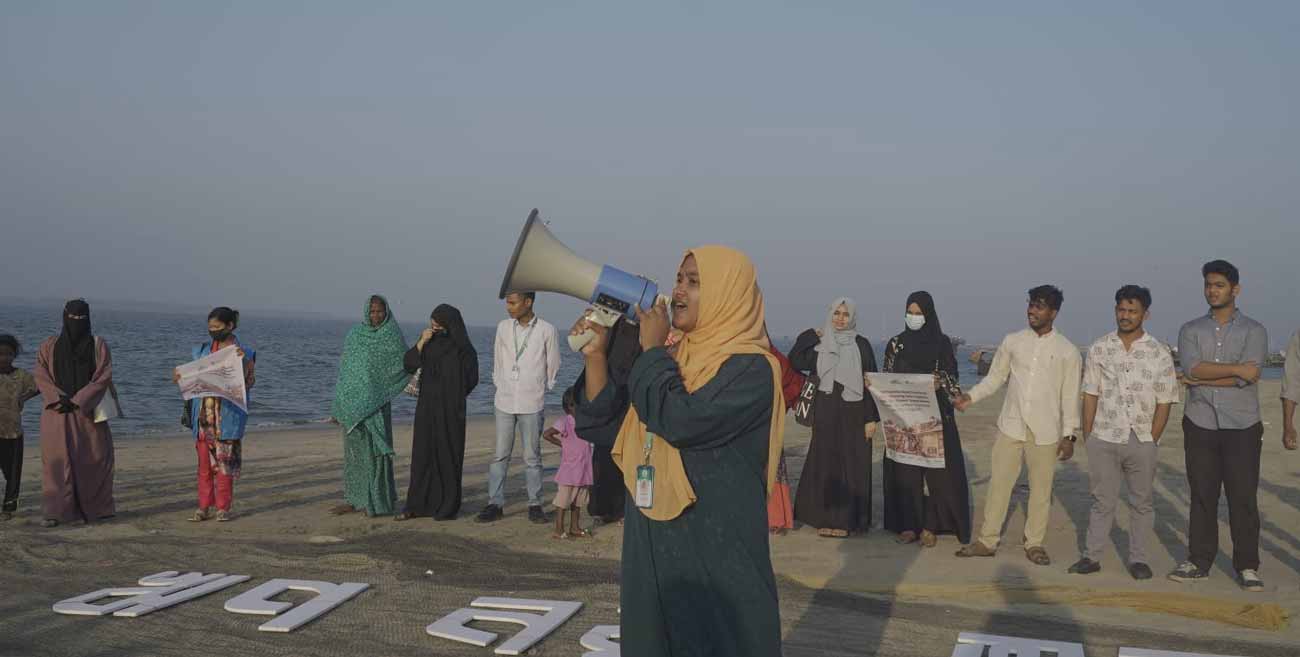
Under the slogan ‘Climate Finance Based on Justice, Not Loans’, a human chain and several other programmes were organised at Nazirartek in Samitipara, a coastal area of Cox’s Bazar, on Monday afternoon (November 16).
The programmes were held as part of a nationwide campaign highlighting the growing climate vulnerabilities of coastal communities and demanding fair climate financing and renewable energy investment under the ongoing UN Climate Conference (COP31) in Antalya, Türkiye.
Speakers at the event said concrete guarantees of adequate and equitable financing to address the adverse impacts of climate change remained elusive. They called for direct grant-based assistance instead of loans for affected communities and demanded local ownership and participation in renewable energy initiatives.
They also urged people from all walks of life to unite in public campaigns and solidarity activities to press for climate justice.
Fishermen, dry-fish workers and marginalised coastal communities are increasingly facing the impacts of climate change, including changing marine conditions, natural disasters, livelihood uncertainty and financial hardship. Participants said those already suffering from climate-related losses should not be burdened with additional debt.
A symbolic protest titled ‘We Want Grants, Not Loans’ was also organised using a large fishing net decorated with hundreds of fabric tags bearing the words ‘Loan’ and ‘Grant’.
Fishermen, women dry-fish workers and young volunteers removed the tags marked ‘Loan’ and replaced them with those marked ‘Grant’. Local participants also attached tags carrying their own demands to the net.
At the end of the programme, participants jointly raised the net during a human chain, symbolising their demand for grant-based support instead of debt-dependent climate financing.
The participants called for increased adaptation financing in the final decisions of COP31, alongside needs-based allocations for agriculture, fisheries and food systems. They also demanded that financial assistance be provided directly as grants to small-scale fishermen, farmers and marginalised communities.
Representatives of environmental organisations and concerned citizens expressed support for the demands.
Among those present were Shah Rukh Karim, executive coordinator of social organisation Zaida Bangladesh, and Jahanara Sultana, programme coordinator.
Environmental activists, local dignitaries, students, more than a hundred volunteers, fishermen, women dry-fish workers, young people and representatives of coastal communities also attended the programmes.