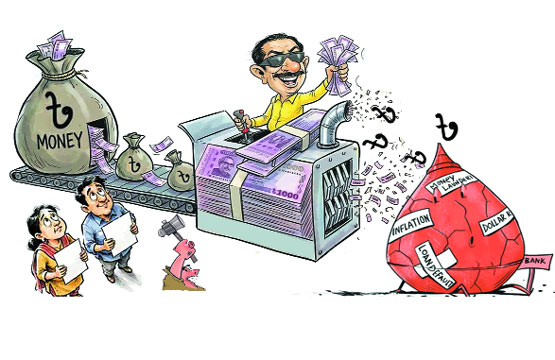
No government can escape accountability for the looting of the banking sector, although the scale of irregularities and alleged state patronage during the previous Awami League government remains unparalleled, according to critics of Bangladesh’s financial sector governance. The consequences of years of weak supervision, irregular lending and alleged financial misconduct are now being reflected in the country’s mounting defaulted loans, with taxpayers facing the prospect of bearing a substantial share of the recovery costs. Defaulted loans exceeded Tk 6 lakh crore, accounting for 32.78% of total outstanding loans as of June 2026. Around 72% of the country’s non-performing loans were concentrated in just 10 banks, highlighting the depth of the crisis and raising questions about the effectiveness of banking regulation.
The Bangladesh Bank, as the country’s principal banking regulator, has faced criticism over its failure to prevent the accumulation of bad loans and curb the influence of powerful borrowers during the previous administration.
The crisis has now raised another pressing question: should ordinary citizens be required to pay for the losses arising from irregularities committed by bank owners, influential borrowers and those responsible for supervising the financial system?
Bangladesh Bank Governor MostaqurRahman has estimated that the country will need to spend Tk 60,000 crore annually over the next five to eight years to restore stability to the banking sector.
The proposed expenditure would amount to Tk 3 lakh crore over five years and Tk 4.8 lakh crore over eight years, placing a substantial burden on public finances.
DrEnayetKarim, a reputed global financial expert and economist, told The Daily Industry that banking sector recovery must not become a mechanism for shifting the consequences of financial misconduct onto ordinary taxpayers without ensuring accountability.
‘Public money should not become a substitute for accountability. Before taxpayers are asked to finance the recovery of troubled banks, the authorities must demonstrate that misappropriated assets are being recovered, responsible parties are being held accountable and meaningful reforms are being implemented,’ DrKarim said.
He said restoring confidence in the banking system would require independent regulation, transparent loan recovery procedures, stronger corporate governance and effective action against borrowers who deliberately avoid repayment.
DrKarim’s comments are drafted for publication and should be confirmed with him before being presented as verbatim quotations.Tk 60,000 crore annual burden: Speaking at an event on Saturday, the governor said Bangladesh would need Tk 60,000 crore annually for five to eight years to overcome the accumulated losses of troubled banks.BThe amount illustrates the potential opportunity cost of the banking sector rescue. The governor noted that Tk 60,000 crore could alternatively support two crore families through a family card programme or finance the construction of two Padma Bridges.
Based on the country’s population, the proposed recovery cost would amount to approximately Tk 3,432 per person.The government must therefore explain how the proposed expenditure would be financed, what safeguards would govern the use of public money and what benefits citizens could expect in return.
While stabilising the banking sector is essential to restoring credit flows and protecting depositors, economists argue that a bailout without strict conditions could encourage irresponsible lending and create expectations of future government support.
Political commitment to reform questioned: Concerns about the government’s commitment to banking reform have emerged over proposed changes to the regulatory framework governing troubled banks and the role of influential families in private banking.
The interim government issued the Bank Resolution Ordinance on May 9, 2025, which restricted former owners of troubled banks from regaining ownership. Subsequent legislation passed by the BNP government introduced a provision allowing former owners an opportunity to return, triggering criticism. The controversial provision was eventually withdrawn following public criticism.
A separate dispute concerns Bangladesh Bank’s proposals to reduce the maximum number of directors from a single family from three to two and shorten the maximum consecutive tenure of a director from 12 years to six years.
The Financial Institutions Division of the Ministry of Finance reportedly rejected both proposals, favouring a nine-year tenure limit while retaining the existing allowance of up to three directors from the same family.
The disagreement has revived concerns about family influence and political intervention in bank governance.The BNP had pledged in its election manifesto to establish a financial sector reform commission and abolish the Financial Institutions Division. Implementation of these commitments would be an important test of its approach to banking sector reform.
Asset recovery must precede public rescue: Government figures cited in the debate indicate that courts have ordered the seizure, attachment or freezing of assets worth approximately Tk 76,984 crore as part of efforts to recover assets allegedly transferred out of the country.Of the total, assets worth Tk 57,325.93 crore are located in Bangladesh, while assets worth Tk 19,658 crore are held abroad.
Recovering overseas assets can be complicated by legal procedures and the need for cooperation from foreign jurisdictions. Domestic assets, however, could offer a more immediate opportunity to recover funds, provided the authorities enforce court orders effectively.
DrKarim said visible progress in asset recovery would be essential to establishing public confidence in any banking sector rescue programme.He said the government should disclose how much money has been recovered, how much remains outstanding and what action has been taken against those implicated in financial irregularities.
The formation of task forces alone would not be sufficient to reassure taxpayers. Citizens would need evidence that recovery efforts were producing results and that the banking sector was being restructured to prevent a recurrence.
Bank mergers are not enough: Bangladesh has consolidated five troubled banks into a newly formed institution as part of its efforts to address the crisis. However, the success of this initiative will depend on whether the restructuring is accompanied by stronger governance, adequate capital and effective management of non-performing loans.
International experience offers several lessons.:Following the 1997 Asian financial crisis, Malaysia established Danaharta to manage non-performing assets, Danamodal to recapitalise financial institutions and a corporate debt restructuring committee to help businesses manage their liabilities. The country also consolidated 51 banking institutions into 10 banking groups.
South Korea closed some inefficient banks and assigned the Korea Asset Management Corporation responsibility for acquiring and managing non-performing assets. Temporary deposit guarantees were introduced to help maintain public confidence.
Sweden’s response to its banking crisis in the 1990s included assessing troubled banks, providing capital to viable institutions and taking control of those that could not be rescued. Specialised asset management companies were established to handle distressed assets, while transparency and disclosure formed part of the recovery process.
These examples suggest that merging banks or injecting public funds cannot independently resolve a systemic crisis. Successful recovery requires comprehensive reforms, transparent management of bad loans and clear accountability for the use of public resources.
Taxpayers must have enforceable conditions: The proposed annual expenditure of Tk 60,000 crore could place considerable pressure on Bangladesh’s budget, particularly as the government faces competing demands for infrastructure, social protection and essential public services.
Any public support for troubled banks should therefore be conditional on independent audits, transparent disclosure of financial assistance, measurable loan recovery targets, restrictions on related-party lending and stronger board governance.
The government should also publish regular progress reports showing how much public money has been committed, how much has been recovered and whether recipient banks have met their restructuring targets.
DrEnayetKarim said the objective should be to restore confidence in the banking sector while ensuring that the cost of recovery does not become an indefinite burden on citizens.
He stressed that accountability must extend beyond the immediate recipients of public assistance to include those responsible for regulatory failures and financial misconduct, subject to due process and established evidence.
The banking crisis has developed over several years and cannot be attributed to a single decision or administration alone. However, the scale of the deterioration during the previous Awami League government has intensified demands for a full investigation into lending irregularities, regulatory decisions and the alleged influence of politically connected borrowers.For the government, the challenge is not simply to find Tk 60,000 crore annually. It is to demonstrate why public money is necessary, how it will be protected and what concrete reforms will ensure that taxpayers do not have to pay repeatedly for the same failures.