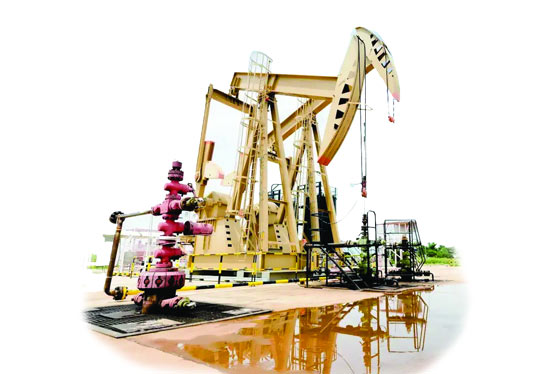
Bangladesh has completed drilling and workover operations at 32 gas wells as the government accelerates efforts to expand domestic gas production and reduce dependence on imported energy.
The 32 wells are part of the government's target to drill 150 onshore gas wells by 2030. Of these, drilling has been completed at 16 wells, while workover operations have been completed at another 16, according to the latest data from Petrobangla.
Work is currently underway at six additional wells, while development project proposals (DPPs) for 17 wells have already been approved. Another 17 wells are awaiting DPP approval.
The government has also planned to drill another 150 wells between 2030 and 2035. State Minister for Power and Energy Anindya Islam Amit recently said the first 150 wells are expected to produce around 1,762 million cubic feet (mmcf) of gas per day once drilling is completed.
Petrobangla Director (Operations and Mines) Engineer Md Shoaib said the pace of the 150-well drilling programme was being accelerated.”The pace of drilling 150 wells onshore is being increased further. Once the DPPs are approved, the pace of work will increase,” he told the correspondent.
Exploration gains momentum: The government has simultaneously expanded seismic surveys to identify new locations for exploration and development wells.Prime Minister Tarique Rahman told Parliament on September 9 that around 4,500 line kilometres of 2D seismic surveys and 4,200 square kilometres of 3D seismic surveys were being conducted to explore domestic gas resources.
Power and Energy Minister Iqbal Hasan Mahmud also told Parliament on September 2 that around 4,500 line kilometres of 2D seismic data had been collected in Blocks 7 and 9 and that data processing was underway to identify locations for new wells.
Bangladesh Gas Fields Company Ltd (BGFCL) has begun 3D seismic data acquisition over approximately 1,450 square kilometres covering the Habiganj, Bakhrabad and Meghna areas. Field-level seismic data collection has already been completed over roughly 125 square kilometres.
Additional 3D seismic surveys are planned in several other prospective areas, including Char Fasson in Bhola, Chhatak-Doarabazar and Jamalpur, as well as areas around Titas, Habiganj and Narsingdi.
Sylhet Gas Fields Ltd (SGFL) has also planned 3D seismic surveys covering around 882 square kilometres in the Laya Gaon, Lalabazar, Gowainghat, Kailashtila South and Fenchuganj West structures.
32 wells completed: Of the 32 wells where drilling or workover operations have been completed, 14 fall under SGFL. These include Beanibazar-1, Kailashtila-2, Rashidpur-2, Kailashtila-8, Sylhet-7, Sylhet-10, Rashidpur-5, Kailashtila-7, Rashidpur-3, Kailashtila-1, Beanibazar-2, Rashidpur-11, Sylhet-11 and Sylhet-10X.
BAPEX has completed work on 11 wells, including Bhola North-2, Tobgi-1, Ilisha-1, Srikail North-1, Shariatpur-1, Sundalpur-3, Begumganj-4 West, Jamalpur-1, Srikail-5, Semutang-6 and Rupganj-1.
BGFCL has completed work on seven wells: Titas-24, Titas-14, Titas-16, Habiganj-5, Bakhrabad-7, Titas-28 and Kamta-2.
Work underway at six wells: Drilling and development activities are currently underway at six wells. These include the exploration work at Rashidpur-3 under SGFL; development work at Sundalpur-4 and exploration at Sundalpur South-1 and development at Bhola North-3 under BAPEX; and deep exploration at Titas-31 and development at Titas-29 under BGFCL.
The government has already approved DPPs for 17 other wells. Among these are Dupitila-1, Kailashtila-9 and Sylhet-12 under SGFL; several exploration and development wells under BAPEX, including Mobarakpur Deep-1, Srikail Deep-1, Fenchuganj South-1, Shahbazpur North East-1, Shahbazpur-5, Shahbazpur-7, Bhola North-4, Begumganj-5, Begumganj-6 and Sunetra-2; and Titas-30, Bakhrabad-11 Deep, Bakhrabad-6 and Meghna-1 under BGFCL.
Another 17 wells are awaiting DPP approval, including Beanibazar-3, Batchia-1, Kailashtila-10, Zakiganj-2 and Zakiganj-3, Subarnachar-1, Noakhali-1, Sundalpur-5, Semutang-7, Begumganj-7, Charlakshya-1, Shahbazpur-9 and Shahbazpur-10, Titas-32, Titas-33, Titas-15 and Bakhrabad-2.
Faster exploration essential: Energy experts have welcomed the expansion of drilling and exploration activities but stressed that the pace must increase substantially if the government is to achieve its 2030 target. Geologist and energy expert Professor Dr Badrul Imam said Bangladesh would have to accelerate drilling operations to achieve the target of drilling 150 onshore gas wells by 2030.
“The government's target of drilling gas wells onshore by 2030 can be achieved only if drilling activities are accelerated further,” he said.
He also stressed the importance of exploration. “Gas exploration has to be strengthened. The more wells are drilled for gas production through exploration, the more positive results can be expected. The key issue is how successfully the work is carried out,” Dr Badrul Imam said.
Long history, limited discoveries: Bangladesh's renewed exploration drive comes against the backdrop of a relatively limited history of oil and gas discoveries. Over roughly 100 years of oil and gas exploration in Bangladesh, only 29 gas fields have been discovered, according to industry sources. A total of only 101 exploration wells have been drilled.
Five of the 29 gas fields have already been declared abandoned, while production has stopped at another four. Gas is currently being extracted from only 20 fields.
The country has also faced a prolonged slowdown in international participation in onshore exploration. No international tender has been invited for allocating onshore blocks since 1997.
The government's current drilling and seismic survey programme therefore represents an attempt to revive domestic exploration after years of limited activity.
Reducing import dependence: The acceleration of domestic gas exploration has become increasingly important as Bangladesh faces persistent energy shortages and growing dependence on imported LNG.
Increasing domestic production could help reduce pressure on foreign exchange reserves and lower exposure to volatility in international LNG prices, while providing more reliable fuel supplies to power plants and industrial facilities.
However, drilling additional wells does not automatically guarantee commercially viable gas production. Exploration success depends on geological prospects, drilling results, reservoir quality and the ability to bring discoveries into production quickly.
For Bangladesh, experts say, the immediate challenge is therefore to maintain momentum in seismic surveys, approve projects without unnecessary delays and strengthen the technical and financial capacity of the agencies responsible for exploration. If the government can sustain the current programme, the 32 completed wells could mark the beginning of a broader effort to revive domestic gas exploration and expand the country's own energy supply.