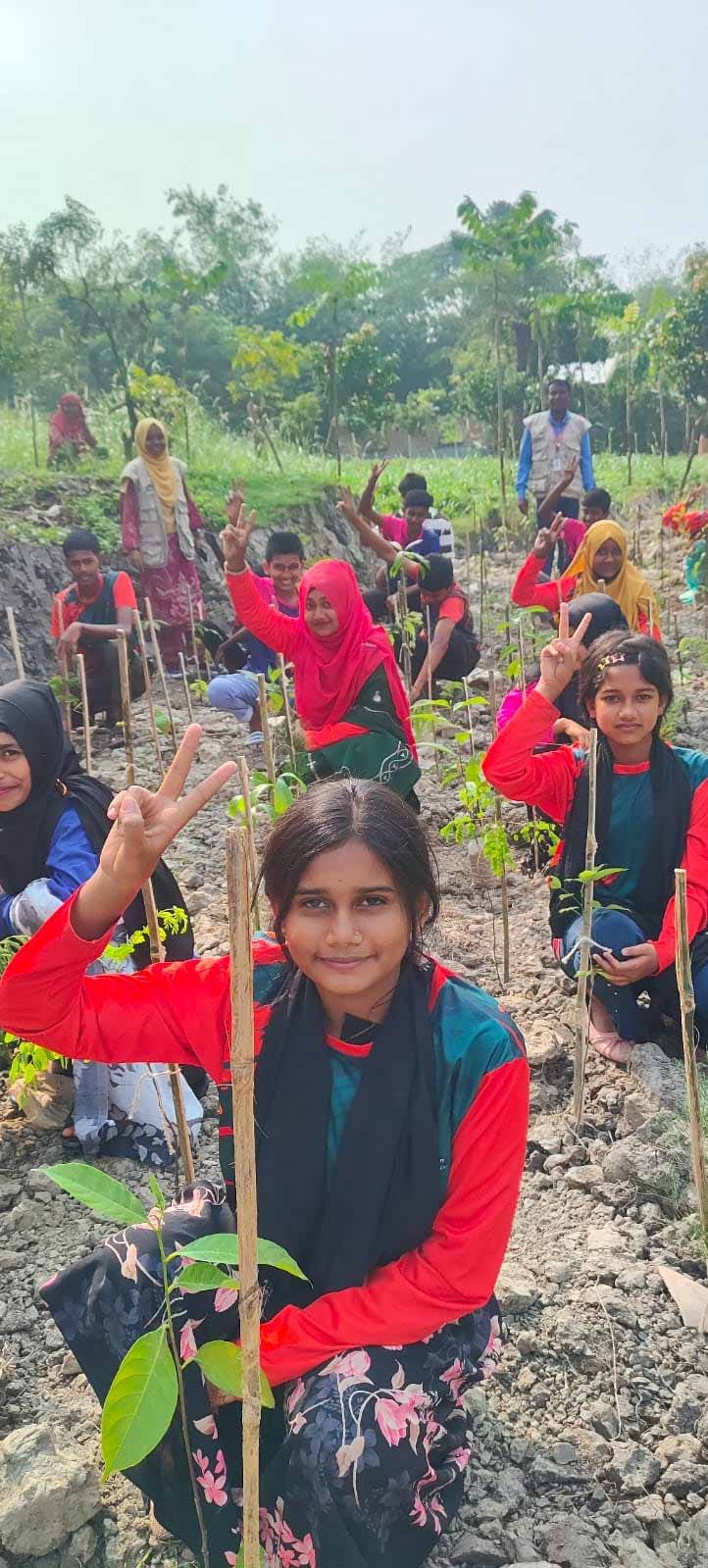
A social forestry initiative using the Miyawaki method has been completed in Purushottam village under Shibpur Union of Satkhira Sadar Upazila to address the adverse impacts of climate change, protect biodiversity and strengthen environmental conservation.
The plantation was carried out on 33 decimals of land adjacent to the Naokhali canal, with the direct participation of 48 children and young people under the SPiRiT-CALL project, implemented by Breaking the Silence (BTS) with support from Terre des hommes (Tdh).
Satkhira, a coastal district, has long been facing various climate-related challenges, including cyclones, tidal surges, excessive rainfall, drought, heatwaves, river erosion, waterlogging and soil salinity. These challenges are adversely affecting local livelihoods and the natural environment.
Soil erosion along rivers and canals, shrinking habitats for native plants and wildlife, and declining green coverage are further increasing environmental risks in the region.
Against this backdrop, local tree plantation, greening initiatives and active participation of children, young people and communities are considered important for environmental protection.
The Miyawaki method involves planting different native and environment-friendly tree species densely in a small area to create the characteristics of a natural forest within a relatively short period.
Planting diverse species together helps increase vegetation diversity and creates potential habitats for birds, insects and other wildlife. The dense green coverage also contributes to improving the local environment.
The initiative aims to strengthen environmental protection, preserve biodiversity and enhance climate resilience in the coastal community of Satkhira.