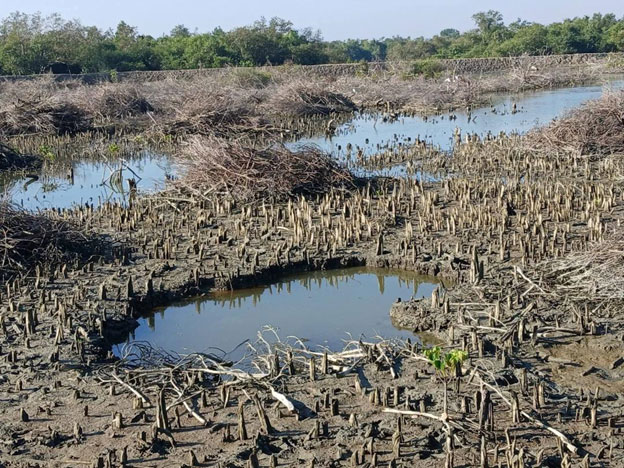
Maheshkhali, the “Digital Island” of Cox’s Bazar, is witnessing alarming destruction of its coastal protective mangrove forests, particularly around Sonadia Island. Geologists warn that Sonadia and surrounding islands are at risk of sinking into the sea due to extensive deforestation.
Over the past five years, over 10,000 acres of mangrove forest have been cleared to construct more than 300 shrimp farms, according to investigations by the Forest Department, local administration, media, and environmental groups. This destruction has caused the loss of biodiversity and displaced wildlife, including tigers, bears, deer, reptiles, and migratory birds. Local predators and pests have increased, affecting human settlements.
Local syndicates, politicians, and business interests are accused of illegally clearing mangroves for land grabs and shrimp farming. In 2023, two young men were killed over disputes concerning shrimp farms on the cleared forests of Sonadia. Despite warnings and previous government oversight, the destruction has resumed, sparking public concern.
Environmentalists highlight that mangroves are crucial natural barriers protecting coastal communities from cyclones, floods, tidal surges, and erosion. They also serve as breeding grounds for fish, crabs, and other marine life. Sonadia Island is particularly rich in biodiversity, hosting over 250 fish species, 150 mollusks, 50 crab species, 40 shrimp species, 170 bird species, and numerous mangrove plants.
Local residents report that powerful syndicates are now clearing approximately 1,500 acres of mangroves to build shrimp farms using excavators. Environmental advocacy groups, including BELA (Bangladesh Environmental Lawyers Association), have issued legal notices to 10 government officials to stop illegal activities in ecologically critical areas and protected forests.
Activists warn that failure to protect these mangroves will put Maheshkhali’s coastal environment, biodiversity, and human settlements at severe risk from natural disasters, including cyclones, floods, and rising sea levels. They urge authorities to enforce laws strictly and prioritize conservation over short-term economic gains.
Over 10,000 acres of mangroves cleared in 5 years for shrimp farms, Sonadia Island at risk of sinking; biodiversity severely impacted, wildlife displaced; pests increasing in local settlements, local syndicates and politically connected individuals driving deforestation, BELA issued legal notices demanding immediate action to stop destruction, environmentalists stress mangroves’ role in disaster protection and climate resilience.
This situation highlights the urgent need for strong administrative action to preserve Maheshkhali’s coastal mangroves, which are vital for both ecological balance and the safety of coastal communities.