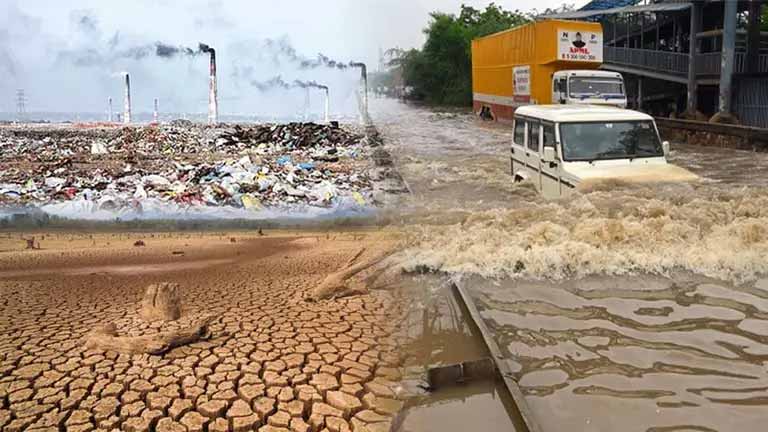
Bangladesh has renewed its call for increased international climate finance, technology transfer and adaptation support as climate risks continue to threaten vulnerable communities.
At COP31 in Antalya, Türkiye, Prime Minister Tarique Rahman presented five proposals to the international community, including allocating at least 50 percent of global climate finance to adaptation.
Meanwhile, Bangladesh has been invited to prepare an investment plan to seek up to $30 million under a new programme of the Climate Investment Funds (CIF).
However, experts warn that securing funding opportunities and announcing financial commitments are not enough. Ensuring timely disbursement, effective project implementation and direct benefits for climate-vulnerable communities remain major challenges.
At the high-level segment of COP31 on November 12, Prime Minister Tarique Rahman outlined five proposals to strengthen global climate action and address the needs of vulnerable countries.
His proposals included allocating at least 50 percent of international climate finance to adaptation, introducing debt-for-climate swaps and climate-resilient debt clauses, ensuring equitable access to climate-friendly technologies through technology transfer, and expanding renewable energy through affordable financing and capacity development.
He also proposed adopting the Belem-Antalya Action Mechanism to support a just energy transition through equitable financing and trade arrangements.
The prime minister stressed that climate-vulnerable countries needed grants rather than additional loans that would increase their debt burdens. He also called for predictable financial support, modern technology and stronger assistance for adaptation.
He said the existing global climate finance architecture remained inadequate to address the needs and priorities of developing countries.
Bangladesh has been invited to participate in the first phase of the Climate Investment Funds' (CIF) Accelerating Resilience Investments and Strengthening Economies (ARISE) programme.
Under the initiative, the country can prepare an investment plan to seek up to $30 million to strengthen climate resilience.
State Minister for Environment, Forest and Climate Change Sheikh Faridul Islam disclosed the development to journalists on November 12, the third day of COP31.
He said it was the first time such an announcement had been made at a climate conference.
The proposed investment could support ecosystem restoration, livelihood improvement for coastal communities and the construction of shelters in cyclone-prone areas.
However, the funding is not yet approved or disbursed. Bangladesh must prepare an investment plan for review before a financing decision is made.
Environment, Forest and Climate Change Minister Abdul Awal Mintoo said Bangladesh was expanding tree plantation and afforestation programmes, promoting renewable energy, particularly solar power, and pursuing environmentally sustainable development initiatives.
He stressed that adequate and timely international financing was essential to implementing the country's Nationally Determined Contributions (NDCs) and National Adaptation Plan (NAP).
Prime Minister's Adviser Mahdi Amin said the government was prioritising solar power to reduce dependence on fossil fuels and making solar energy mandatory in government and institutional buildings.
Initiatives were also underway to generate electricity from waste and promote electric vehicles to reduce emissions in the transport sector, he said.
The government was encouraging industries to adopt environmentally friendly technologies, expanding green industries and increasing the coverage of LEED certification.
Other initiatives include plans to excavate and re-excavate 20,000 kilometres of rivers and canals and plant 250 million trees over the next five years.
Steps have also been taken to implement the Padma Barrage and Teesta Master Plan to reduce groundwater wastage and improve integrated water resource management, Mahdi Amin said.
He noted that although Bangladesh contributed negligibly to global carbon emissions, it remained one of the countries most vulnerable to climate change, making international cooperation and compensation essential to addressing climate-related losses and damage.
Climate expert Professor Dr Ainun Nishat said securing financial commitments at international climate conferences was not enough, stressing the need for proper monitoring and accountability to ensure that funds achieved their intended objectives.
He said previous climate conferences had generated several political and procedural commitments, but implementation remained a major challenge.
Bangladesh had so far received $464 million, while discussions were underway for an additional $30 million, he said.
However, he questioned whether the proposed funding would be utilised effectively, particularly given concerns over the capacity of the Water Development Board and the Ministry of Water Resources to manage projects in coastal areas.
Although the proposed amount was small compared with the needs of coastal communities, Bangladesh needed to demonstrate its ability to use the money effectively, he said, warning that failure could affect access to future financing.
Waterkeepers Bangladesh Coordinator Sharif Jamil said the proposed $30 million was negligible compared with the scale of losses suffered by coastal communities.
He observed that progress in climate finance negotiations remained limited compared with the requirements of vulnerable countries. Nevertheless, continued negotiations were necessary to hold countries accountable for their contributions to climate change.
He also emphasised that climate funds must reach affected communities and improve their livelihoods rather than remain confined to financial announcements and institutional commitments.
Ultimately, Bangladesh's progress at COP31 will depend on whether international funding pledges translate into actual disbursements, access to loss and damage financing improves and sufficient resources are secured for adaptation.
The real measure of success, experts say, will be not how much funding is announced but how much is received, how effectively it is spent and how far it improves the lives of communities most exposed to climate risks.