The International Court of Justice (ICJ) has ruled that Myanmar committed genocide against the Rohingya minority during its 2017 military crackdown in northern Rakhine State, holding the country responsible for violating the 1948 Genocide Convention.
In a landmark judgment delivered on Thursday (November 19), the UN's highest court ruled by nine votes to six that Myanmar had committed genocide against the Rohingya. The court also found that the country had failed to prevent genocidal acts, punish those responsible and preserve evidence related to the atrocities.
The case was brought by The Gambia in 2019, accusing Myanmar of violating the Genocide Convention through its military operations against the Rohingya in 2017.
Reading out the judgment, ICJ President Judge Yuji Iwasawa said Myanmar's security forces had killed thousands of Rohingya civilians, committed widespread sexual violence and carried out extreme acts of violence against children.
The court estimated that around 10,000 Rohingya were killed during the 2017 military clearance operations. It also noted that approximately 815,000 Rohingya living in northern Rakhine State before the crackdown constituted a substantial part of the targeted population.
"The court is of the view that the only reasonable inference that can explain Myanmar's actions is an intention to destroy a substantial part" of the Rohingya group, Iwasawa said.
The judges found that systematic hate speech promoted by Myanmar's military had fuelled hostility against the Rohingya, portraying them as inferior and a threat to society.
The court also considered decades of discriminatory policies, including restrictions on freedom of movement, marriage and childbirth, which had made the community increasingly vulnerable.
It found that a two-child restriction imposed on Rohingya couples was intended, at least partly, to reduce births within the community. Sexual violence during the military operations was also considered part of the evidence of genocidal intent.
The ICJ issued several orders requiring Myanmar to fulfil its obligations under the Genocide Convention.
By 13 votes to two, the court ordered Myanmar to take immediate and effective measures to investigate individuals reasonably suspected of committing genocide and other prohibited acts during the 2017 military operations.
It also directed Myanmar to provide assurances and guarantees against repeating violations of the convention and to adopt measures to prevent similar atrocities in the future.
In two separate rulings, both passed by 10 votes to five, the court held Myanmar responsible for compensating the Rohingya group and its members for violating its obligation to prevent genocide.
The amount and form of compensation and other reparations will be determined at a later stage of the proceedings.
The court further found that Myanmar had failed to preserve evidence relating to the alleged genocidal acts, contrary to an earlier ICJ order issued in January 2020.
However, the judges did not find that Myanmar had publicly incited genocide against the Rohingya, with the decision passed by 14 votes to one.
In its judgment, the court highlighted the decades-long discrimination faced by the Rohingya, who have lived in Myanmar for generations but have been denied recognition as a distinct ethnic group.
The country's 1982 citizenship law excluded the Rohingya from its list of 135 recognised ethnic groups, resulting in severe restrictions on their citizenship, movement, marriage and registration of births.
The judges also considered evidence of systematic anti-Rohingya hate speech and the failure of Myanmar's authorities to conduct genuine investigations into alleged atrocities.
The court said witnesses presented by The Gambia were credible in describing specific incidents during the final week of August 2017.
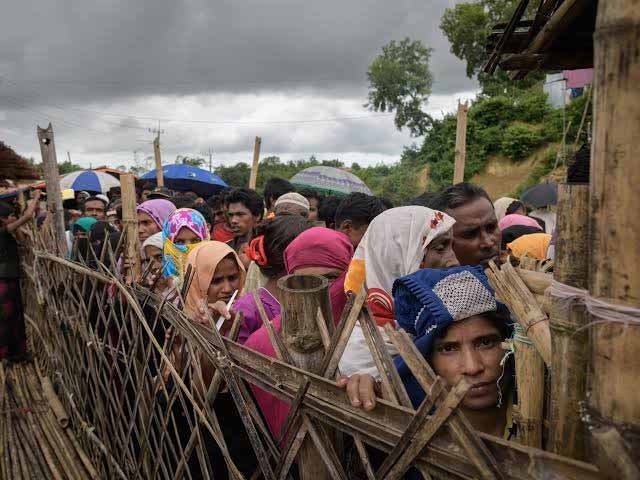
The landmark ruling carries major significance for Bangladesh, which hosts more than one million Rohingya refugees who fled Myanmar, most of them during the 2017 military crackdown.
The judgment strengthens international legal efforts to secure justice and reparations for the persecuted community. However, it does not automatically guarantee their safe repatriation to Myanmar.
A sustainable return would require security guarantees, restoration of citizenship and fundamental rights, and protection against further persecution.
The ICJ ruling establishes Myanmar's responsibility under international law but does not directly prosecute individuals or impose criminal sentences on military commanders. Individual criminal accountability would require separate proceedings before competent courts.