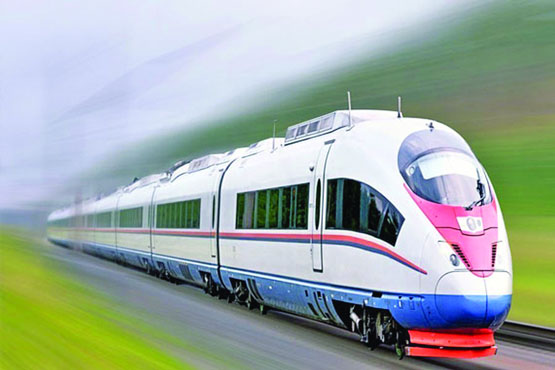
The much-anticipated introduction of high-speed electric trains in Bangladesh may take at least another five years, as the feasibility study for the project-ongoing since 2021-remains incomplete despite repeated deadline and cost extensions.
The initiative to electrify the railway line from Narayanganj to Chittagong via Dhaka and the Tongi-Joydebpur section was first approved in October 2021. Initially scheduled for completion by April 2024, the deadline was later extended to June 2025. However, with only 80% of the physical work and just 36.49% of the financial work completed, Bangladesh Railway has again applied for a further extension-this time until September 30, 2025.
Initial Plan Focused on High-Speed Connectivity: The project was envisioned to electrify the railway line from Narayanganj to Chittagong via Dhaka, and a section from Tongi to Joydebpur. Approved in October 2021, the original deadline was April 2024, later extended to June 2025. However, project officials now propose a further extension to September 2025.
Electrification to Revolutionize Passenger and Freight Transport: If implemented, the electric train system is expected to drastically improve travel time, cut operational costs, and provide an eco-friendly transport alternative. Bangladesh Railway is also emphasizing freight movement, with plans to develop an Inland Container Depot (ICD) in Dhirashram, enhancing container transport from Chittagong Port.
Costs Soar with Expanded Scope and Currency Fluctuations: The project’s initial budget of Tk 15 crore has ballooned to over Tk 16 crore, driven by exchange rate hikes and an expanded project scope. The consultancy workload has increased from 101 to 114.5 person-months to accommodate new sections, including Dhirashram-Pubail and Fauzdarhat-CGPY. Long-Awaited Dream Faces Bureaucratic Hurdles: The idea of electric trains with speeds of 200 km/h was first floated in 2016. However, the actual feasibility
study only began in 2021. Experts believe the Narayanganj-Dhaka-Chittagong corridor, with its population density and energy access, is ideal for launching Bangladesh’s first electric train-yet bureaucratic delays continue to stall progress.
Environmental and Economic Potential Remains Untapped: With electrification, the railways could shift a significant portion of cargo movement from road to rail, offering both economic and environmental benefits. Officials stress that electric locomotives would reduce emissions, speed up logistics, and boost Bangladesh Railway’s revenue.
Electric Railway Could Be a Game-Changer: If implemented, the electric train project promises a major transformation in both passenger and freight transportation. Electric traction is expected to cut travel time, reduce costs, and be more environmentally sustainable. It could also boost cargo transport efficiency, especially in light of plans to construct an inland container depot (ICD) in Dhirashram, Gazipur.
“This could be a revolutionary step for Bangladesh Railway,” said Md. Habibur Rahman, Project Director and Electrical Engineer (West) at Bangladesh Railway. “We’re focusing on container transport from Chittagong Port. Electrifying the line will increase speed and reduce emissions.”
Project Delays, Cost Overruns Plague Study: The feasibility study includes plans to electrify about 337 kilometers of railway track from Narayanganj to Chittagong and an additional 11 kilometers between Tongi and Joydebpur. Now, officials are proposing to expand the scope further by adding the Dhirashram-Pubail and Fauzdarhat-CGPY sections-an additional 17.4 kilometers-to enable broader freight movement.
This expansion, along with rising foreign exchange rates, has significantly driven up project costs. Originally approved at Tk 15 crore, the revised proposal now estimates the cost at over Tk 16 crore, including increased consultancy service requirements.”In 2021, the US dollar exchange rate was Tk 84.80. It later rose to over Tk 122, which has impacted our consultancy and procurement expenses,” Rahman explained.
A Decade-Old Dream Still Waiting: The vision to run electric trains at speeds up to 200 km/h dates back to 2016, but the plan stalled for five years before the current study began. Despite favorable conditions-such as the high population density, industrial activity, and energy availability in the Narayanganj-Dhaka-Chittagong corridor-the main project has yet to move forward.”This region handles around 90% of the country’s exports and imports. Yet we’re still stuck in survey stages nearly a decade later,” a railway official noted, requesting anonymity.
The feasibility study aims to evaluate the project’s technical, economic, environmental, and social viability. However, without a clear timeline for transitioning to implementation, stakeholders are growing increasingly concerned that the electrification of the railway may remain a distant dream.
Looking Ahead: While project officials remain optimistic that the remaining work can be completed “in a short time,” the reality suggests otherwise. Further delays could derail the government’s broader transport modernization goals, especially at a time when global climate and energy challenges demand greener solutions.As the revised project proposal awaits approval from the Planning Commission, the hope for a fast, sustainable railway system now hinges on swift decision-making and greater institutional accountability.