Economists have called for comprehensive tax reforms and stronger revenue administration after Bangladesh fell well short of its revenue collection target in FY2025-26, warning that persistent weaknesses in domestic resource mobilization will increase dependence on costly domestic and foreign borrowing.
According to official figures, the government initially targeted Tk 564,000 crore in revenue for FY2025-26 before revising the goal to Tk 518,000 crore. The National Board of Revenue (NBR) ultimately collected Tk 476,000 crore, leaving a shortfall of Tk 88,000 crore from the original target.
The latest outcome continues a long-standing trend, as Bangladesh has failed to meet its annual revenue target in almost every fiscal year since independence.
Analysts say stronger tax collection is becoming increasingly important as the government seeks to finance development projects while containing fiscal deficits and public debt.
The FY2026-27 budget projects a Tk 243,000 crore deficit, with the government planning to borrow Tk 155,000 crore from foreign sources and Tk 112,000 crore domestically to bridge the financing gap.
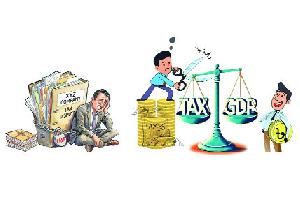
Low tax base limits fiscal space: Bangladesh’s tax-to-GDP ratio remains around 6.8%, one of the lowest in South Asia, compared with approximately 12% in India, 13.5% in China, and 23% in Nepal.
The government has set a target of increasing the ratio to 10% within five years and 15% by 2035, but economists say achieving those goals will require major structural reforms.
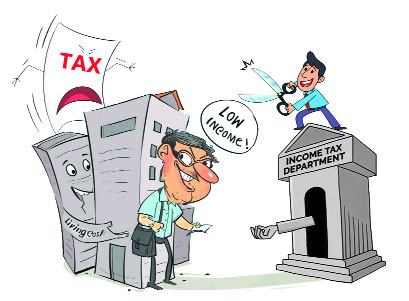
Bangladesh currently has more than 10.2 million Taxpayer Identification Number (TIN) holders, yet only 3.6-4.2 million submit annual tax returns, while nearly two-thirds of filed returns generate no tax liability.
Reform, not higher taxes, seen as priority: Economists argue that expanding the tax base, improving compliance and modernizing tax administration should take precedence over raising tax rates. “Bangladesh cannot sustain higher public spending and development ambitions without significantly improving domestic revenue collection. The priority should be broadening the tax net, digitising tax administration, reducing compliance costs and improving transparency rather than simply imposing higher tax rates,” The Daily Industry quoted Dr. Zahid Hussain, former Lead Economist of the World Bank’s Dhaka office, as saying.
He added that stronger domestic revenue mobilisation would reduce reliance on borrowing while creating greater fiscal resilience.
Governance reforms critical: Experts also stressed the need for institutional reforms within the National Board of Revenue to improve efficiency and strengthen taxpayer confidence. “Revenue collection is ultimately a governance issue. Modern tax administration requires automation, risk-based audits, better data integration and stronger accountability. Without institutional reform and effective enforcement, Bangladesh will continue struggling to raise its tax-to-GDP ratio despite repeated policy changes,” The Daily Industry quoted Dr. Ahsan H. Mansur, Executive Director of the Policy Research Institute (PRI), as saying.
Borrowing cannot replace revenue: Analysts caution that continued reliance on bank borrowing could crowd out private-sector credit, while excessive dependence on foreign loans would increase debt servicing costs and reduce fiscal flexibility.
Bangladesh’s combined public debt currently stands at roughly 42% of GDP, including external debt equivalent to about 22% of GDP. While still below internationally recognized risk thresholds, economists warn that rising deficits could push debt levels higher if revenue performance does not improve.
hey note that stronger domestic resource mobilisation is essential to finance infrastructure, education, healthcare and social protection programmes without placing excessive pressure on the country’s financial system.
Experts say achieving the government’s long-term development goals will depend not only on economic growth but also on building a more efficient, transparent and technology-driven tax system capable of generating sustainable revenue.