Bangladesh’s private sector credit growth remained subdued in May despite a slight improvement from the previous month, reinforcing concerns that high borrowing costs, political uncertainty and banking sector weaknesses continue to restrain investment and slow the country’s economic recovery.
According to the latest data from Bangladesh Bank, private sector credit growth stood at 4.98 percent in May, up marginally from 4.75 percent in April, but well below the central bank’s earlier monetary policy projection of around 8.5 percent for the January-June period.
Economists and business leaders say the prolonged weakness in credit expansion is directly affecting industrial investment, business expansion, job creation, production and exports, while small and medium-sized enterprises (SMEs), which depend heavily on bank financing, are bearing the brunt of the slowdown.
Credit Growth Falls Short of Target: Bangladesh Bank data show that outstanding loans to the private sector increased from Tk 17.39 trillion in May 2025 to Tk 18.25 trillion in May 2026. Although the overall volume of lending has increased, the pace of growth remains historically low.
The central bank had expected credit growth to accelerate during the first half of the year, but none of the first five months met the projected target, indicating continued weakness in investment demand and lending activity.
The latest monetary policy, announced on June 30, retained a contractionary stance to contain inflation, leaving the policy rate unchanged at 10 percent while lowering the private sector credit growth target for the current monetary policy period to 6.8 percent.At the same time, Bangladesh Bank announced a Tk 60,000 crore stimulus programme to support economic activity.
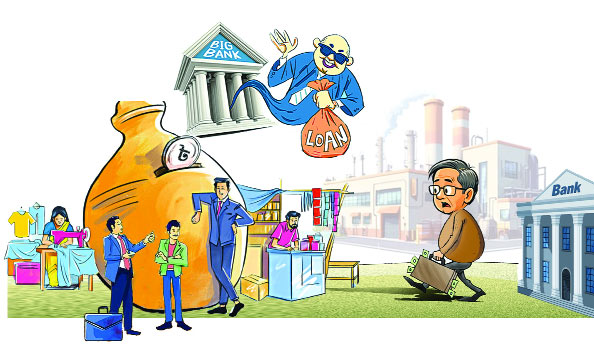
Investment Momentum Remains Weak: Business leaders say high lending rates have significantly increased financing costs, discouraging entrepreneurs from undertaking new investment projects.Political uncertainties over the past two years, policy inconsistencies, foreign exchange volatility and higher import costs have further weakened investor confidence. Banks themselves remain cautious in extending fresh loans because of liquidity shortages and mounting non-performing loans.The result has been slower industrial expansion, weaker manufacturing output and delayed business investment across multiple sectors.
SMEs Facing the Biggest Challenge: Analysts say smaller businesses are suffering the most because they rely almost entirely on bank borrowing for working capital and business expansion.Limited access to affordable credit has reduced their ability to expand production, invest in new technology and create employment.As SMEs account for a significant share of industrial employment, prolonged weakness in lending could have broader implications for domestic demand and economic growth.
Economists Call for Urgent Reforms: Helal Ahmed Jony, Honorary Fellow at the private research organisation Change Initiative, said restoring healthy credit growth requires coordinated reforms across the financial sector.”Interest rates need to be brought down to a more manageable level. At the same time, Bangladesh must ensure business-friendly policies, strengthen governance in the banking sector and reduce non-performing loans. A stable investment climate and greater stability in the foreign exchange market are also essential for increasing private sector lending. Otherwise, the prolonged slowdown in credit growth could place even greater pressure on the economy,” he said. Business Leaders Seek Lower Borrowing Costs: Former President of the Dhaka Chamber of Commerce and Industry (DCCI) Rizwan Rahman said businesses remain reluctant to undertake new investment because financing costs have become prohibitively expensive.”Many entrepreneurs have viable investment plans, but double-digit lending rates have significantly raised project costs. Unless borrowing costs decline and policy consistency improves, private investment will remain subdued despite improvements in political stability,” he told The Daily Industry.
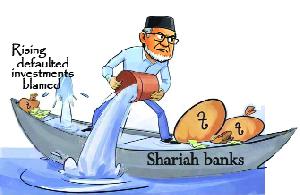
Banking Sector Reform Essential: Ahsan H. Mansur, Executive Director of the Policy Research Institute of Bangladesh (PRI), said restoring confidence in the banking system is equally important.”The banking sector must improve its financial health through stronger governance, better risk management and faster resolution of defaulted loans. Without restoring confidence in banks, credit growth alone will not recover sustainably,” he said.
Exporters Need Better Access to Finance: Mohammad Hatem, President of the Bangladesh Knitwear Manufacturers and Exporters Association (BKMEA), said many export-oriented manufacturers continue to face financing constraints despite stable export demand.
“Factories are struggling to obtain working capital at affordable rates. High interest costs and stricter lending practices have made it difficult for exporters, particularly small and medium-sized manufacturers, to expand production or modernise operations. Improving access to finance is essential for maintaining Bangladesh’s export competitiveness,” he said.
Economic Recovery Still Fragile: According to the Bangladesh Bureau of Statistics (BBS), the country’s real GDP growth recovered to 4.14 percent in FY2025-26, compared with 3.49 percent in the previous fiscal year.
Bangladesh Bank noted in its latest monetary policy statement that economic activity remained weak due to supply chain disruptions, sluggish private investment and prolonged political uncertainty that began in mid-2024.
While the central bank believes investor confidence has started to improve following the formation of the new government, economists caution that stronger policy support will be needed to revive lending, stimulate investment and sustain economic recovery.
They argue that without a meaningful rebound in private sector credit, Bangladesh may struggle to generate sufficient employment, accelerate industrial production and maintain long-term export growth, making financial sector reforms and improved investment conditions critical priorities in the months ahead.