Bangladesh experienced a significant setback in measles vaccination last year. In 2025, only 56.2% of children received the measles vaccine, leaving 43.8% unvaccinated—the lowest coverage in the past nine years.
Health experts have warned that a large number of unvaccinated children could increase the risk of future measles outbreaks, particularly among those who have not received any dose or have been partially vaccinated. Officials from the Directorate General of Health Services (DGHS) cited several field-level challenges that complicated vaccination efforts, including strikes by health assistants, irregularities during vitamin A campaigns, and administrative weaknesses.
According to the Expanded Program on Immunization (EPI), vaccination coverage had been much higher in previous years: 98.9% in 2024, 97.3% in 2023, 93.8% in 2022, 99.7% in 2021, and 93.2% in 2020. Coverage in 2017–2019 ranged between 98% and 119.9%. Even during the COVID-19 pandemic, the vaccination rate remained comparatively high.
The decline in coverage led to measles cases spreading, prompting the EPI website to remove some vaccination data. While Bangladesh’s overall immunization information is available on the World Health Organization website, data for 2025 measles vaccination is currently missing.
Dr. Abul Fazal Md. Shahabuddin Khan, last year’s EPI program manager, acknowledged the setbacks. He noted that health assistants went on strike three times, directly affecting vaccination campaigns. Operational plan suspensions and job losses among health workers further disrupted field activities. Although limited recruitment occurred in 23 districts, most positions remain vacant, hampering vaccination efforts. Transportation and supply issues also contributed to the low coverage.
Public health experts stressed that missed vaccinations leave thousands of children at risk each year. Unvaccinated children gradually become susceptible, leading to larger outbreaks over time. According to the national immunization schedule, children should receive two doses of the measles-rubella vaccine at 9 months and 15 months of age, with roughly 4 million children requiring vaccination annually.
Professor Be-Nazir Ahmed, former DGHS director and public health specialist, noted that measles requires at least 90–95% coverage to prevent outbreaks. Currently, many areas are below 60%, putting hundreds of thousands of children at risk. Officials cited declining participation in routine immunization, parental unawareness, and post-COVID disruptions as contributing factors. Additionally, the last nationwide MR campaign was in December 2020, leaving a growing number of unvaccinated children.
Dr. Ziauddin Haider, former World Bank health and nutrition expert, highlighted policy and administrative changes that have complicated funding and implementation in the health sector. He urged special vaccination drives, proper treatment for infected children, and sample testing for symptoms in children under nine months.
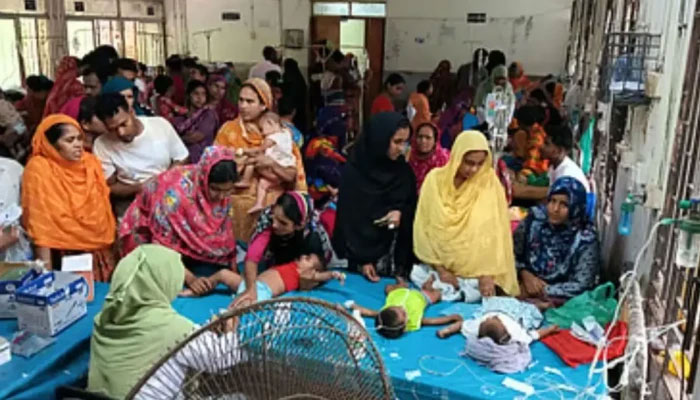
Treatment for measles remains primarily supportive, including fever management, oxygen, and pneumonia care, which can be provided at primary and secondary health centers. However, lack of facilities often forces patients to travel to Dhaka, increasing risk.
Health experts emphasize that data-driven analysis and immediate action are crucial. Measures should include intensifying routine vaccination, identifying and immunizing missed children, and raising awareness. DGHS has announced plans for special campaigns prioritizing children who missed doses. Experts warn that without swift action, measles outbreaks could pose a serious threat to child health.
Regional Impact
• Rajshahi: Two children died in the past 24 hours with measles symptoms. Currently, 98 children are hospitalized, with 65% under six months old, below the standard vaccination age of nine months. The vaccination age has been temporarily lowered in response.
• Chapainawabganj: A 20-bed isolation unit admitted 286 children in March, with 77 currently hospitalized. Shortage of specialists makes care challenging.
• Chattogram: One six-month-old child died, seven others tested positive, and several remain under observation.
• Gopalganj: One child died, six hospitalized; unvaccinated children are being prioritized for immunization.
• Shariatpur: Three children died in nine days from measles symptoms; 15 out of 25 tested in two weeks were confirmed cases.
Meanwhile, the government has announced plans to partially reopen the 200-bed Rajshahi Children’s Hospital, closed for three years, within three months to help manage the crisis.