Mounting allegations of financial irregularities and governance failures in Bangladesh’s banking sector have put a spotlight on a group of influential insiders, often described by critics as “yes-men,” who are accused of enabling questionable decisions during the recent reform drive. Economists and policy analysts are now calling for urgent legal action against those involved, warning that failure to ensure accountability could further erode public trust in the financial system.
The controversy is closely linked to the tenure of former central bank governor Dr Ahsan H. Mansur, who led sweeping reforms under the interim administration headed by Dr Muhammad Yunus. While the reform programme initially aimed to restore discipline and transparency, critics say its implementation opened the door to a new wave of financial mismanagement and corruption. Allegations against ‘Yes-Men’ Network: Banking insiders and analysts allege that a number of individuals appointed to the key positions during the reform process operated as loyalists rather than independent professionals. These individuals, critics claim, played a central role in approving risky loans, bypassing standard procedures, and facilitating financial irregularities.
“The problem is not just policy failure, but the people who were entrusted to implement those policies,” said Dr Enayet Karim, president of the Global Economist Forum. “When decision-making is dominated by unquestioning loyalists, institutional integrity suffers, and that is exactly what we are witnessing.”
According to sector insiders, these alleged “yes-men” were placed in top roles across several banks following large-scale restructuring initiatives. Their actions, critics argue, contributed to a sharp rise in non-performing loans and weakened internal controls.
Reforms and Restructuring Under Question: During Dr Ahsan Mansur’s tenure, Bangladesh Bank undertook extensive measures, including dissolving boards of multiple banks and appointing administrators to oversee operations. Among the affected institutions were First Security Islami Bank PLC, Global Islami Bank PLC, Union Bank PLC, Social Islami Bank PLC, and EXIM Bank PLC.
These banks were facing severe liquidity shortages and high default loans, prompting the central bank to initiate a merger plan aimed at stabilizing the Islamic banking segment. In addition, leadership changes were implemented in other banks such as Islami Bank Bangladesh PLC, National Bank Limited, and IFIC Bank. While these steps were widely seen as necessary, critics now argue that the selection of replacement officials lacked transparency and merit-based evaluation. Rising Calls for Legal Action: As allegations intensify, experts are increasingly demanding that those responsible be brought under the purview of the law.
“There must be a clear message that financial misconduct will not be tolerated,” said Dr Karim. “If individuals have abused their positions-whether directly or indirectly-they should face ????? and ????? without delay.”
Legal experts note that Bangladesh’s existing regulatory framework provides mechanisms to prosecute financial crimes, but enforcement has often been weak.
“Accountability is the missing link,” said a Dhaka-based financial lawyer. “Without visible action against those responsible, reforms lose credibility.”Impact on Banking Stability: The ongoing controversy has raised concerns about the stability of the banking sector, which continues to grapple with high default loans, liquidity pressures, and declining depositor confidence.
Industry insiders say that uncertainty in leadership and governance has disrupted normal banking operations, particularly in private banks where key appointments remain pending. “Confidence is everything in banking,” said a senior banker. “When people see allegations of misconduct going unpunished, it undermines trust in the entire system.” Questions Over Oversight and Transparency: Critics also point to broader issues of oversight, arguing that the reform process itself lacked adequate checks and balances.
Some have raised concerns about the use of public funds during the reform period, including expenditures on initiatives such as overseas efforts to recover laundered money, which reportedly yielded limited results.
“These are serious questions that require transparent answers,” said an economist. “Public money must be accounted for, especially in times of economic stress.”
Government’s Reform Agenda at a Crossroads: The interim government’s banking reform agenda was initially welcomed as a bold attempt to address deep-rooted problems. However, the emerging allegations have placed the programme under intense scrutiny.
Analysts say the government now faces a critical test: whether it can ensure accountability while continuing necessary reforms. “The credibility of the entire reform effort depends on how these allegations are handled,” said Dr Karim. “This is an opportunity to demonstrate that no one is above the law.”
The Way Forward: Experts emphasize that restoring confidence in the banking sector will require more than structural changes-it will demand a strong commitment to transparency, accountability, and institutional independence. Key priorities include: Conducting impartial investigations into alleged irregularities, Ensuring merit-based appointments in bank leadership. Strengthening regulatory enforcement. Enhancing transparency in financial reporting. “Reform is not just about changing systems; it is about changing behavior,” Dr Karim said. “And that begins with accountability.” As Bangladesh’s banking sector navigates a challenging period, the spotlight on alleged “yes-men” and their role in recent irregularities underscores the importance of good governance.
With calls for justice growing louder, the coming months are likely to be decisive in determining whether the country’s financial system can regain stability and public trust. For many observers, the message is clear: without accountability, reform efforts risk becoming little more than rhetoric-leaving the underlying problems unresolved.
Dr. Ahsan Mansur has appointed former Sonali Bank Managing Director Md Obayed Ullah Al Masud in Islami Bank as Chairman, who is now in custody for huge corruption. He has looted the weak bank encashing the opportunity of S Alam’s sucking.
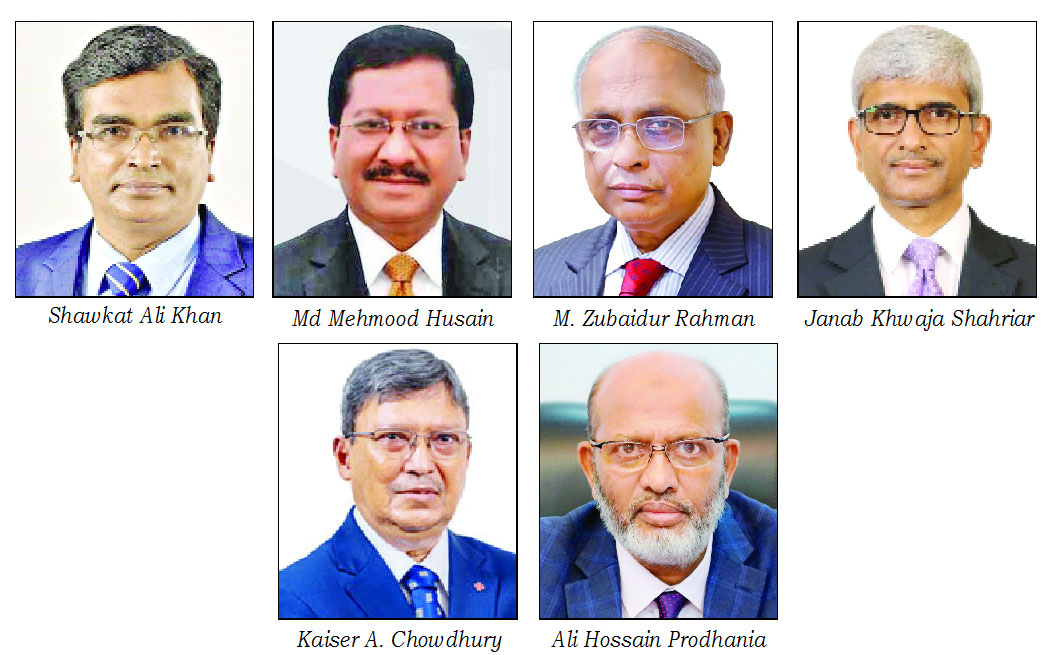
Huge critics have been created against Mehmud Husain of IFIC Bank as he commenced huge corruption in the bank after being appointed as Chairman of IFIC Bank.
Similarly, former Islami Bank Managing Director M A Mannan in First Security Islami Bank, Farid Uddin in Union Bank, Mohammad Nurul Amin in Global Islami Bank, Md. Ali Hossain Prodhania in NRBC Bank,Khwaja Shahriar asChairman of Al Arafah Islami Bank.
Mohd. Rafat Ullah Khan, Managing Director and Chairman Khwaja Shahriar are already under the scanner of Anti-Corruption Commission for huge irregularities in Al Arafah Bank. Kaiser A. Chowdhury been appointed Chairman of AB Bank but so far, he has not been able to involved any irregularities. But any remarkable development has not been achieved so far in AB Bank during his period. Managing Director of the bank Mizanur Rahman has ousted with huge critics charging lots of irregularities.
Prof. Dr. Jubaidur Rahman of Islami Bank has not also performed any citable contribution so far.
Padma Bank, the money sucker of Sheikh Hasina’s men Mohiuddin Alamgir and Chowdhury Nafis Sarafat have looted the bank and make it a big burden for the nation. Sonali Bank’s Managing Director Shawkat Ali Khan is now playing the duty of Chairman of the Bank. These new chairmen and their new board have neither made any reform nor made any significant improvement in the overall banking health. The shareholders and sponsors have already raised voice to get back their bank to their hand. They told these hired chairmen have no admire to the bank rather they came to earn two pies from our beloved banks.