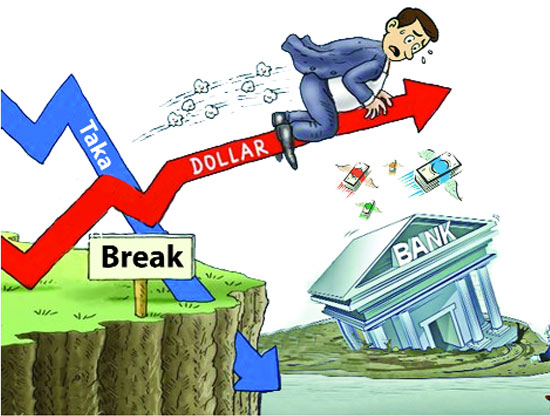
Bangladesh’s banking sector is facing mounting pressure as a persistent shortage of foreign currency and a steadily rising exchange rate continue to disrupt import activities and trade operations, industry insiders and economists have warned.
Commercial banks are reportedly struggling to meet the growing demand for US dollars needed to settle import payments, while delays in opening letters of credit (LCs) are further complicating business transactions.
Banks Struggle to Meet Dollar Demand: The country’s banking sector is increasingly unable to supply adequate foreign currency for imports, creating bottlenecks across multiple industries.”Many banks are failing to provide the required dollar support for importers, forcing businesses to delay or scale down their operations,” The Daily Industry reported, citing sector sources. In numerous cases, importers are facing delays in opening LCs-an essential requirement for international trade-due to insufficient dollar liquidity within the banking system.
Rising Dollar Rate Intensifies Pressure: The exchange rate has been steadily increasing, reflecting ongoing pressure on the local currency. As of Saturday, the dollar was trading at around Tk 122.81, according to market sources. However, importers claim that the realistic rate in the market is often higher than the interest rate, as banks and broker houses charge additional premiums to supply dollars. “In many cases, banks and broker houses are charging above the official rate, which is further increasing import costs,” The Daily Industry observed.
Currency Depreciation Raises Import Costs: The gradual depreciation of the Bangladeshi taka is significantly increasing the cost of imports. Businesses that rely on imported raw materials, machinery, and essential goods are bearing the brunt of this trend.
‘Money devaluation is directly translating into higher import costs, which ultimately affects production and consumer prices,” The Daily Industry reported. Higher import costs are feeding into inflation, as businesses pass on the increased expenses to consumers.
Trade Operations Face Disruptions: The combined effect of dollar shortages, higher exchange rates, and LC delays is disrupting overall trade operations.
Importers are struggling to secure timely shipments, while exporters face challenges in maintaining production due to shortages of raw materials. “Trade flows are being hampered as financing constraints and currency volatility create uncertainty for businesses,” The Daily Industry noted.
Impact on Industrial Production: Industries dependent on imported inputs-particularly manufacturing and the ready-made garment sector-are facing production disruptions. Delays in raw material imports are forcing factories to operate below capacity, affecting output and delivery timelines.
Experts Warn of Broader Economic Risks: Dr. Zahid Hussain, former Lead Economist at the World Bank Dhaka office, told The Daily Industry: “A persistent dollar shortage combined with exchange rate instability can significantly disrupt trade and production. It also erodes business confidence and slows economic recovery.” He emphasized that restoring stability in the foreign exchange market should be a top priority for policymakers.
Market Distortions Raise Concerns: Economists have also raised concerns about discrepancies between official and unofficial exchange rates, which create distortions in the market. A financial analyst , said: “When multiple exchange rates exist in practice, it reduces transparency and efficiency in the market, ultimately discouraging investment and trade.”
Need for Urgent Policy Intervention: Experts stress that urgent policy measures are needed to ease the dollar crisis and stabilize the exchange rate.
Key recommendations include improving foreign exchange management, boosting export earnings, encouraging remittance inflows through formal channels, and ensuring transparency in currency transactions.
Outlook: Continued Pressure on Trade: As global uncertainties persist and foreign exchange reserves remain under pressure, Bangladesh’s banking sector is likely to continue facing challenges in meeting dollar demand. “Without timely intervention, the ongoing currency pressure could further disrupt imports, increase inflation, and slow economic growth,” The Daily Industry concluded. For businesses and consumers alike, the rising dollar rate and persistent forex shortage signal a period of continued economic strain, highlighting the need for coordinated action to restore stability in the financial.