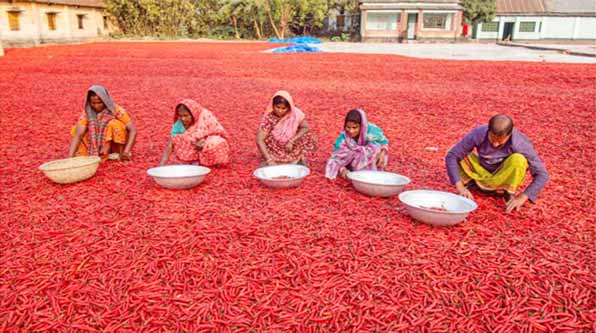
Dry chili prices have increased sharply in local markets following a decline in imports through the Bhomra Land Port in Satkhira, raising concerns among traders and consumers ahead of the peak consumption season.
According to data from the revenue department of Bhomra Custom House, imports of dry chili through the port fell by nearly 1,000 tonnes during the first ten months of the current fiscal year compared with the same period of the previous fiscal year.
Data showed that from July to April of the 2025-26 fiscal year, a total of 48,375 tonnes of dry chili were imported through the port, with an estimated market value of Tk 1,329.91 crore. During the corresponding period of the 2024-25 fiscal year, imports stood at 49,332 tonnes. This means imports declined by 956 tonnes year-on-year.
Importers and traders said lower supply and higher prices of dry chili in India, Bangladesh's key source market, have directly affected import volumes and pushed up prices in the domestic market.
As a result, prices in Satkhira's spice markets have risen significantly over the past month. Traders said dry chili prices have increased by Tk 80 to Tk 90 per kilogram in local markets due to the supply shortage.
A visit to Sultanpur Boro Bazar in Satkhira district town on Tuesday showed dry chili being sold at Tk 400 per kilogram, compared with Tk 300 to Tk 320 per kilogram just one month ago.
Retail traders said wholesale prices have increased by around Tk 60 to Tk 70 per kilogram, forcing retailers to purchase products at higher rates and pass the increased cost on to consumers.
"Supply in the market is not sufficient. We are being forced to buy dry chili at higher prices from wholesalers, which is affecting retail prices," a local retailer said.
Market analysts said Bangladesh depends heavily on imported dry chili, particularly from India, making the local market highly vulnerable to supply disruptions and price fluctuations in neighbouring countries.
Confirming the price increase, District Agricultural Marketing Officer MM Abdullah said the decline in imports through the port has created a supply shortage in the market.
"Prices of dry chili have increased because imports through the port have decreased. However, if supply improves in the market, prices are expected to come down," he said.
Traders also expressed concern that if import volumes do not recover soon, prices may remain elevated in the coming weeks, putting additional pressure on consumers already dealing with high food inflation and rising costs of essential commodities.