An unprecedented situation has emerged in the global potato market, with potato futures prices surging by more than 700 percent within less than a month despite abundant supplies across major European producing countries.
According to a report by Euronews, benchmark potato futures contracts rose sharply from 2.11 euros per 100 kilograms on April 21 to 18.50 euros per 100 kilograms in recent trading, marking an extraordinary increase of around 705 percent in just a few weeks.
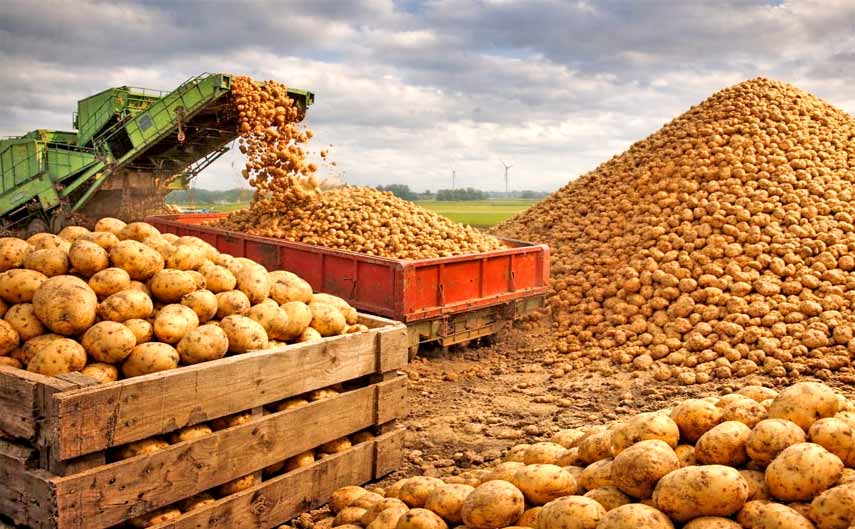
Market analysts said the dramatic rise has been driven mainly by speculative activity in financial markets rather than any immediate shortage of potatoes in Europe. Currently, Europe is experiencing a substantial oversupply of potatoes as production has exceeded demand across several major agricultural economies, including Belgium, the Netherlands, France and Germany.
Farmers in these countries significantly expanded potato cultivation over recent seasons, encouraged by favourable weather conditions and strong harvest expectations. The latest growing season also produced bumper yields, creating large stockpiles across the region. Industry sources said the glut has become so severe that some growers are reportedly spending additional money simply to dispose of lower-quality potatoes that cannot be sold profitably.
Despite the massive surplus, global financial markets have become increasingly nervous about future supply risks linked to the ongoing Iran war and disruptions in international trade routes.
Traders and investors fear that geopolitical tensions in the Middle East could trigger a global shortage of chemical fertilisers, which are heavily used in potato farming.
Agricultural experts noted that potato cultivation requires significant amounts of fertiliser and energy inputs. Any disruption in fertiliser supplies or fuel transportation could sharply increase production costs and reduce future harvests.
As a result, investors are aggressively purchasing potato futures contracts at elevated prices in anticipation of possible food supply constraints in the coming months.
Transportation concerns are also contributing to the market volatility.
According to United Nations data, nearly one-third of the world's fertiliser and agricultural mineral shipments pass through the Strait of Hormuz, one of the world's most strategically important maritime trade routes.
The route has become increasingly risky due to the ongoing conflict involving Iran, creating fears of disruptions in the global supply chain for agricultural inputs and food commodities.
Analysts said the current surge in potato futures reflects growing concerns over long-term food security rather than immediate market fundamentals.
Although futures prices have skyrocketed, industry insiders believe the impact on retail consumers is likely to remain limited for now because of the existing surplus of physical potato supplies in Europe.
However, economists warned that if tensions in the Middle East continue and disruptions in fertiliser and fuel markets persist, agricultural production costs could rise significantly worldwide, potentially affecting food prices in the coming seasons.
The latest developments underscore how geopolitical instability and supply chain disruptions are increasingly influencing global agricultural commodity markets, even in sectors currently facing oversupply conditions.