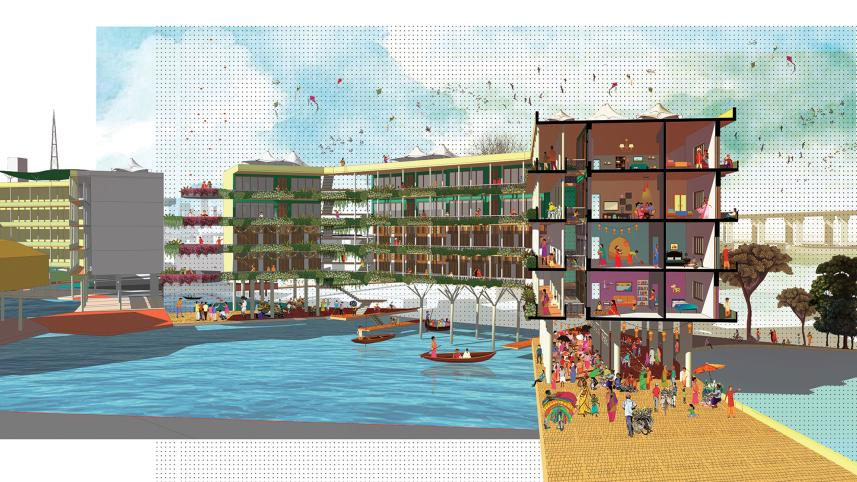
The government is set to launch a major housing initiative aimed at improving the living conditions of thousands of floating and displaced people in the capital, as part of its broader social protection strategy under the upcoming national budget.
Officials familiar with the plan told The Daily Industry that the proposed project will include the construction of small apartment units for around 5,000 marginal families currently living in slums and informal settlements across Dhaka. The initiative is expected to be incorporated into the 2026–27 fiscal budget with a proposed allocation of Tk 735 crore.
Housing for the Urban Poor: According to sources at the Ministry of Social Welfare, the project will focus on providing 500 square foot flats equipped with basic amenities such as sanitation, clean water access, and safe living environments.
The plan primarily targets residents of densely populated slum areas, including Korail Slum, where thousands of families live in makeshift structures under hazardous and unhygienic conditions.
A senior official involved in the project told The Daily Industry, “This initiative is not just about providing housing; it is about restoring dignity and ensuring that vulnerable populations are brought into a formal urban framework.”
For years, slum dwellers in Dhaka have faced multiple challenges, including overcrowding, poor sanitation, lack of access to clean water, and frequent fire hazards. The government believes that transitioning these populations into planned housing units could significantly improve their quality of life.
Part of a Broader Social Protection Plan: The proposed housing project is part of a wider government strategy aimed at addressing urban poverty and social exclusion. Alongside housing, the plan includes provisions for skills development, employment generation, and rehabilitation support.
A Z M Zahid Hossain formally proposed the initiative in a recent communication to Amir Khosru Mahmud Chowdhury, urging budgetary support for the project. In his communication, the minister highlighted that a coordinated approach is necessary to address the needs of floating populations, combining housing with economic empowerment.
He noted that the initiative would also complement existing social safety net programs, including the expansion of subsidized food distribution through family card schemes and targeted support for orphans and disadvantaged children.
Integrated Rehabilitation Approach: Officials say the housing project will go beyond simply constructing flats. It aims to create a comprehensive rehabilitation framework that integrates displaced populations into the formal economy.
A policy analyst told The Daily Industry, “Housing alone will not solve the problem. The success of this initiative will depend on whether residents can secure stable livelihoods, access education, and receive healthcare services.”
The government plans to incorporate vocational training and employment programs to ensure that beneficiaries can sustain themselves after relocation. This integrated approach is expected to reduce long-term dependency on state support.
Implementation Challenges: Despite its potential, the project faces several significant challenges. Urban planners point out that land scarcity in Dhaka could complicate implementation. Identifying suitable locations for constructing multi-storey residential buildings will require careful planning and coordination among various government agencies. Transparency and governance are also key concerns. Past experiences with public housing projects have shown that issues such as corruption, cost overruns, and delays can undermine effectiveness.
An urban development expert told The Daily Industry, “Ensuring transparency in beneficiary selection and project execution will be critical. Without proper oversight, there is a risk that the intended beneficiaries may not fully benefit from the initiative.”
Selecting the Right Beneficiaries: Another major challenge will be identifying genuine beneficiaries among the large and diverse population of urban poor. Authorities say priority will be given to long-term residents of major slums who lack access to permanent housing. However, ensuring fairness and preventing political or administrative bias in the selection process will be essential.
A social policy researcher told The Daily Industry, “There must be a clear and transparent database of beneficiaries. Otherwise, the program could face credibility issues.”
Economic and Social Impact: If implemented effectively, the project could have far-reaching implications for urban development and poverty reduction.
Experts believe that providing secure housing can lead to improvements in health, education, and overall well-being. Stable living conditions can also enhance productivity and enable individuals to participate more actively in the economy.
A development economist told The Daily Industry, “Housing is a foundational element of social development. When people have a safe place to live, it creates a platform for economic mobility and social inclusion.”
A Step Toward Inclusive Cities: The initiative aligns with the government’s broader vision of building inclusive and sustainable cities. Urbanization in Bangladesh has been rapid, with Dhaka emerging as one of the most densely populated cities in the world. However, this growth has been accompanied by a rise in informal settlements and urban poverty. By addressing the housing needs of marginalized populations, the government aims to reduce inequality and improve urban governance.
Experts Call for Long-Term Planning: While welcoming the initiative, experts emphasize the need for long-term planning and sustained commitment. They argue that housing projects should be integrated with broader urban development strategies, including transportation, healthcare, education, and employment. An infrastructure policy expert told The Daily Industry, “This should not be a one-off project. It needs to be part of a long-term urban housing policy that addresses the root causes of slum formation.”
Looking Ahead: The proposed housing project for floating populations represents a significant policy shift toward inclusive urban development.
However, its success will depend on effective implementation, transparent governance, and the ability to address the economic needs of beneficiaries. As the government prepares to present its 2026–27 budget, the initiative is expected to be closely watched by policymakers, development partners, and civil society organizations. If executed properly, it could serve as a model for addressing urban poverty and improving the lives of millions living in precarious conditions across Bangladesh.