The Bangladesh Bureau of Statistics (BBS) has, for the first time, quantified the economic value of unpaid household and care work in Bangladesh, revealing its staggering contribution to the national economy-an estimated Tk 6.7 trillion, or 18.9 percent of GDP.
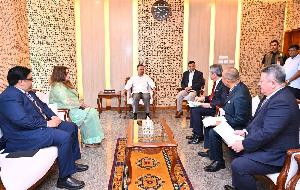
The groundbreaking figure was unveiled in a report published at a ceremony held Tuesday at the BBS headquarters in Agargaon, Dhaka. The study was conducted with the technical support of UN Women Bangladesh and the Asian Development Bank (ADB), under the Human Resources and Social Security Account (HPSA) framework of the Women Count Global Programme.
The event was presided over by BBS Director General Md. Mizanur Rahman, while Sharmin S. Murshid, Women and Children Affairs Advisor, attended as the chief guest. Other notable attendees included Momtaz Ahmed, Senior Secretary of the Ministry of Women and Children Affairs; Aleya Akhter, Secretary of the Statistics and Data Management Division; and Geetanjali Singh, UN Women’s representative in Bangladesh.
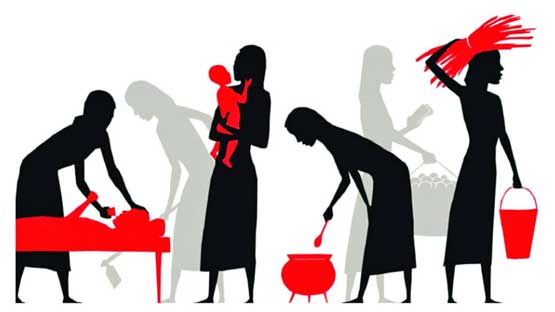
A Hidden Pillar of the Economy: The report brings attention to the economic significance of unpaid domestic and care work-such as cooking, cleaning, caregiving for children and the elderly, and household management-which remains excluded from the traditional Gross Domestic Product (GDP) calculations.
Women bear the overwhelming burden of this invisible labor, contributing 85 percent of the total value, as per the findings based on the BBS Time Use Survey 2021 and the Labour Force Survey 2022. “This contribution is not just invisible-it’s unrecognized, unmeasured, and undervalued in policy-making,” said Sharmin S. Murshid in her remarks. “We now have clear evidence that household labor is a major part of our economy. It is time to give it formal recognition in planning and resource allocation.” What the Numbers Say: The Tk 6.7 trillion valuation places unpaid care and domestic work as a vital segment of the national economy-larger than many formal industries. Yet, this work remains uncompensated, predominantly done by women, and largely absent from national budgets or policy frameworks. “This is not about charity-it’s about economic justice,” said Geetanjali Singh of UN Women. “Women work just as hard at home as they do in the workforce, often harder. That work is foundational to every economy. And yet, it’s not included in what we consider the GDP.”
Key Findings of the Report: Economic value of unpaid household work: Tk 6.7 trillion (2021). Share of GDP: 18.9%. Women’s contribution: 85%. Main tasks included: Cooking, cleaning, caring for children and the elderly, household management.
Source of data: Time Use Survey 2021, Labour Force Survey 2022: A New Metric: The “Care Calculator”: The event also featured the introduction of a digital “Care Calculator” tool presented by Nubayra Zehin, Program Analyst at UN Women Bangladesh. This interactive tool allows individuals-especially policymakers-to input daily household activities and see their time value converted into economic terms. “The calculator makes visible what has been kept invisible for far too long,” said Zehin. “It challenges traditional views of productivity and urges governments to count what truly counts.”
Expert Opinions & Policy Recommendations: Asma Akhtar, Deputy Director of the Demography and Health Branch of BBS, presented the detailed analysis, emphasizing that the data not only shines a light on gender inequality but also opens up possibilities for more gender-responsive budgeting and planning.
BBS and UN Women jointly urged the government to integrate the recognition of unpaid care work into: National legislation and policies, Social protection programs, Annual budgets and development plans, Educational campaigns to shift gender norms.
Other key recommendations include: Creating an inter-ministerial coordination mechanism to ensure unpaid work is recognized and addressed across sectors. Encouraging shared responsibility of care work between men and women. Regular national data collection on unpaid care and domestic work. Investing in care infrastructure, such as daycare centers and elderly care homes, to reduce the unpaid burden on women.
The Bigger Picture: Globally, women perform over three-quarters of unpaid care work, according to the International Labour Organization. The COVID-19 pandemic further exacerbated this burden, with women taking on increased responsibilities during lockdowns and school closures. In Bangladesh, despite significant strides in female education and employment, deep-rooted social norms continue to assign domestic and caregiving roles exclusively to women.
“The way forward is not just to measure unpaid work, but to actively redistribute it,” said Aleya Akhter. “Recognizing women’s household contributions in economic terms is a critical step toward achieving gender equality and inclusive development.”
Why It Matters: While Bangladesh has seen commendable progress in women’s empowerment through microfinance, education, and labor force participation, the hidden labor at home has long gone unnoticed in official statistics. This report changes that narrative. It provides a data-driven basis for demanding economic recognition, promoting shared care responsibilities, and enabling more equitable resource allocation.
Looking Ahead: UN Women and BBS emphasized that this is just the beginning. They aim to institutionalize care data collection and push for national policy shifts to support unpaid workers-most of whom are women. “Without women’s unpaid labor, the entire economy would collapse,” said Sharmin S. Murshid. “Now that we have the numbers, it’s time for action. Let’s make sure this work is not just counted, but also valued.”
The inclusion of unpaid care and household work in the national economic narrative is a long-overdue step towards justice and equity. As policymakers grapple with economic recovery, inflation, and social protection, recognizing and redistributing unpaid work could be a game-changer for millions of women-and for the nation as a whole.