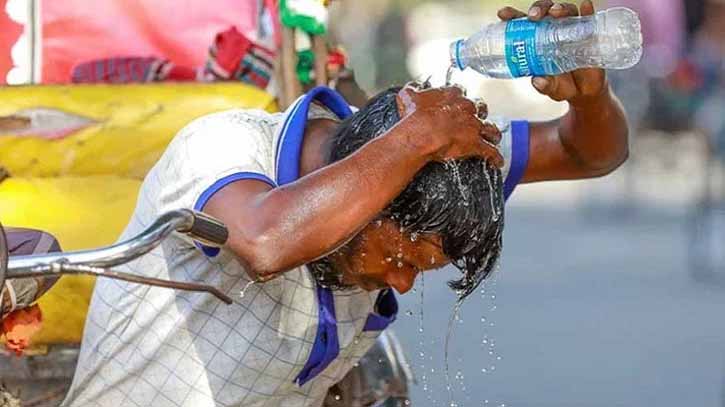
Extreme heat is emerging as a growing threat to Bangladesh’s economy, productivity and public health, with millions of workers and children increasingly exposed to heat stress.
The World Bank estimates that extreme heat caused $1.3 billion to $1.8 billion in productivity losses in Bangladesh in 2024, equivalent to around 0.3–0.4% of GDP. In Dhaka alone, heat stress makes roughly 3% of annual working hours theoretically unworkable, equivalent to about 465,000 full-time jobs.
The economic risks are particularly serious for workers in agriculture, construction, transport and other labour-intensive sectors, where prolonged exposure to high temperatures can reduce working hours and incomes while increasing healthcare costs.
Bangladesh’s garment industry, the country’s largest export sector, also faces growing risks. A joint analysis by the ILO, IFC and Cornell University’s Global Labor Institute, cited by the World Bank, estimates that apparel industries in Bangladesh, Pakistan, Vietnam and Cambodia could lose up to $65.8 billion in export earnings by 2030 if heat stress remains unaddressed.
The health consequences are equally concerning. Heat-related deaths in Bangladesh roughly doubled between 2000 and 2023, according to Global Burden of Disease estimates cited by the World Bank. Prolonged exposure to extreme heat can cause heat exhaustion, heatstroke and other serious health problems.
A recent study led by Vrije Universiteit Brussel and published in Science Advances on August 27 projected that 23 million Bangladeshi children could face at least one additional month of heat stress every year under a 1.5°C global-warming scenario.
Economists and health experts say Bangladesh needs stronger measures to protect workers and vulnerable communities. Suggested steps include adjusting working hours during extreme heat, improving workplace ventilation, expanding heat-health awareness, strengthening labour protections for informal workers and accelerating mechanisation in labour-intensive sectors.
Experts also stress the need to formalise the informal economy so that more workers can benefit from labour laws and workplace protections.
Some progress is already visible in the manufacturing sector. Bangladesh’s Green Transformation Fund and sustainability-focused financing have helped factories invest in energy-efficient equipment and improve working environments. The country now has more than 270 LEED-certified apparel factories.
However, experts caution that factory-level improvements alone cannot protect millions of workers who spend their days outdoors or in informal workplaces.
With temperatures continuing to rise, Bangladesh faces an urgent policy challenge: heat must be treated not only as a climate issue, but also as a public-health, labour and economic priority.