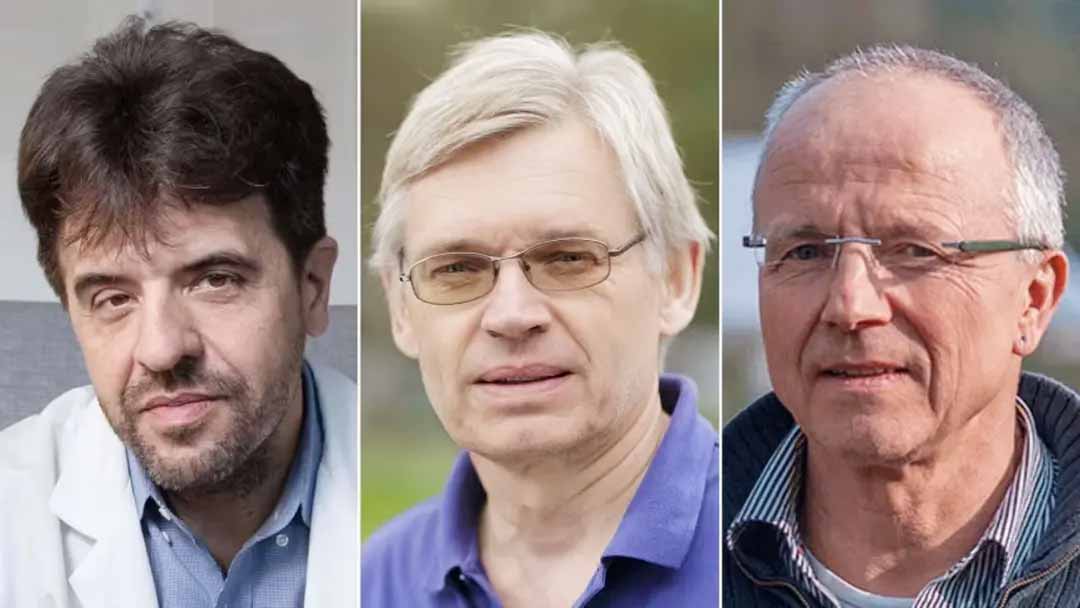
Three scientists Karl Deisseroth, Peter Hegemann and Georg Nagel—have been awarded the 2026 Nobel Prize in Physiology or Medicine for groundbreaking research into the human brain and the use of light to control nerve cells.
The Nobel Assembly at the Karolinska Institutet in Sweden announced the winners on Monday, recognising their work on channelrhodopsins, a group of light-sensitive proteins that has opened new avenues in neuroscience.
Hegemann and Nagel discovered and characterised channelrhodopsins, while Deisseroth played a key role in developing the technology that uses these proteins as light-controlled switches in neurons.
According to the Nobel Committee, their work has enabled scientists to use light to control the activity of cells, particularly nerve cells. The breakthrough has transformed research into how the brain functions and has created new possibilities for studying and potentially treating neurological and other diseases.
The committee said the discoveries have provided scientists with powerful tools to investigate the structure and functions of the brain, including mechanisms related to memory and behaviour.
Channelrhodopsins can be introduced into specific cells and activated by light, allowing researchers to control neural activity with a high degree of precision. This approach, known as optogenetics, has become an important tool in modern neuroscience.
The Nobel Committee said the researchers' discoveries laid the foundation for a new era in neuroscience by making it possible to manipulate the activity of individual nerve cells and study their roles in brain functions.
The Nobel Prize in Physiology or Medicine is among the most prestigious honours in medical science. It recognises discoveries that have significantly advanced understanding of diseases, prevention or treatment.
Since the first Nobel Prize in Physiology or Medicine was awarded in 1901, the prize has been awarded 116 times.
Canadian scientist Frederick Grant Banting was the youngest recipient in the category. He was 31 when he received the 1923 Nobel Prize for the discovery of insulin.
Peyton Rous was the oldest recipient, receiving the 1966 Nobel Prize at the age of 87 for discoveries concerning tumour-inducing viruses.