Bangladesh is among six countries covered by a new initiative aimed at expanding access to climate adaptation finance across climate-vulnerable communities in South and Southeast Asia and the Pacific.
The initiative, known as ICCAP, is funded by the German government’s International Climate Initiative (IKI) and the Federal Ministry for Economic Cooperation and Development (BMZ).
The other participating countries are Bhutan, Cambodia, Fiji, Laos and Nepal.
According to project representatives, an international consortium is working to channel climate adaptation funding to local communities and promote investment in climate-resilient development.
As part of the initiative, the Association of Food and Agricultural Credit Associations (APRACA) is working with policymakers to create an enabling environment for climate-friendly investment. Meanwhile, the Stockholm Environment Institute (SEI) is engaging with communities on the ground to assess local needs and priorities. The consortium is expected to formally begin its activities by the end of 2027. By 2029, the initiative aims to directly benefit 14,000 people and indirectly reach at least two million people through climate adaptation interventions.
Efforts are currently underway to connect local stakeholders with domestic and international investors to accelerate implementation.
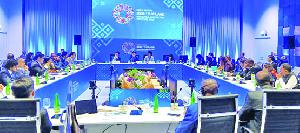
On the sidelines of the IMF and World Bank annual meetings in Bangkok, DrEnayetKarim, editor of The Daily Industry, discussed financing for environmental and climate-related programmes in Bangladesh with an ICAP representative.
The discussion focused on the issue of climate and environmental programme financing in Bangladesh, reflecting the importance of connecting international initiatives with the country’s investment needs.
As the initiative moves towards its planned launch, further details about country-specific activities, financing arrangements and implementation mechanisms will be important in determining how Bangladesh and the other participating countries can benefit.
For Bangladesh, the key challenge will be to translate international cooperation and investment opportunities into practical adaptation measures that reach vulnerable communities and deliver measurable benefits.
The programme’s progress towards its 2029 targets will also provide an indication of how effectively international partnerships can help expand climate adaptation finance and strengthen resilience across the participating countries.