The World Bank has urged developing countries to focus on building small artificial intelligence (AI) models tailored to local needs, saying the technology could accelerate economic development and expand access to digital services.
According to a report by British newspaper The Guardian, these smaller models can operate directly on smartphones, even with slow internet connections, making AI more accessible in areas with limited digital infrastructure.
While major Silicon Valley technology companies are increasingly developing sophisticated AI products for consumers, World Bank Chief Knowledge Officer Pascal Donohoe said AI could significantly accelerate growth in emerging economies if adapted to local requirements.
Small AI refers to specialised models trained on smaller, targeted datasets to perform specific tasks efficiently.
“We believe that the transformation in economic development that might otherwise have taken centuries in the developing countries and among the partners we work with could now happen in just decades through the use of this technology,” Donohoe said.
He added that small AI could operate in local environments, function with weak internet connectivity, support local languages and remain accessible through ordinary mobile phones.
Donohoe, Ireland's former finance minister, highlighted the World Bank's AgriConnect initiative in India, where farmers seek information about soil nutrients and chemical composition in their own languages.
He said it was impossible to provide every small-scale farmer with direct access to agricultural scientists and specialists, making AI-powered services on mobile phones a practical alternative for delivering essential information.
According to the World Bank, affordable, energy-efficient AI solutions designed for local languages could create new opportunities for emerging economies and countries across the Global South.
The institution also emphasised the need for cooperation among the World Bank, national governments and the private sector to develop and expand specialised AI-based services.
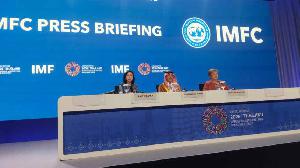
The impact of AI on employment and global economic growth has emerged as a major topic at the annual meetings of the World Bank and the International Monetary Fund (IMF) in Bangkok, Thailand, this week.
Speaking at a panel discussion on Monday, IMF Managing Director Kristalina Georgieva urged world leaders to establish the basic conditions necessary for the effective adoption of AI.
She said reliable electricity, digital infrastructure and public acceptance were essential for the technology to deliver widespread benefits. Governments must also ensure cybersecurity and protect people against harmful uses of AI, she added.
“If we work hard to ensure these fundamentals, the spread of AI can become democratic, just as mobile phones have reached people across the world,” Georgieva said.
A World Bank *World Development Report* published in August also highlighted AI's considerable potential while warning that infrastructure gaps could prevent many communities from benefiting.
The report noted that nearly one-third of schools in rural areas of sub-Saharan Africa lack electricity, while more than two-thirds do not have reliable internet access.
Overcoming these basic barriers, particularly limited electricity and inadequate digital infrastructure, remains a major challenge to ensuring that the benefits of AI reach people across developing countries.