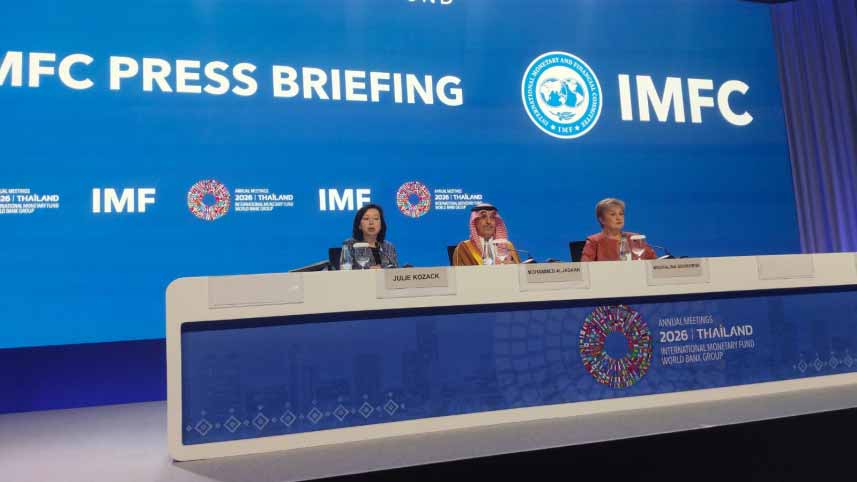
The IMF and World Bank's 2026 Annual Meetings ended with few concrete answers for developing countries grappling with mounting debt, geopolitical conflicts, rising inflation and uncertainty surrounding artificial intelligence (AI).
The meetings, held in Bangkok last week, highlighted how developing economies continue to bear the consequences of decisions made by wealthier nations, including higher borrowing costs, increased debt repayments and the risk of falling further behind in the global AI-driven economy.
Despite these growing challenges, the two global lenders largely reiterated their traditional recommendations, urging countries to reduce fiscal deficits and accelerate economic reforms to attract private investment.
International Monetary Fund (IMF) Managing Director Kristalina Georgieva acknowledged that advanced economies were among the biggest contributors to global fiscal imbalances. She noted that developing countries had reduced their debt levels in recent years, but rising bond yields in other economies had pushed up their borrowing costs.
Average debt-servicing payments in developing countries have more than doubled over the past decade, reaching 14% of government revenue, Georgieva said. The rising burden is leaving governments with fewer resources for education, healthcare and other essential public services.
Speaking during a panel discussion on Saturday, Georgieva warned that major uncertainties remained, particularly regarding AI and its potential economic consequences.
"We are in a place where we have many more questions than we have answers. And my alert to everybody is: Do not fall for the guys that pretend they have the answers. They are tricking you," she said.
Josh Lipsky, vice president of international economics at the Atlantic Council, said the meetings had failed to deliver meaningful guidance or practical assistance to countries facing mounting economic risks.
He argued that discussions about development had become more difficult because advanced economies themselves were struggling with fiscal pressures and political challenges, while development aid was losing priority.
Mauricio Cardenas, Colombia's former finance minister and a research scholar at Columbia University's School of International and Public Affairs, said policymakers were increasingly concerned about the possibility of a major economic disruption but lacked a clear strategy to navigate the uncertainty.
"The IMF and World Bank are not particularly well prepared for this new phase," Cardenas said, adding that although the institutions were bringing in AI experts, they had yet to provide specific and practical advice on preparing for the technology's uncertain consequences.
Geopolitical divisions also overshadowed the meetings, reflecting tensions that have complicated international cooperation since Russia's invasion of Ukraine in 2022.
In Bangkok, nearly half the delegates at an IMF steering committee meeting walked out when Russia's finance minister addressed the gathering, underscoring the difficulties of building consensus on global economic challenges.
Regional instability also affected the event. Houthi attacks on Riyadh airport delayed the arrival of Saudi Finance Minister Mohammed Al-Jadaan, who chairs the committee. He had to travel overland to Qatar to catch a flight to Bangkok.
Meanwhile, Thailand's own circumstances highlighted the vulnerability of developing economies to climate-related disasters. Bangkok remained partly flooded following September's inundation, which caused nearly $200 million in damage to the country's industrial sector.
The meetings therefore ended with developing countries facing a familiar dilemma: rising financial pressures and growing global uncertainty, but limited practical guidance from the international institutions expected to help them navigate these challenges.