Bangladesh is once again facing growing pressure to reform its economy as it moves toward a new financing programme with the International Monetary Fund (IMF).
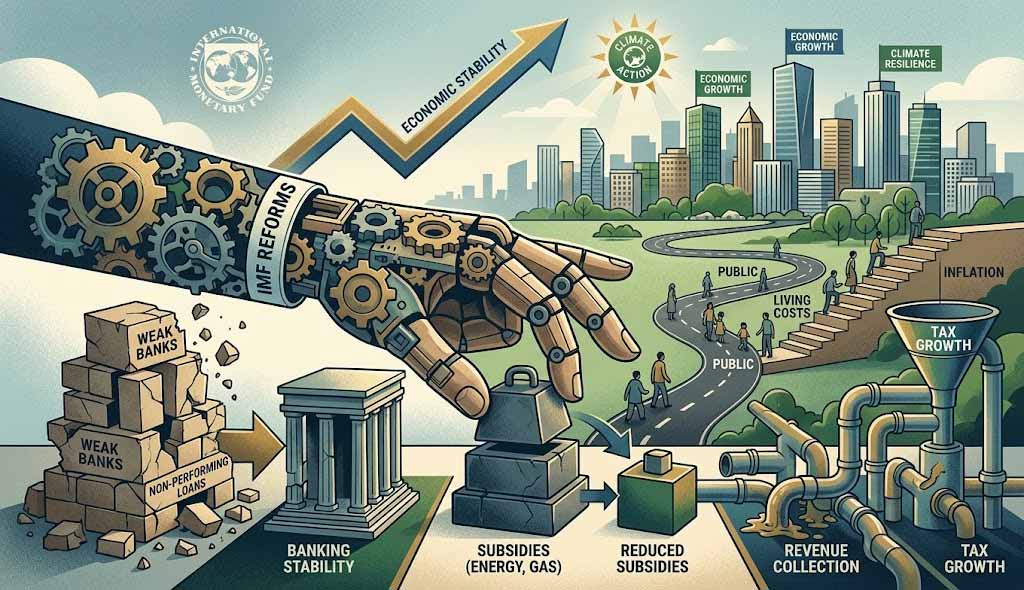
Alongside discussions on new loans, key reform areas include strengthening the banking sector, increasing tax revenue, reducing subsidies, making the exchange rate more market-oriented and improving climate resilience.
The IMF has been stressing reforms to address weaknesses in the banking system, rising non-performing loans, low revenue collection and the growing burden of government subsidies.
Discussions between Bangladesh and the IMF in July reportedly covered a broad framework for a new programme, with reforms expected to be implemented in phases.
The government is also seeking nearly $2 billion in additional budget support, alongside the remaining funds under the existing programme. Progress on financial-sector reforms, subsidy reduction and climate resilience could be important for further loan disbursements.
The key challenge for Bangladesh will be to restore economic stability while ensuring that the cost of reforms does not place excessive pressure on ordinary people’s living expenses.