Bangladesh’s economic growth may slow to 3.2% in the current fiscal year, while average inflation could climb to 10.9%, raising fresh concerns about household purchasing power, private investment and the country’s economic recovery, according to the International Monetary Fund’s (IMF) October 2026 World Economic Outlook.
The latest projection indicates a deterioration in the country’s economic outlook compared with the previous fiscal year, when growth is estimated to have reached 3.6% and average inflation stood at 8.7% in FY26.
The IMF released its latest assessment during the ongoing annual meetings of the World Bank and the IMF.
The forecast suggests that Bangladesh will continue to face significant macroeconomic challenges in FY27, with persistent price pressures and subdued economic activity threatening business confidence and employment generation.
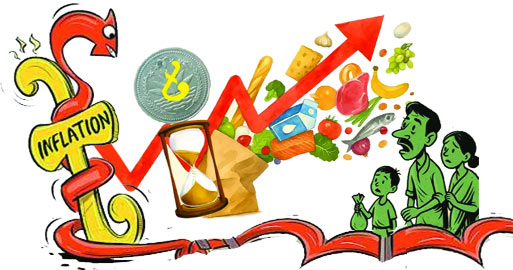
The inflation projection of 10.9% is particularly concerning for consumers, as prolonged increases in the prices of essential goods and services could further erode real incomes and reduce household spending capacity.
According to the Bangladesh Bureau of Statistics (BBS), the country’s overall inflation rate stood at 8.34% in September 2026, up from 8.26% in August. The IMF’s annual average projection suggests that inflationary pressure could remain elevated throughout the current fiscal year.
Investment and employment face fresh risks:Slower economic growth could constrain private investment, industrial production and job creation, particularly if businesses remain reluctant to expand amid high operating costs, energy shortages and persistent uncertainty.
Economists have repeatedly warned that weak private investment can undermine Bangladesh’s productive capacity and limit the creation of new employment opportunities. When businesses postpone expansion plans, the effects can spread across manufacturing, trade, construction and services. The World Bank has also highlighted the country’s weakening growth momentum, subdued private investment and employment, disruptions to industrial production caused by gas and electricity shortages, and mounting vulnerabilities in the banking sector.
Its October 2026 Bangladesh Development Update, titled Make Subsidies and Social Protection Work Better for the Poor, identifies energy security, banking-sector stability, governance and revenue mobilisation as important areas for reform.
The World Bank has also pointed to rising non-performing loans and capital shortfalls in the banking sector as challenges that could constrain the flow of credit to productive businesses.
For Bangladesh, where export-oriented industries and domestic enterprises depend on reliable energy supplies and access to finance, addressing these structural weaknesses will be essential to restoring investor confidence.
Low- and middle-income households under pressure:Persistent inflation is likely to place a disproportionate burden on low- and middle-income households, whose budgets are heavily concentrated on food, housing, transport, healthcare and other essential expenses.
When prices rise faster than wages and household earnings, consumers lose purchasing power even if their nominal incomes remain unchanged. This can reduce demand for non-essential goods and services, affecting small businesses and domestic market-oriented industries.
Higher living costs can also force families to cut spending on education, healthcare and other essential needs, potentially worsening economic inequality.
The IMF’s projections therefore raise concerns not only about headline economic indicators but also about the distribution of income and the living standards of ordinary citizens.
Subsidies and social protection need better targeting:The World Bank has warned that a substantial portion of government spending on social protection, electricity and energy, and fertiliser subsidies does not necessarily reach the poorest households.
According to its assessment, some relatively affluent families benefit from existing support programmes, while many of the poorest remain outside the social protection system.
The institution has recommended gradually reducing broad-based subsidies while expanding targeted assistance for poor and vulnerable people.
Better targeting could help the government use limited fiscal resources more effectively, particularly as it faces competing demands for social spending, infrastructure development and economic stabilisation.
However, reforms would need to be carefully designed to prevent reductions in subsidies from placing additional pressure on vulnerable households before adequate alternative support becomes available.
Global economic outlook remains uncertain: The IMF projected global economic growth at 3.1% in 2026, rising to 3.4% in 2027. Global average inflation is expected to decline from 4.7% in 2026 to 4.1% in 2027. The contrast between the projected global inflation trend and Bangladesh’s domestic outlook underscores the country’s continuing struggle to bring price increases under control.
For Bangladesh, restoring macroeconomic stability will require coordinated action to contain inflation, strengthen the banking sector, improve energy security, increase revenue collection and encourage productive private investment. Economists say the effectiveness of policy implementation will be crucial to determining whether the country can reverse its weakening growth trajectory while protecting the purchasing power of households.
The latest IMF forecast highlights the scale of the challenge facing policymakers in FY27: reviving economic activity without allowing persistent inflation to further undermine living standards, business confidence and the prospects for sustainable growth.