Bangladesh has called for easier access to nature conservation financing, longer repayment periods and low-interest refinancing, warning that mounting debt burdens and borrowing costs are squeezing developing countries’ ability to protect biodiversity.
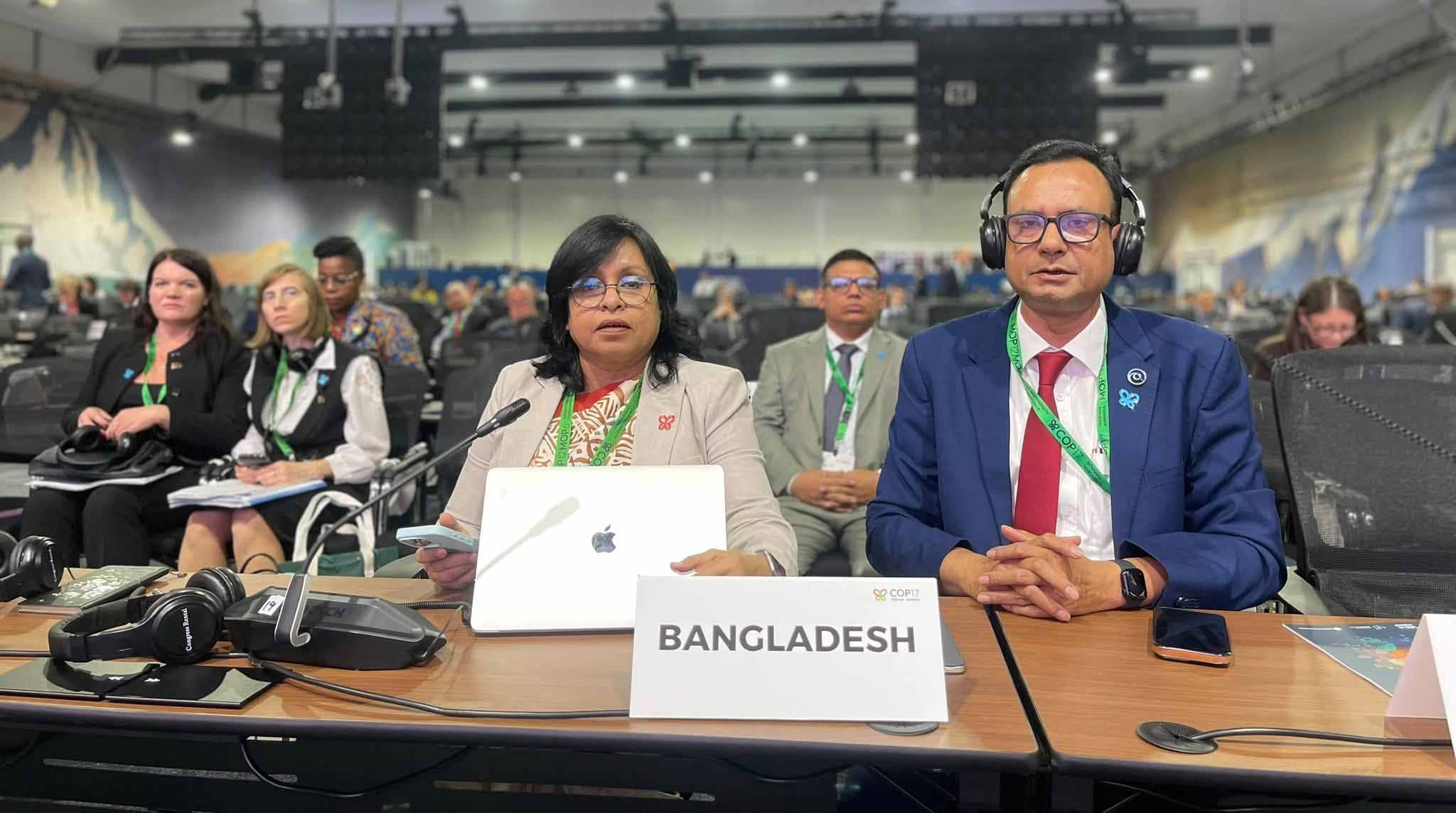
The country presented its position at a high-level session of the UN Biodiversity Conference, COP17, in Yerevan, Armenia, on Tuesday. AKM Sohel, additional secretary of the Economic Relations Division (ERD) under the Ministry of Finance, made the remarks during a ministerial dialogue titled “Financing Initiatives for Nature”.
Valerie Hickey, the World Bank Group’s director for environment, chaired the session, which was also attended by Fahmida Khanam, acting secretary of the Ministry of Environment, Forest and Climate Change.
“Nature is economic infrastructure for us,” Sohel said, calling for innovative financing mechanisms to support sustainable development and biodiversity conservation.
He said rising energy prices, debt distress and higher borrowing costs were weakening the investment capacity of climate-vulnerable countries. Easing financing terms, he added, would create more fiscal space for governments to invest in sustainable development and protect ecosystems.
“Nature loss is a risk to macroeconomics and public finances. It must be addressed accordingly,” he said.
Welcoming the World Bank’s guarantee mechanisms for lending, Sohel expressed hope that they would help reduce borrowing costs for the private sector.
However, he stressed that highlighting risks alone would not be enough to attract investment. Countries also need well-designed projects, credible implementation plans and the capacity to use funds effectively.
He called for disbursement mechanisms linked to the fulfilment of pre-agreed conditions and for climate threats to be more accurately reflected in financial risk assessment models.
Emphasising domestic reforms alongside international support, Sohel outlined five priorities: national planning, budget allocation and expenditure monitoring, valuation of ecosystem services, financial risk assessment, and improved access to finance and technology.
He said the finance ministry should be involved from the outset in preparing the National Biodiversity Strategy and Action Plan. Other ministries should also incorporate nature conservation targets into their respective financial plans.
He further emphasised the need to identify and monitor biodiversity-related allocations and expenditures in the national budget, suggesting that Bangladesh could draw on its experience of tracking climate expenditure across 25 ministries.
According to Sohel, the economic value of ecosystem services, including protection against cyclones and support for livelihoods, should be reflected in national accounts.
A study cited in Bangladesh’s statement estimated that the Sundarbans helps avert potential storm-related damage worth between $98 million and $132 million annually.
At COP17, Astrid Schomaker, executive secretary of the UN Convention on Biological Diversity, highlighted the stark imbalance between financing for nature conservation and funding for activities that damage nature.
She compared the disparity to hiring one person to rebuild a house while paying 30 others to demolish it.
Schomaker stressed the need to strengthen accountability, align policies and financing, and accelerate implementation of the Kunming-Montreal Global Biodiversity Framework, which sets 23 targets for achievement by 2030.
She urged countries to build on national reports, scientific evidence and the findings of the first global review to intensify action. Public budgets, private investment and financial incentives must also be aligned with biodiversity conservation goals, she said.
For Bangladesh, nature loss is closely linked to the livelihoods of people dependent on agriculture and forests.
According to the country's statement, agriculture accounts for around 11% of gross domestic product and employs nearly 40% of the workforce. At least 19 million people depend on forests for their livelihoods.
Sohel said Bangladesh ranks second only to China in terms of the population exposed to climate-related risks.
The statement said Cyclone Remal affected 4.6 million people in May 2024, causing more than $570 million in damage. Floods in August that year affected another 5.8 million people, with losses exceeding $1.1 billion.
Sohel also highlighted Bangladesh's broader climate financing needs, saying the pressure to meet these requirements further limits the government's ability to allocate public funds for ecosystem conservation.
According to the statement, Bangladesh's climate budget for the 2026-27 fiscal year stands at around $4.2 billion, of which 75.2% is allocated to adaptation. However, implementing the country's National Adaptation Plan requires approximately $8.5 billion annually.
Bangladesh called for support from multilateral development banks to implement integrated programmes and faster access to funding from the Green Climate Fund.
The statement also acknowledged the need to improve domestic implementation capacity. The rate of development programme implementation fell from 92.7% in the 2021-22 fiscal year to 68% in 2024-25.
Sohel said accessible financing and technology were essential to fulfil the country's commitments to climate action and biodiversity protection. Funding mechanisms were also needed to help address climate-related and other sudden crises.
Calling for new debt arrangements to expand fiscal space for sustainable development, he warned that without such changes, Bangladesh's goals of conserving biodiversity and protecting natural resources would remain out of reach.