In a notable move to defuse escalating trade tensions and realign Bangladesh’s trade policy with global partners, the interim government has announced significant reductions in tariffs on a broad range of goods imported from the United States. The initiative, unveiled during the budget presentation for fiscal year 2025-26 by Financial Advisor Dr. Salehuddin Ahmed, is seen as a calculated effort to negotiate a broader trade understanding with the U.S. and counteract the economic impact of recent tariff hikes announced by U.S. President Donald Trump.
The measures, which include the full withdrawal of import duties on 110 items and a reduction in tariffs on 65 others, come in direct response to President Trump’s aggressive trade policy rolled out earlier this April. Trump’s move-raising tariffs on Bangladeshi products to as high as 37%-triggered alarm in Dhaka’s economic and diplomatic circles. In a partial reprieve, the U.S. president temporarily suspended counter-tariffs for 90 days, keeping a minimum 10% tariff in place, thereby opening a window for negotiation.
Tariff Reductions: A Strategic Concession: During his budget speech on Monday, Dr. Salehuddin Ahmed confirmed that the government is using this 90-day moratorium as a critical window to renegotiate Bangladesh’s tariff standing with the U.S.”As part of a phased reduction of import duties and a strategic preparation for trade dialogues with the United States, we have proposed to withdraw import duties entirely on 110 U.S. products and reduce duties on another 65,” said the Financial Advisor.
Additionally, the government has proposed to completely remove supplementary duties on 9 U.S. products and reduce such duties on 442 items. These sweeping changes signal an intent to not only repair strained trade ties with Washington but also stimulate the domestic economy by lowering input costs and consumer prices.
Dr. Ahmed emphasized that these reforms would have a “dual impact”-they would reduce the overall tax burden on the public while minimizing the anti-export bias that has historically hindered the competitiveness of Bangladeshi exporters. “Reducing protectionist policies on imports aligns our economy more with the principles of open trade and global market integration,” he added.
Backdrop: Trump’s Tariff Offensive: The context of this dramatic policy shift lies in the unexpected announcement by President Trump in early April, when he introduced a sweeping set of tariffs aimed at a group of developing nations, including Bangladesh. Trump justified the measures as necessary to “rebalance unfair trade advantages” that, according to his administration, had benefited some countries at the expense of American manufacturers.
The decision particularly stung for Bangladesh, a country that has long relied on tariff preferences and low export barriers to maintain its competitive edge in textiles, garments, leather, and agro-based products. The new 37% tariff on Bangladeshi exports significantly threatens the nation’s largest export markets, especially for garments-raising fears of job losses, foreign exchange shortages, and slower GDP growth.However, Trump’s temporary suspension of the most severe tariff levels-allowing a 90-day pause for negotiation-has given affected countries a narrow but critical opportunity to reshape their trade policies.
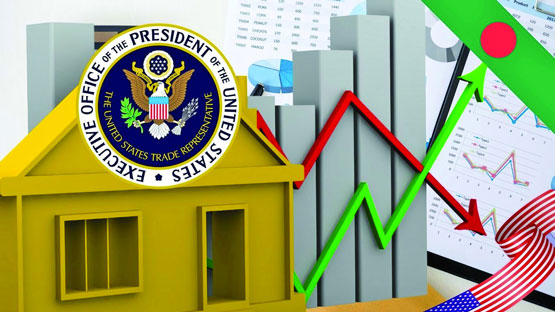
Trade Diplomacy in Motion: Sources within the Ministry of Commerce and Bangladesh Trade and Tariff Commission confirm that negotiations with the U.S. Trade Representative (USTR) began in mid-May. The goal: to achieve a bilateral or multilateral agreement that would keep Bangladeshi products competitively priced in the U.S. market.
“The tariff reductions we’ve proposed are not one-sided. They’re part of a larger negotiation strategy,” said a senior official at the Ministry of Commerce, requesting anonymity. “The U.S. is asking for market access, and we’re trying to preserve our own. If we show good faith by reducing duties on some American goods, we might win exemptions or favorable terms on our exports.”Among the items receiving full or partial duty relief are likely to be U.S.-origin electronics, industrial machinery, pharmaceuticals, agricultural goods (like soybeans and wheat), and certain types of raw materials critical for manufacturing.
Rationalizing the Tariff Regime: Beyond Just the U.S.: The Financial Advisor also announced broader reforms in the tariff structure beyond those linked specifically to the U.S. In a bid to modernize Bangladesh’s overall trade policy-particularly in anticipation of its graduation from Least Developed Country (LDC) status in 2026-Dr. Ahmed proposed the rationalization of minimum and tariff prices across the board.This includes the withdrawal of all existing “tariff prices” (reference values used for duty calculations) and the removal of minimum prices for 84 products. In contrast, the minimum price for 23 items has been increased to reflect market realities and reduce under-invoicing.
“These reforms mark significant progress toward full compliance with World Trade Organization (WTO) principles and the trade standards of developed economies,” noted Dr. Rehman Sobhan, chairman of the Centre for Policy Dialogue (CPD). “They also increase transparency and reduce room for bureaucratic manipulation or corruption.”
Mixed Reactions from Industry and Policy Circles: While the government has projected the changes as pro-trade and reform-oriented, reactions from stakeholders have been mixed. Exporters, particularly in the readymade garment sector, have welcomed the move as a necessary compromise to preserve access to U.S. markets.”This is a pragmatic step,” said Rubana Huq, former president of the Bangladesh Garment Manufacturers and Exporters Association (BGMEA). “If we don’t respond strategically, we risk losing billions in export orders. The U.S. is our single largest export destination-we can’t afford to lose that ground.”
However, some import-competing sectors, such as local electronics manufacturers and pharmaceutical companies, expressed concerns that reduced tariffs on U.S. goods could lead to a surge in cheaper imports and hurt domestic producers.
“Opening up too quickly without adequate safeguards could lead to market flooding,” warned Mizanur Rahman, Managing Director of a local electronics firm. “We need a calibrated approach, not just a reactive one.”
A New Chapter in U.S.-Bangladesh Trade: The tariff reduction initiative may also mark a turning point in how Bangladesh positions itself globally. As the country prepares to exit its LDC status, it can no longer rely on preferential trade treatment and must instead engage in reciprocal agreements and advanced trade diplomacy.The interim government’s approach under Dr. Salehuddin Ahmed suggests a willingness to modernize Bangladesh’s trade regime, even under politically sensitive conditions.
“This budget signals a pivot,” said Dr. Mustafizur Rahman, a distinguished fellow at CPD. “It’s about making difficult but necessary choices. We are now moving from dependency to negotiation, from passive beneficiary to active trade partner.”
Risks and Rewards Ahead: The road ahead remains uncertain. Much will depend on how the U.S. responds during the remaining weeks of the 90-day suspension window. If Bangladesh’s concessions are deemed sufficient, they could pave the way for reduced tariffs or even a partial restoration of earlier trade preferences.
But if negotiations fail, the consequences could be severe, especially for Bangladesh’s vulnerable export-driven economy.In the meantime, Dr. Salehuddin Ahmed’s budget has laid the groundwork for a more mature, responsive, and globally integrated trade strategy-one that aims to balance national interests with international expectations.