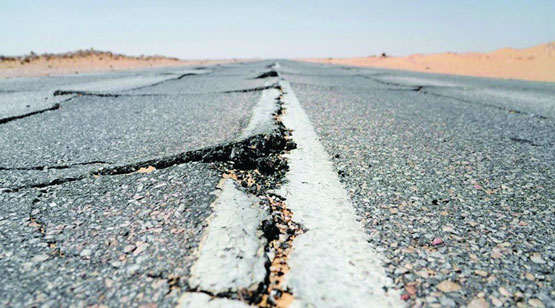
Bangladesh’s national highways, constructed at a tremendous cost, are increasingly becoming a source of frustration and hardship for passengers due to widespread damage, potholes, and uneven surfaces. While these highways are intended to facilitate smooth transport of people and goods across the country, the reality on the ground tells a very different story, according to sources within the Roads and Highways Department (RHD).
Currently, Bangladesh has an extensive network of national highways totaling approximately 4,294 kilometers. Among them, major routes such as Dhaka-Chattogram, Dhaka-Mymensingh, Faridpur-Barishal-Kuakata, Dhaka-Tangail, and Dhaka-Sylhet are plagued by deep potholes and damaged pavement, causing significant difficulties for commuters. This degradation not only disrupts daily travel but also hampers the transportation of goods, impacting the broader economy.
Sources within the RHD told The Daily Industry that slow-paced repair and maintenance work has exacerbated the condition of the roads. “During the rainy season, permanent road repairs are generally not undertaken, which leads to the proliferation of potholes. This year’s prolonged monsoon has further worsened the situation,” said one RHD official.
Dhaka-Chattogram Highway: A Case of Persistent Damage: The Dhaka-Chattogram highway, considered the economic lifeline of Bangladesh, has suffered extensive wear and tear, particularly near the Meghna Bridge. Small and large potholes have developed on both ends of the bridge, and in front of the Meghna toll plaza, two lanes have deteriorated with asphalt rising in certain areas, creating significant gaps. Vehicles entering the toll lanes often experience severe congestion due to these damaged sections.
Other problematic areas along this highway include Padua Bazar in Comilla, Bishwaroad, Nandunpur, Mostafapur, Chashapara, Dhanaitari, Suyagazi, Miyabazar, Chowddogram, Feni, Mirsharai, and Sitakunda, where travelers encounter a mix of large and small potholes. In Narayanganj, the highway has been in poor condition for over a year. Even a slight increase in traffic volume leads to severe traffic jams between Narayanganj and the Meghna Bridge, adding to travel time and causing frustration among commuters.
The Dhaka-Chattogram highway, which was upgraded to a four-lane road in July 2016 at a cost of Tk 3,817 crore, has also seen nearly Tk 800 crore spent on maintenance by the RHD from 2019 to 2025. Yet, despite these investments, passengers continue to face hardships due to damaged and uneven surfaces.
Dhaka-Tangail Highway: Newly Constructed but Already Damaged: The Dhaka-Tangail highway, officially inaugurated in 2023, spans 70 kilometers and was constructed at a cost of Tk 6,168 crore. However, within just two years of its opening, at least 25 kilometers of this highway have developed large potholes, and over five kilometers have sunk significantly. Vehicles using this road are unable to maintain normal speeds, and accidents have risen due to the damaged conditions.
Similarly, the Faridpur-Barishal-Kuakata highway has also deteriorated, particularly the 20-kilometer stretch from the Rajbari Road junction in Faridpur Sadar to the broken sections. The asphalt has risen, cracks have widened into potholes, and multiple sections are broken, creating risks for both passenger and freight transport.
Ongoing development works are taking place on the Dhaka-Sylhet and Tangail-Rangpur highways. Yet, slow progress in these projects has led to traffic congestion and extended travel times. Even the Dhaka-Mymensingh and Chattogram-Cox’s Bazar highways are dotted with multiple potholes, frustrating passengers and truck operators alike.
National Highway Network and Overall Condition: According to RHD records, Bangladesh has a total road network of 22,719 kilometers, including national, regional, and district roads. Out of these, 1,474 kilometers of highways are currently in poor condition. The breakdown of deteriorated roads across divisions is as follows: Rajshahi 229 km, Rangpur 194 km, Chattogram 186 km, Comilla 167 km, Mymensingh 150 km, Sylhet 148 km, Dhaka 143 km, Barishal 119 km, Gopalganj 70 km, and Khulna 68 km. The RHD faces a considerable challenge in maintaining more than 4,000 kilometers of national highway networks in good condition at all times. Experts argue that despite heavy investments, the quality of construction and materials used during highway development has not always met required standards, leading to early deterioration.
Quality Concerns and Oversight Failures: Communication and transportation experts have raised serious concerns regarding the construction quality of Bangladesh’s national highways. According to these experts, each national highway in Bangladesh was built at four to five times the cost compared to similar roads in neighboring countries. However, the oversight of construction quality remains questionable.
“Low-quality materials and substandard construction practices have caused highways to deteriorate well before their designed lifespan,” said one transportation expert. “It is the primary responsibility of the RHD to supervise construction, development, and maintenance work. If a road designed for a 20-year lifespan deteriorates in just one year, those responsible must be held accountable.”
Such early degradation not only increases travel hazards but also undermines public trust in the authorities responsible for infrastructure development. Frequent accidents, vehicle damage, and extended travel times have become routine experiences for travelers on these highways.
Steps Taken by the Roads and Highways Department: Speaking to The Daily Industry, Chief Engineer of RHD Syed Moinul Hasan said that maintenance work is ongoing on several highways under the annual development program. “We are also introducing new programs to accelerate road maintenance,” he noted. Hasan further added that the ongoing monsoon season has disrupted repair works. “This year, rainfall began in April and has continued, which prevents permanent repairs during the rainy season. However, RHD engineers are continuously working to keep the road network functional,” he explained.
The RHD emphasizes that, despite challenging weather conditions and resource constraints, engineers and workers across the country are committed to maintaining and repairing the highways to the best possible standard.
Passenger Experience and Economic Impact: For daily commuters and long-distance travelers, navigating these damaged highways has become a trial of patience and endurance. Travel times have increased substantially, vehicle maintenance costs have risen, and the risk of accidents has escalated. Moreover, the inefficiency in highway transport has direct implications for the economy, particularly in sectors dependent on timely movement of goods, including agriculture, industry, and trade.
Transport operators also report significant losses due to slower traffic and frequent breakdowns. The Daily Industry spoke with a truck driver who regularly travels the Dhaka-Chattogram route. “It takes much longer to complete the journey now, and the constant potholes damage tires and suspension systems. It is stressful for drivers and costly for businesses,” he said.
Bangladesh’s national highways, despite massive investments and strategic importance, are suffering from accelerated deterioration. Experts, commuters, and RHD officials alike point to slow repair work, poor-quality construction, and prolonged monsoon seasons as the primary reasons. While the RHD continues maintenance efforts and plans to accelerate repair programs, the scale of the problem indicates that a more comprehensive strategy, including stricter quality control during construction and timely maintenance, is essential to restore the highways’ intended function.
Passengers, transporters, and economists agree that unless immediate and effective interventions are implemented, the country’s economic lifelines may remain compromised, prolonging travel hardships and affecting the broader economy.