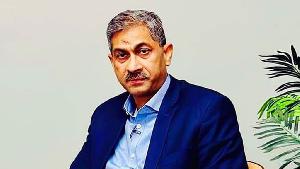
The government has set an ambitious target of transforming Bangladesh into a $1 trillion economy by 2034, Finance Minister Amir Khasru Mahmud Chowdhury told parliament on Monday, outlining a broad economic roadmap focused on investment, employment generation, and structural reforms.
The announcement came during a question-and-answer session in the Jatiya Sangsad, presided over by Deputy Speaker Kaisar Kamal, where lawmakers raised concerns over economic performance, income levels, and future growth strategies.
Per Capita Income Reaches $2,769: Citing the latest data from the Bangladesh Bureau of Statistics, the finance minister said Bangladesh’s per capita income stood at $2,769 in the 2024–25 fiscal year.
He emphasized that raising per capita income remains a central priority of the government, which is working on multiple fronts including employment creation, investment expansion, export growth, remittance inflows, and skills development. “The government is simultaneously focusing on all key drivers of growth to increase people’s income and ensure macroeconomic stability,” he told the House.
Roadmap to a Trillion-Dollar Economy: According to Amir Khasru Mahmud Chowdhury, achieving the trillion-dollar milestone by 2034 will require a comprehensive and coordinated strategy. The government has already formulated action plans that prioritize: Boosting domestic and foreign investment, Expanding employment opportunities, Promoting economic democratization, developing the creative economy, leveraging the sports economy.
Economists say these emerging sectors—particularly the creative and sports economies—represent new growth frontiers that could diversify Bangladesh’s traditionally export-driven economy. However, they caution that achieving a trillion-dollar GDP will require sustained high growth rates, improved productivity, and significant institutional reforms.
Focus on Jobs, Investment, and Stability: Responding to a question from SM Jahangir Hossain of the Bangladesh Nationalist Party, the finance minister highlighted that the government is placing equal importance on job creation, investment, production, and exports.
He also stressed the importance of remittances and social protection programs in strengthening household incomes and reducing economic vulnerability. “The government is working to ensure that growth translates into real benefits for the people through employment, income generation, and social safety nets,” he added.
Energy Security Amid Global Tensions: In response to another question from BNP lawmaker Zainal Abedin, the finance minister addressed concerns over energy security in the context of ongoing geopolitical tensions in the Middle East. He said the government has taken steps to diversify energy sources by increasing imports of fuel oil and liquefied natural gas (LNG) from alternative suppliers.
With global energy prices remaining volatile, the government is also seeking budget support from development partners and implementing various energy-saving measures to manage fiscal pressure.
Challenges Facing the Economy: Despite the ambitious targets, the finance minister acknowledged that the government inherited a challenging economic environment marked by multiple vulnerabilities.
These include: Global economic instability, Rising commodity prices, pressure on foreign exchange transactions, Weaknesses in the banking sector.
Economic disruptions created in previous years: He noted that these challenges have complicated the government’s efforts but reaffirmed its commitment to strengthening the economy.
Reform Measures Underway: Since taking office, the government has prioritized a series of reforms aimed at restoring stability and confidence in the economy.
According to Amir Khasru Mahmud Chowdhury, key focus areas include: Strengthening the economic foundation, Easing public suffering amid inflationary pressures, Increasing investment and employment, Restoring discipline in the banking sector, Enhancing transparency and accountability in public financial management. “These measures are essential to build a resilient and dynamic economy capable of achieving long-term growth targets,” he told parliament.
Analysts Urge Realistic Implementation: While the trillion-dollar goal has been welcomed as a bold vision, economists and policy analysts quoted by The Daily Industry stressed that its success will depend on effective implementation.
They pointed out that Bangladesh must address structural bottlenecks such as: financial sector governance, Limited private sector investment, Infrastructure gaps, Skills mismatch in the labor market. “Setting targets is important, but achieving them requires consistent policy execution and institutional capacity,” an economist told The Daily Industry.
Investment and Private Sector Role: A key pillar of the government’s strategy is to attract both domestic and foreign investment. Business leaders have repeatedly called for reducing regulatory hurdles, ensuring policy consistency, and improving ease of doing business to unlock investment potential.
The finance minister indicated that the government is working to remove investment bottlenecks and create a more business-friendly environment.
Outlook: Ambition Meets Reality: Bangladesh’s journey toward a $1 trillion economy will depend on maintaining strong growth momentum over the next decade.
Experts estimate that the country will need to sustain annual GDP growth of 7–8 percent or higher, alongside improvements in productivity and export diversification. At the same time, managing inflation, stabilizing the banking sector, and ensuring energy security will remain critical challenges.
The government’s target of achieving a $1 trillion economy by 2034 reflects its long-term vision for Bangladesh’s economic transformation. As outlined by Amir Khasru Mahmud Chowdhury in parliament, the strategy hinges on investment, employment, innovation, and structural reforms.
However, as The Daily Industry observes, translating this vision into reality will require not only ambitious planning but also sustained policy discipline, institutional reforms, and strong governance to navigate both domestic and global challenges. If successfully implemented, the roadmap could mark a defining shift in Bangladesh’s economic trajectory—positioning it among the world’s emerging trillion-dollar economies within the next decade.