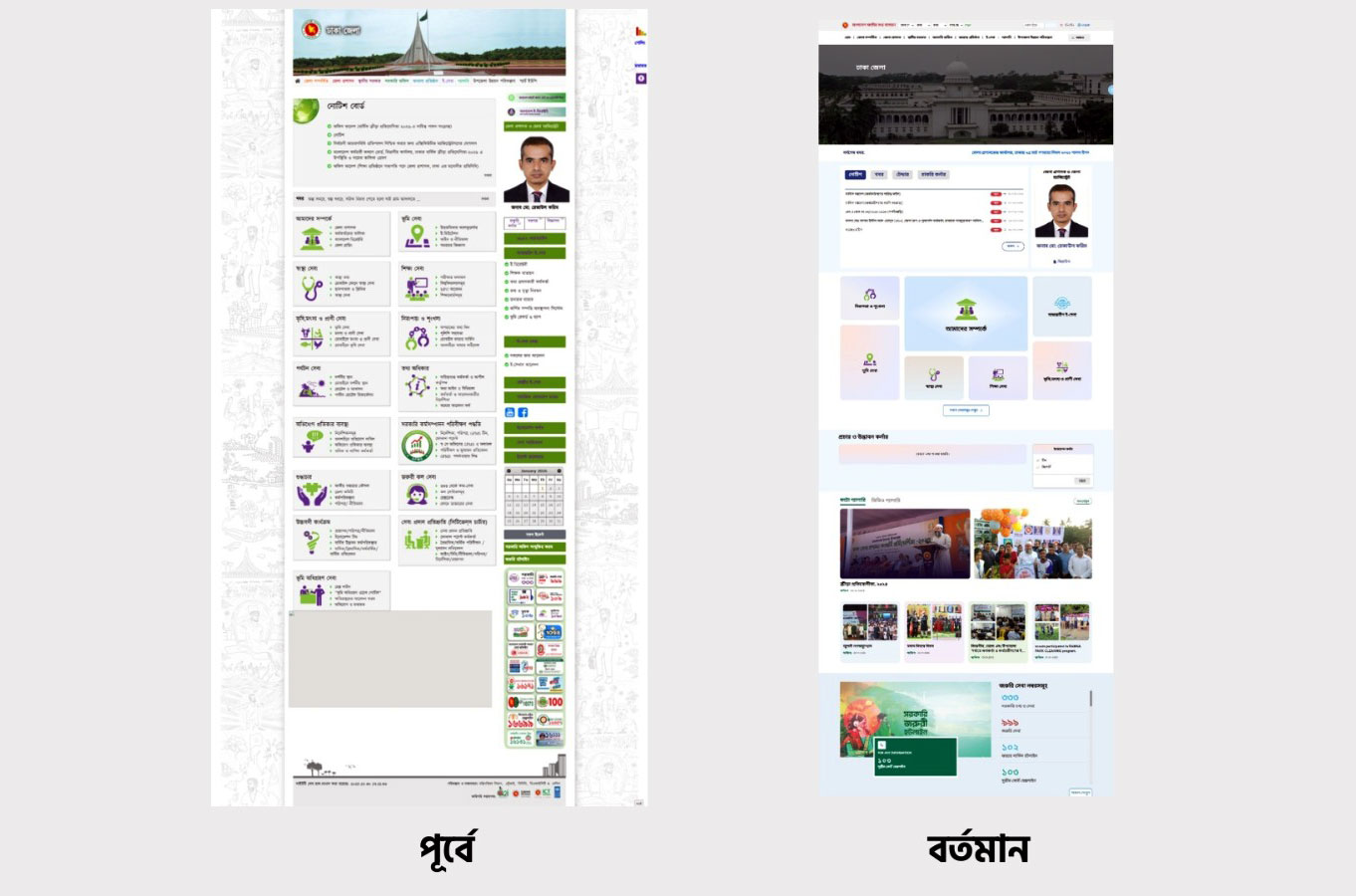
Aspire to Innovate (a2i) has launched the second version of the Bangladesh National Portal, or Framework 2.0, to make government information management more modern, dynamic, and secure.
Implementation of the new version began in phases across all ministries from December 21, 2025. The initiative, being implemented under the supervision of the Cabinet Division and the Information and Communication Technology Division, currently connects nearly 52,000 government offices across the country. Of these, more than 35,500 websites have already been hosted on the upgraded platform. Other government websites at the directorate, division, district, upazila and union levels are also being brought under the framework in phases.
a2i Project Director (Additional Secretary) Md Abdur Rofiq said the new version of the National Portal had been verified through functionality testing, vulnerability assessment and penetration testing by the Software and Hardware Quality Testing and Certification Centre, which has also formally certified the platform.
He called on all offices connected to the portal to update their official information regularly, saying the new version would further strengthen the country’s digital public service ecosystem while reinforcing transparency, accountability and citizens’ right to information.
a2i Senior Consultant (Deputy Secretary) Fazlul Zahed Pavel said that in the past, citizens often had to visit government offices in person to learn about a service, increasing both time and cost. Now, through the National Portal, people can access from home information such as office addresses, required documents, application procedures and relevant instructions.
He added that the platform also provides access to information on tenders, job circulars, citizen charters and budget allocations. The portal records more than 3 billion digital interactions annually, reflecting citizens’ growing reliance on online government information and services.
Pavel said the platform is not only a channel for information dissemination, but also an effective tool for implementing the Right to Information Act. In addition to reducing public inconvenience, it is also helping the government cut the cost of building and maintaining separate websites.
Officials concerned said the new version has introduced a cloud- and microservices-based architecture, making the platform faster, more stable and more scalable. It also includes enhanced features such as faster search, real-time updates and content caching. Security measures have also been strengthened with the addition of single sign-on, two-factor authentication and SSL encryption. At the same time, server uptime has been improved to 99 percent, ensuring more uninterrupted service delivery and boosting user confidence in the platform.