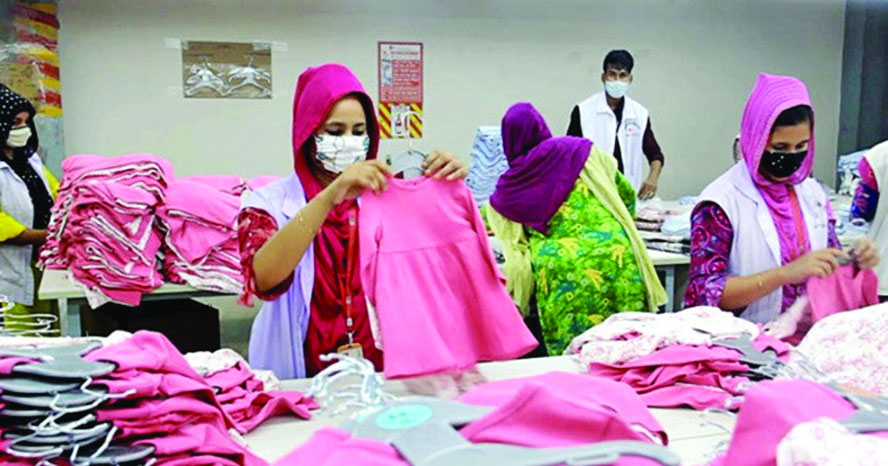
Bangladesh's ready-made garment (RMG) sector is facing a sharp decline in production capacity due to a deepening energy crisis, with industry leaders warning that output has already fallen by 20 to 30 percent as fuel shortages and power disruptions intensify.
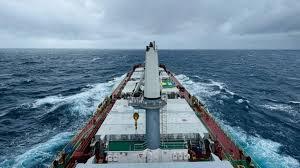
According to The Daily Industry, the situation stems from volatility in global energy markets triggered by geopolitical tensions in the Middle East, particularly around the Strait of Hormuz - a critical route for global oil and gas shipments. The instability has driven up fuel prices and disrupted supply chains, significantly raising production costs for factories across Bangladesh. Production Hit by Load Shedding and Fuel Shortages: Garment factories report losing at least two hours of productive time during a typical ten-hour workday due to load shedding, severely disrupting operations. The situation has forced factories to rely heavily on diesel-powered backup generators. In addition to electricity shortages, declining gas pressure has made it difficult for factories to run captive power systems efficiently, pushing them further toward costly fuel alternatives such as diesel, furnace oil, and liquefied petroleum gas (LPG). With fuel supplies also constrained, many factories are struggling to secure sufficient stocks, compounding the impact on production. Mahmud Hasan Khan, President of the Bangladesh Garment Manufacturers and Exporters Association, said the extent of disruption varies across industrial zones but remains severe overall.
"Two to three hours of total daily working time are lost. Broadly speaking, production capacity has contracted by around 25 to 30 percent," he said.
Industry-Wide Impact and Rising Costs: The crisis is not limited to garment factories alone. At a recent roundtable hosted by the Dhaka Chamber of Commerce and Industry, business leaders highlighted the broader economic consequences of the energy shock. DCCI President Taskeen Ahmed said the production capacity in the garment sector has, in some cases, dropped by nearly 50 percent due to the ongoing energy crisis.
He also pointed out that the cost of cement production has increased by Tk 25 to Tk 30 per bag, while shipping costs have surged by an additional $500 to $4,000 per container, reflecting the ripple effects across multiple industries.
The discussion further noted that every $10 increase in global oil prices adds approximately $1 billion to Bangladesh's annual import bill. If oil prices rise above $120 per barrel, energy-related expenditures could increase by $4 billion to $5 billion annually, significantly worsening fiscal and external pressures.
Export Sector Under Threat: The garment sector, which is the backbone of Bangladesh's export economy, is now facing mounting risks. The two major trade bodies - the Bangladesh Garment Manufacturers and Exporters Association and the Bangladesh Knitwear Manufacturers and Exporters Association - collectively represent around 3,000 factories.
These factories exported garments worth over $39 billion in the 2024-25 fiscal year. However, export performance has already turned negative in the current 2025-26 fiscal year, reflecting weak demand in key markets and rising production constraints.
Data from the Export Promotion Bureau shows that Bangladesh's merchandise exports declined by 4.85 percent in the first nine months of the fiscal year (July-March).
Exports to major markets have also weakened. Shipments to the United States fell by 1.10 percent, exports to Germany dropped by 13.54 percent, and exports to the United Kingdom declined by 1.39 percent.
Industry leaders fear that if the energy crisis persists, export earnings could decline further, putting additional strain on the country's balance of payments and foreign exchange reserves.
Compounding Global and Domestic Pressures: Mohammad Hatem, President of the Bangladesh Knitwear Manufacturers and Exporters Association, said the sector is facing an unprecedented combination of challenges."Factories are now enduring two to three hours of load shedding daily. That has cut the sector's production capacity by 20 to 25 percent. Exports have been contracting for several months," he said.
Although he noted that the energy crisis is not yet the primary cause of declining exports, he warned that it could have a severe impact in the near future.
"The industry has never faced such a convergence of pressures. After the introduction of new tariffs in global markets, there was hope that inflation might ease. But the escalation of the Middle East crisis has disrupted all expectations," he added.
Gas Supply Crisis Deepens: Bangladesh's industrial sector relies heavily on natural gas, which accounts for roughly 66 percent of electricity generation. However, disruptions in liquefied natural gas (LNG) imports from the Middle East have significantly reduced gas pressure across industrial zones.
According to data from Petrobangla, the national grid currently receives around 2.65 billion cubic feet of gas per day. Of this, 910 million cubic feet is used for power generation, leaving limited supply for industrial use.
Fertilizer factories are receiving almost no gas, while other industries are getting only a fraction of their required supply - around 70 million cubic feet compared to a demand of 320 million cubic feet. The shortage has forced many factories to shift to alternative fuels, increasing costs and reducing efficiency.
LNG Supply Disruptions and Rising Costs: The situation has been exacerbated by disruptions in LNG imports from key suppliers in the Middle East, including Qatar. To meet demand, Bangladesh has been forced to procure LNG from the spot market at more than double the previous price.
At the same time, crude oil imports have become more expensive due to supply constraints and rising global prices.
Although a complete supply collapse has not yet occurred, long queues at fuel stations have already been reported, indicating growing pressure on domestic supply chains.
Banking Sector Exposure Raises Concerns: The slowdown in the garment sector is also raising concerns within the financial system. Banks with significant exposure to textile and apparel industries are facing increased risks as production and export earnings decline.
Economists warn that a prolonged crisis could lead to higher loan defaults and further stress on the banking sector. Dr. Selim Raihan, Executive Director of the South Asian Network on Economic Modeling, said the ?????? could have far-reaching implications. "The garment sector is central to Bangladesh's economy. Any sustained disruption will not only affect exports but also employment, banking stability, and overall economic growth," he said.
Outlook Remains Uncertain: Analysts believe that the trajectory of the global energy market will play a crucial role in determining the future of Bangladesh's industrial sector. If geopolitical tensions in the Middle East persist or escalate further, energy prices could remain elevated. "Without a swift resolution, the pressure on the economy will intensify," Dr. Selim Raihan warned. "The government must explore alternative energy sources, improve efficiency, and strengthen supply chains to mitigate the impact."
A Critical Moment for the Economy: The ongoing energy crunch highlights Bangladesh's vulnerability as an import-dependent economy and underscores the need for structural reforms in the energy sector.
As the country navigates a complex global landscape, the ability to ensure stable energy supply will be critical for sustaining industrial production, export growth, and economic stability. For now, the garment sector - the backbone of the economy - remains under significant strain, with industry leaders warning that the coming months could prove decisive for its future.