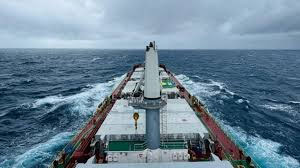
A Bangladeshi-flagged cargo vessel that had been stranded in the Persian Gulf due to escalating conflict in the Middle East has resumed its journey following a ceasefire, offering relief to maritime authorities and highlighting the vulnerability of global shipping routes during geopolitical crises.
The vessel, MV Banglar Joyjatra, owned by the Bangladesh Shipping Corporation, set sail early Wednesday to cross the strategically important Strait of Hormuz.
Quoting officials and crew members, The Daily Industry reports that the ship was carrying 31 Bangladeshi sailors and a large consignment of fertiliser, and had been unable to proceed due to security risk following the outbreak of war in Iran and surrounding regions.
According to maritime tracking platform MarineTraffic, the vessel departed from Ras Al Khair port in Saudi Arabia and, as of Wednesday noon, wasstand near the outer anchorage of Dammam port, )
moving steadily at a speed of 8.3 knots. The ship has a draft of 10.8 metres, indicating a heavy cargo load. Rashedul Hasan, Chief Engineer of the vessel, confirmed the new journey in remarks quoted by The Daily Industry. “We were off the outer anchorage of Dammam port, loaded with almost 37,000 tonnes of fertiliser from Ras Al Khair port. Following the ceasefire, we have weighed anchor and are heading toward Hormuz,” he said.
He further explained that once the ship successfully crosses the strait, it will continue its long sea journey toward Cape Town port in South Africa, marking the next important destinations in its international trade route.
At the time of communication, the vessel was approximately 425 nautical miles away from the Strait of Hormuz. “It may take at least another two days, around 40 hours, to cross the strait,” Hasan added, underlining the cautious and slower development being maintained for security reasons.
According to officials from the Bangladesh Shipping Corporation, the MV Banglar Joyjatra had originally entered the Persian Gulf through the Hormuz Strait on 2 February, carrying goods from India. It later transported steel coils from a port in Qatar to Jebel Ali port in the United Arab Emirates on 27 February.
However, the situation promptly decorates when military conflict escalated in the region. Following attacks by the United States and Israel on targets in Iran, Tehran launched counter action across multiple locations, intensifying tensions and raising concerns over maritime security. “The Daily Industry” quotes BSC officials as saying that the vessel completed cargo unloading at Jebel Ali port on 11 March and was scheduled to load new goods from a Kuwaiti port. As the conflict deepened, many vessels operating in or near the Persian Gulf adopted a wait-and-watch approach, with some rerouting and others anchoring at safer until the situation stabilised. The Banglar Joyjatra was among those that remained stranded, reflecting the broader disruption faced by the shipping industry.
The recent ceasefire has now allowed operations to gradually resume, although uncertainty still lingers over the sustainability of the peace treaty and the security situation in the region.
Maritime experts note that even short-term disruptions in the Strait of Hormuz can have far-reaching consequences, including higher shipping costs, delays in supply chains, and volatility in global energy markets. For countries like Bangladesh, which rely heavily on maritime trade for imports and exports, such disruptions pose significant economic risks.
The safe passage of the MV Banglar Joyjatra is therefore being closely monitored, not only for the security of its crew but also as a symbol of the gradual restoration of trade routes following weeks of tension.
As The Daily Industry highlights, the episode illustrates how global conflict can directly impact Bangladesh's shipping operations, underscoring the need for stronger risk management strategies and contingency planning in the maritime sector.With the vessel now en route to cross one of the world's most sensitive waterways, attention remains focused on whether stability in the region will hold long enough to ensure uninterrupted passage and the safe return of its crew.