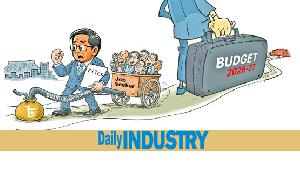
Bangladesh’s efforts to contain inflation through a prolonged high-interest-rate regime are increasingly weighing on investment, industrial expansion and job creation, raising concerns among economists and business leaders about the country’s growth prospects.
The latest data from Bangladesh Bank show that private sector credit growth has fallen to one of its lowest levels in recent years, while excess liquidity in the banking sector has surged to a record high. The divergence reflects a growing reluctance among businesses to borrow at elevated interest rates, even as banks accumulate large volumes of idle funds. According to central bank statistics, excess liquidity in the banking sector stood at Tk 378,135 crore at the end of March this year, marking a 58.31 percent increase from Tk 238,845 crore a year earlier. At the same time, deposit growth reached 11.76 percent, while overall credit growth slowed sharply to 4.73 percent. Private sector credit growth was recorded at 4.72 percent, underscoring weak investment demand across the economy.
The Daily Industry observed that the slowdown in lending is beginning to affect industrial activity, business expansion and employment generation at a time when Bangladesh is already grappling with high inflation, subdued export growth and lingering uncertainty in the financial sector.
Bankers and economists say the high cost of borrowing has emerged as one of the primary reasons behind the investment slowdown. In many cases, lending rates have crossed 14 percent, making it increasingly difficult for businesses to justify new investments or expansion projects.
“Entrepreneurs are delaying investment decisions because financing costs have become too expensive,” industry insiders told The Daily Industry. “Many businesses are focusing on survival and cost management rather than expansion.”
As investment activity weakens, concerns are mounting over employment generation. New factories, industrial units and business ventures traditionally serve as key sources of jobs in Bangladesh. When investment slows, opportunities for new employment also decline. Economists warn that the country may face growing unemployment pressures if the current trend persists for an extended period.
The Daily Industry believes that while tighter monetary policy has helped moderate inflationary pressures to some extent, policymakers now face the challenge of balancing inflation control with economic growth and job creation.
Banks Swimming in Liquidity but Struggling to Lend: The surge in excess liquidity presents a paradox within Bangladesh’s banking sector. While many banks are witnessing strong deposit inflows, they are finding it increasingly difficult to deploy those funds through productive lending. Industry experts attribute part of this trend to changes in depositor behavior following political and financial sector developments over the past year.
After weaknesses in several troubled banks became more visible, depositors began shifting their funds toward institutions perceived as financially stronger and safer. As a result, some banks have experienced substantial growth in deposits. However, these same banks are struggling to find creditworthy borrowers willing to take loans at prevailing interest rates.
Syed Mahbubur Rahman, Managing Director of Mutual Trust Bank, said excess liquidity is growing faster than loan demand. “Liquidity is increasing, but it is not possible to expand lending at the same pace. Selecting quality borrowers and disbursing loans responsibly takes time. As a result, banks are investing surplus funds in treasury bills, treasury bonds and other safe instruments,” he said.
The Daily Industry notes that the rising preference for government securities among banks reflects both risk aversion and limited private-sector borrowing opportunities. However, the situation is not uniform across the banking sector.
Several banks, including National Bank Limited, AB Bank PLC, Social Islami Bank PLC, Union Bank PLC, Bangladesh Commerce Bank Limited, Padma Bank PLC, First Security Islami Bank PLC, Global Islami Bank PLC and ICB Islamic Bank Limited continue to face liquidity shortages despite the overall surplus in the banking system. This uneven distribution of liquidity remains one of the key structural weaknesses in Bangladesh’s financial sector.
Employment Risks Intensify: The decline in credit growth is raising alarms about future employment generation. Economists argue that investment and employment are closely linked. When businesses postpone factory expansion, machinery purchases or new projects, demand for labor also weakens.
Bangladesh’s labor market absorbs hundreds of thousands of new entrants every year. Sustaining employment growth therefore requires consistent investment in manufacturing, services, agriculture and infrastructure.
The Daily Industry observed that many sectors, including small and medium enterprises, are already operating below capacity due to weak domestic demand and high financing costs. Economic analysts say prolonged investment stagnation could slow GDP growth and reduce opportunities for young job seekers entering the labor force.
“Idle money sitting in banks does not contribute to economic growth,” economists noted. “Those funds need to flow into productive sectors that create output, income and employment.”
They warn that if the banking system continues accumulating excess liquidity without corresponding growth in productive lending, the economy could face slower growth momentum in the coming years.
Bangladesh Bank Announces Tk60,000 Crore Stimulus Package: In response to the slowdown in investment and credit demand, Bangladesh Bank has announced a special Tk60,000 crore incentive package aimed at channeling excess liquidity into productive sectors.
The package seeks to support industrial recovery, employment generation and economic diversification.
Under the initiative, Tk40,000 crore will come from banks’ own resources, while Tk20,000 crore will be provided through a refinancing facility operated by the central bank. The Daily Industry understands that the package includes targeted support for several sectors considered critical for economic growth and employment.
A total of Tk20,000 crore has been allocated for closed industrial and service-sector enterprises. Another Tk5,000 crore will be directed toward cottage, micro, small and medium enterprises (CMSMEs), while Tk10,000 crore has been earmarked for agriculture and the rural economy. Additionally, Tk6,000 crore has been set aside for export diversification initiatives and the development of an agricultural hub in northern Bangladesh.
Entrepreneurs will be able to access loans from the special fund at an interest rate of 7 percent, significantly below prevailing market rates and roughly half the cost of conventional commercial borrowing. Bangladesh Bank expects the programme to generate approximately 1.75 million new jobs through increased investment and business activity.
The Daily Industry believes that the effectiveness of the package will depend largely on implementation efficiency, borrower selection and the ability of banks to identify viable projects capable of generating sustainable employment.
Balancing Inflation Control and Growth: The current situation highlights the difficult policy choices facing Bangladesh’s economic managers. For the past several years, inflation has remained elevated due to global commodity price shocks, exchange-rate pressures, supply-chain disruptions and domestic market challenges. In response, policymakers adopted tighter monetary policies to curb inflation.
While those measures have helped moderate demand and contain price pressures, they have also increased borrowing costs and weakened investment activity.
Economists say a prolonged period of restrictive monetary conditions could undermine long-term growth prospects if productive investment continues to decline.
Speaking at a recent programme, Dr. Fahmida Khatun, Executive Director of the Centre for Policy Dialogue (CPD), stressed the need for a balanced policy approach.
She warned that unless effective steps are taken to revive investment and employment while maintaining inflation control, unemployment pressures could continue to increase across the economy.
The Daily Industry notes that Bangladesh’s economic recovery now depends on restoring business confidence, improving access to affordable financing and ensuring that surplus liquidity is directed toward productive sectors rather than remaining idle in the banking system.
As private-sector credit growth falls below 5 percent and excess liquidity reaches record levels, policymakers face mounting pressure to stimulate investment without reigniting inflation. How successfully they manage that balance may determine the trajectory of economic growth, industrial development and employment generation in the years ahead.