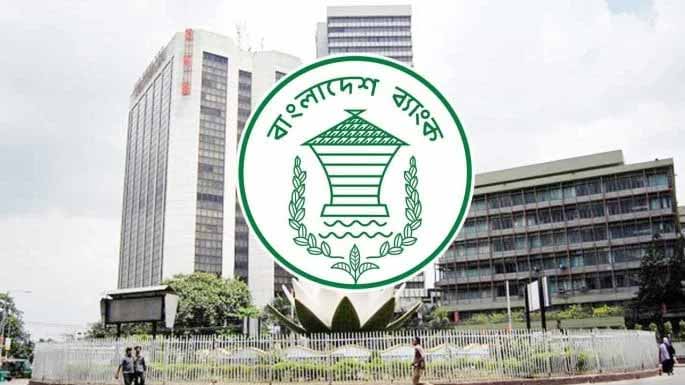
Bangladesh Bank has kept its policy rate unchanged at 9.5%, citing persistent inflation risks despite a recent decline in headline inflation.
Announcing the monetary policy on Wednesday, the central bank said headline inflation fell to 8.26% in August from 9.16% in June, reaching its lowest level in 10 months. Food inflation declined to 7.02%, while non-food inflation remained high at 9.32%.
The central bank warned that rising global fuel prices, disruptions in the Strait of Hormuz, increases in domestic fuel prices and the possible implementation of a new pay scale could put further pressure on inflation.
It said premature monetary easing could raise inflation expectations and delay the return of inflation to the desired range.
Meanwhile, economic activity remains weak, with real GDP growth estimated at 4.14% in FY2025-26. Growth in the third quarter was estimated at 2.2%, while industrial production contracted 0.28%.
Bangladesh Bank identified high borrowing costs, energy shortages, infrastructure constraints and uncertainty over domestic and external demand as key challenges to economic recovery.
To support economic activity, the central bank highlighted a Tk60,000 crore incentive package, including Tk20,000 crore for reopening closed factories. It also referred to refinancing schemes for agriculture, CMSMEs and export diversification.
Private-sector credit growth remained weak at 4.75% in August 2026, reflecting subdued investment and lending demand, borrower risks and weaknesses in the banking sector.
The share of non-performing loans in the banking sector rose to 32.78% in June, prompting Bangladesh Bank to stress the need for bank restructuring, stronger governance, capital recovery and improved credit discipline.
The balance of payments recorded a $6.6 billion surplus in FY26, although the overall balance turned negative during the first two months of FY27, mainly due to a deficit in the financial account.
Remittance inflows increased 18.90% during the period, providing support to the external sector, while a relatively stable exchange rate helped contain imported inflation.
Bangladesh Bank expects a gradual economic recovery in the coming fiscal year. The World Bank projects 4.6% growth for FY27, while the International Monetary Fund has lowered its forecast to 3.5% from 4.3%.
The central bank expects inflation to ease gradually in the next fiscal year, although the pace of the decline remains uncertain.