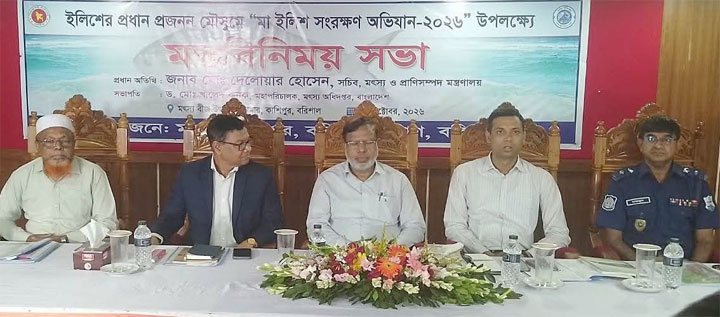
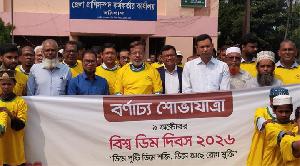
An exchange meeting regarding the ‘Mother Hilsa Conservation Campaign’ was held in Barishal, aimed at protecting mother Hilsa during their peak breeding season, boosting Hilsa production, and ensuring sustainable fisheries management.
Organized by the Divisional Fisheries Office, Barishal, the meeting took place on Friday, October 9, at the Fish Seed Production Farm in Kashipur. Md. Delwar Hossain, Secretary of the Ministry of Fisheries and Livestock, attended as the chief guest, while Dr. Md. Khaled Kanak, Director General of the Department of Fisheries, presided over the event.
Special guests and other attendees included Divisional Fisheries Director Md. Kamrul Hasan, Deputy Commissioner Md. Mamun Khandaker, Superintendent of Police (Naval Police, Barishal Region) S.M. Nazmul Haque, District Fisheries Officer Dr. Md. Hadiuzzaman, Sadar Upazila Nirbahi Officer (UNO) Mst. Farida Sultana, and Upazila Senior Fisheries Officer Md. Jamal Hossain, alongside various Upazila fisheries officers and officials from relevant departments.
Fish wholesalers, fishermen, and journalists were also present. Speakers at the meeting urged fishermen to refrain from catching Hilsa during the designated ban period to ensure uninterrupted breeding. They emphasized that protecting mother Hilsa would secure the fish's reproduction and population growth, playing a vital role in developing the country's fisheries resources and safeguarding the long-term livelihoods of fishermen.
During the meeting, fishermen highlighted various issues and demands. They called for the timely and accurate distribution of rice allocated to support their livelihoods during the ban period. Additionally, they proposed the establishment of a dedicated bank for fishermen to the Secretary of the Ministry of Fisheries and Livestock, aiming to ensure financial security and facilitate economic activities.
These proposals from the fishers highlight the importance of improving their living standards, ensuring financial security, and providing alternative support during the ban period. Emphasis was placed on the need for the administration, the Department of Fisheries, law enforcement agencies, the fishing community, and the media to work in a coordinated manner to conserve mother Hilsa.
Speakers noted that conserving mother Hilsa is not the government's sole responsibility; sincere cooperation from all stakeholders, including the fishers, is essential. Through collective efforts, it is possible to boost Hilsa production, improve the livelihoods of fishers, and ensure the sustainable conservation of the country's fisheries resources.