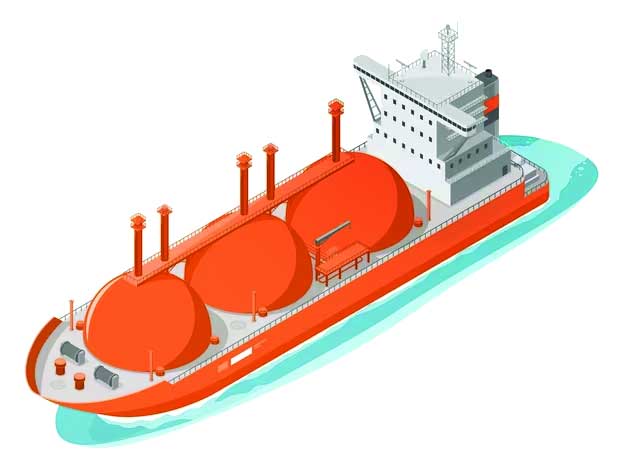
Bangladesh’s domestic gas production is steadily declining, forcing the country to rely more heavily on expensive imported liquefied natural gas (LNG) to meet growing energy demands. Petrobangla data and government sources reveal a widening gap between local production and imports, raising concerns about mounting subsidies, economic strain, and future energy security.
Declining Domestic Gas Production: According to Petrobangla, gas production from local wells has dropped by more than 600 million cubic feet per day in the past three years. In January 2024, foreign and domestic companies together produced about 2,047 million cubic feet of gas. By April 2025, this figure had fallen drastically to just 1,820 million cubic feet.
The downward trend is consistent across most months. In December 2024, domestic production stood at 1,917 million cubic feet, whereas in February 2025, it fell further to 1,900 million cubic feet. By March, the figure plummeted to 1,840 million, and in April, to just 1,820 million cubic feet.
This decline is attributed to the aging of existing gas wells, lack of timely exploration, and delays in drilling new wells. Despite efforts by Petrobangla and its subsidiaries, the pace of fresh discoveries has not kept up with the growing demand.
Rising LNG Imports: To offset the shortfall, the government has significantly ramped up LNG imports since 2018. In January 2024, Bangladesh imported 498 million cubic feet of LNG, which rose to 630 million in February, and 868 million cubic feet in April. By November, the figure touched 868 million cubic feet, nearly half the level of local production.
The most recent data show that in March 2025, LNG imports reached 928 million cubic feet - surpassing the domestic supply gap and underscoring the country’s growing dependence on imported gas.
Analysis of annual data shows an even sharper picture. In 2018-19, Bangladesh imported 41 cargoes of LNG (2.52 million tons). By 2024-25, this figure had surged to 94 cargoes (5.8 million tons). Experts predict imports could rise to as many as 124-126 cargoes by 2026.
Mounting Subsidy Burden: The cost of LNG imports has imposed a heavy financial burden on the government. Between 2018-19 and 2024-25, Bangladesh spent Tk 2.54 trillion on LNG imports, with Tk 36,765 crore provided as subsidies.2018-19: LNG worth Tk 11,812.52 crore imported, Tk 2,500 crore subsidy. 2019-20: Imports cost Tk 17,502.98 crore, Tk 3,500 crore subsidy. 2020-21: Imports worth Tk 16,505.97 crore, Tk 3,497.56 crore subsidy. 2021-22: Imports ballooned to Tk 40,562.77 crore, with Tk 6,000 crore subsidy. 2022-23: Tk 35,274.5 crore spent, Tk 6,332.3 crore subsidy. 2023-24: Tk 42,844 crore spent, Tk 6,356.8 crore subsidy. 2024-25: Tk 40,751.58 crore spent, Tk 8,900 crore subsidy.
These figures highlight the widening gap between the high international price of LNG and the lower regulated price at which gas is sold domestically. The government continues to absorb this difference, but experts warn the practice is unsustainable.
Growing Energy Demand: The decline in domestic production comes at a time when demand from the power and industrial sectors is steadily rising. Bangladesh’s rapid industrialization, especially in textiles, fertilizers, and manufacturing, has pushed gas consumption to new heights.
Gas-fired power plants alone account for nearly half of the country’s electricity generation. With increasing urbanization and industrial growth, demand is unlikely to decline in the foreseeable future.
As a result, the government has been compelled to import additional LNG cargoes, but even then, the supply deficit persists. Energy rationing, reduced pressure in household gas lines, and frequent power cuts have become common, particularly during peak consumption months.
Petrobangla’s Response: In response to the crisis, Petrobangla has announced an ambitious plan to drill 100 new gas wells across the country. “Gas is already being supplied from some of the newly drilled wells,” said Petrobangla Chairman Md. Rezanur Rahman. “We are trying to increase domestic gas production to reduce dependence on LNG.”
The drilling plan includes both exploratory and development wells, targeting untapped reserves in onshore fields as well as potential offshore basins. International oil companies (IOCs) are also being encouraged to participate in deep-water exploration, although negotiations and production-sharing contracts (PSCs) often take years to finalize.
Economic Risks of LNG Dependence: Economists and energy experts have raised alarms about Bangladesh’s increasing reliance on LNG imports. Unlike locally produced gas, which costs significantly less, LNG imports expose the country to fluctuations in global energy markets.
When international LNG prices surged in 2022 due to the Russia-Ukraine war, Bangladesh faced severe energy shortages as spot market purchases became unaffordable. Although prices have since stabilized, the volatility remains a major concern.
“Bangladesh is walking a tightrope,” said energy economist Dr. Moinul Haque. “The subsidy burden is becoming unsustainable, and the heavy dependence on LNG imports makes us vulnerable to global market shocks. Without urgent investment in local exploration, the energy security situation will worsen.”
The Way Forward: Experts suggest a multi-pronged strategy to address the crisis: Accelerating Exploration: Immediate steps are needed to attract international investment in both onshore and offshore exploration. Expanding Renewable Energy: Diversification into solar and wind power could reduce dependence on gas-fired power plants. Energy Efficiency: Promoting efficient use of gas in industries, households, and power generation can help reduce demand. Reviewing Subsidy Policy: Gradual reforms in energy pricing could help reduce the fiscal burden. Regional Cooperation: Exploring cross-border energy trade with neighboring countries may provide alternative sources of supply.
A Looming Challenge: As Bangladesh moves toward middle-income status, the challenge of ensuring reliable, affordable energy will only grow. The government’s immediate priority remains balancing the urgent need for gas with the financial burden of LNG imports. But without bold reforms and greater focus on self-sufficiency, experts warn the current trajectory is unsustainable. For now, LNG serves as a stopgap measure, but it cannot replace the long-term necessity of domestic exploration and renewable energy expansion.