Bangladesh Bank has warned that inflation remains far above a tolerable level for consumers and stressed the urgent need to bring it down to at least 4.29 percent to restore economic stability. In a newly published report, the central bank identified three key challenges to achieving this target: stabilizing the exchange rate of the taka against the dollar, ensuring overall economic stability, and eliminating political uncertainty.
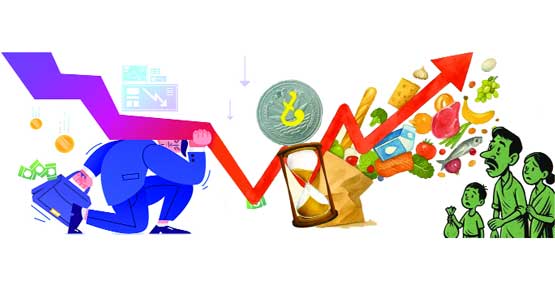
At present, the inflation rate stands at 8.29 percent, nearly double the tolerable level of 3-4 percent. This has deepened the financial hardship of ordinary citizens and created long-term risks for investment, savings, and employment generation. Bangladesh Bank believes that without addressing these three fundamental challenges, reducing inflation to a sustainable level will remain out of reach.
Inflation Still Above Tolerable Level: According to the report, inflation in Bangladesh has been persistently above the comfort zone for several years. In August 2022, inflation spiked to 9.5 percent, driven by supply chain disruptions, import price shocks, and rising global commodity costs. By July 2024, the figure had surged further to a peak of 11.66 percent, the highest in over a decade.
Since then, government and central bank measures - including monetary tightening, higher policy interest rates, and import restrictions - have helped bring down inflation slightly. By August 2025, the rate had eased to 8.29 percent, but this remains well above the tolerable level.
Economists note that the current inflation rate is 4.29 to 5.29 percentage points higher than what consumers can endure. “Bangladesh needs inflation to come down to at least 4.29 percent to provide relief to households. Anything above that creates pressure on purchasing power and destabilizes consumption patterns,” the report observed.
Three Challenges to Reducing Inflation: Bangladesh Bank underlined that bringing inflation under control requires tackling three critical areas.
Stabilizing the Exchange Rate: The exchange rate of the taka against the dollar has been one of the most significant drivers of inflation. Over the past three years, the taka depreciated by more than 30 percent, making imports costlier. Since Bangladesh is heavily reliant on imported fuel, raw materials, and food items, this depreciation directly pushed up domestic prices.
The central bank noted that recent improvements in dollar inflows - helped by remittances, curbs on money laundering, and declining illegal capital flight - have stabilized the exchange rate. If this trend continues, inflationary pressure will ease.
However, any renewed volatility in the dollar market could quickly reverse these gains. “A stable exchange rate is essential. Without it, neither import costs nor inflation expectations can be controlled,” the report said.
Ensuring Economic Stability: The second challenge lies in maintaining overall macroeconomic stability. High inflation has already discouraged investment, slowed business activity, and increased unemployment. A fragile banking sector, rising defaulted loans, and weak investor confidence further threaten growth.
Bangladesh Bank emphasized that if inflation can be controlled, economic activities will regain momentum. “Stable inflation will encourage investment, generate employment, and increase productivity, which in turn will strengthen the economy,” the report stated.
Eliminating Political Uncertainty: Perhaps the most critical factor identified is political stability. The report warned that prolonged uncertainty creates an unfavorable climate for investment, reduces foreign capital inflows, and increases pressure on the currency.
Although the political situation has somewhat stabilized following the last general election, lingering tensions continue to affect investor sentiment. “Everything depends on political stability. Without it, efforts to reduce inflation will not succeed,” Bangladesh Bank cautioned.
Path Forward: How Inflation Could Be Controlled: The central bank outlined a roadmap for tackling inflation while balancing growth needs.
If inflation can be brought below 5 percent, monetary policy could be gradually relaxed. This would allow interest rates to come down, making loans cheaper for businesses and individuals.
Lower borrowing costs would encourage investment and job creation, fueling economic activity. Conversely, if inflation remains high, any premature relaxation of policy could backfire by increasing credit flow, raising import demand, and destabilizing the exchange rate again.
Bangladesh Bank’s target is to bring inflation down to around 6 percent by June 2026 and further reduce it to 4-5 percent in the following year.
Why 4.29 Percent Matters: The report emphasized that the figure of 4.29 percent is not arbitrary. Economists consider annual inflation of 3-4 percent to be tolerable for consumers in Bangladesh. At this level, purchasing power remains intact, savings are not eroded, and businesses can plan with confidence.
By contrast, an inflation rate of 8-9 percent is seen as damaging to both households and the broader economy. The cost of living rises sharply, forcing low- and middle-income families to cut down on essential items like food, healthcare, and education. At the same time, high inflation undermines confidence in the financial system and discourages long-term investment.
“If inflation stays above 8 percent, the economy risks getting trapped in a cycle of high prices and low investment,” the report warned.
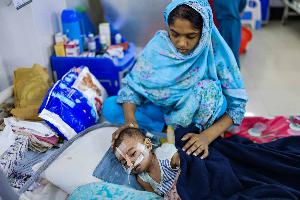
Impact on Consumers: The prolonged inflation crisis has already taken a severe toll on ordinary citizens. Prices of essentials such as rice, edible oil, lentils, and vegetables have remained stubbornly high.
For example, despite global price declines, local food markets have not reflected the drop. Rent, utility bills, and transportation costs have also continued to rise. Middle-class households are being forced to cut discretionary spending, while low-income families are struggling to meet basic nutritional needs.
Economist Dr. Ahsan H. Mansur remarked, “The biggest losers in this inflationary cycle are the poor and fixed-income groups. Their real incomes have eroded significantly, and many are unable to maintain even a minimum standard of living.”
The Banking and Investment Angle: High inflation also affects Bangladesh’s financial system. With deposit growth slowing due to reduced savings, banks face liquidity pressures. At the same time, high interest rates - used as a tool to fight inflation - have made borrowing more expensive for businesses.
As a result, many industries are operating below capacity, exports are losing competitiveness, and job creation is stagnating. “Unless inflation is controlled, the private sector cannot expand. And without private sector growth, the economy cannot achieve sustainable progress,” said a senior official at Bangladesh Bank. Foreign investors, too, remain cautious. Political uncertainty and inflationary risks have made Bangladesh less attractive compared to regional competitors like Vietnam and India.
Looking Ahead: Bangladesh Bank’s message is clear: without controlling inflation, sustainable growth will remain elusive. The report concludes that: Low and stable inflation will boost confidence in the central bank and government policies.
Households will gain relief, improving social stability. Businesses and investors will operate with greater certainty. Employment and income levels will rise, creating a positive feedback loop for the economy.
In the words of the report: “Reducing inflation is not only about price stability; it is about restoring confidence, ensuring investment, and accelerating long-term economic growth.”
Bangladesh now faces a defining economic challenge. With inflation stuck at more than double the tolerable level, the central bank’s goal of reducing it to 4.29 percent or lower will require determined action. Stable exchange rates, a robust economic foundation, and political calm are all essential to achieving this. As policymakers, businesses, and citizens await concrete steps, one fact is undeniable: unless inflation is brought under control, the dream of a stable, prosperous economy will remain out of reach.