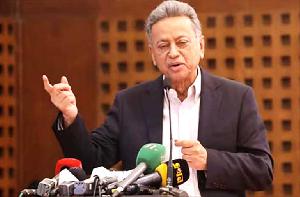
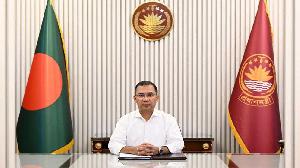
The Bangladesh government borrowed nearly Tk 20,000 crore from the central bank in March-effectively creating new money-raising fresh concerns about inflationary pressure and macroeconomic stability, according to leading economists. The warning came from Ashikur Rahman, Chief Economist at the Policy Research Institute (PRI), during a seminar held in Dhaka to review the country’s economic situation for February and March. Speaking at the event at PRI’s Banani office on Thursday, Rahman said the government’s borrowing from Bangladesh Bank constitutes “high-powered money,” which directly increases liquidity in the economy and can accelerate inflation.
“In March alone, the government took Tk 20,000 crore from Bangladesh Bank. This is essentially printed money. Such expansion in base money supply could further fuel inflation,” he said.
Inflation Risks Intensify: Rahman’s remarks come at a time when Bangladesh is already grappling with persistently high inflation, particularly in food and essential commodities. Economists have long warned that excessive reliance on central bank financing-commonly referred to as monetizing the deficit-can destabilize prices if not managed carefully.
High-powered money, or reserve money, forms the base of the monetary system. When governments borrow directly from the central bank, it injects fresh liquidity into the economy without corresponding increases in production, thereby increasing demand-pull inflation. Rahman cautioned that without disciplined fiscal management and structural reforms, such monetary expansion could worsen the cost-of-living crisis already facing ordinary citizens.
Reform Slowdown Raises Concerns: In his presentation, Rahman also stressed the importance of continuing economic reforms, warning that any backtracking could prove damaging. “If we step back from reforms, it will be self-destructive. We expect the government to review the bank resolution framework. Retreating from reform has already created unnecessary tension regarding the International Monetary Fund,” he said, referring to ongoing engagements with the International Monetary Fund.
Bangladesh is currently implementing a series of reforms tied to IMF loan conditions, including exchange rate flexibility, banking sector restructuring, and revenue mobilization improvements. Economists say delays or reversals in these reforms could jeopardize future loan disbursements and undermine investor confidence.
Business Confidence Weakens: The seminar also highlighted growing uncertainty among investors, particularly in the private sector, as energy shortages and policy unpredictability weigh on business sentiment. Mahbubur Rahman, President of the International Chamber of Commerce Bangladesh, who attended the event as chief guest, said investors are increasingly hesitant to commit funds due to unresolved structural issues. “Businesspeople are currently facing a dilemma. They are unsure whether they will have access to gas and electricity. This uncertainty is affecting investment decisions,” he said.
He emphasized the need for stronger collaboration between the government and the private sector to address these challenges and restore confidence.
Energy Crisis Adds Pressure: Energy constraints remain a central concern for the economy, affecting industrial production, transportation, and overall cost structures.
PRI Chairman Zaidi Sattar noted that energy prices have a cascading impact across all sectors, contributing to rising costs of goods and services. “There is a direct link between energy prices and overall inflation. The global situation, particularly tensions around the Strait of Hormuz, is adding pressure not just on Bangladesh, but on the entire global economy,” he said.
The Strait of Hormuz is a critical route for global oil shipments, and any disruption there can significantly influence international fuel prices, which in turn affects domestic markets in import-dependent countries like Bangladesh.
Fiscal Challenges Mount: The government’s increased reliance on central bank borrowing reflects broader fiscal challenges, including revenue shortfalls and rising expenditure pressures.
Economists note that when tax collection fails to keep pace with spending, governments often resort to borrowing from domestic sources. While borrowing from commercial banks can crowd out private sector credit, borrowing from the central bank carries inflationary risks.
Rahman’s remarks suggest that Bangladesh may be entering a phase where fiscal and monetary policy coordination becomes increasingly critical to maintaining economic stability.
A Delicate Balancing Act: The developments underscore the delicate balance policymakers must maintain between supporting economic growth and controlling inflation. On one hand, increased government spending may be necessary to stimulate economic activity and address social needs. On the other, excessive money creation risks eroding purchasing power and destabilizing the macroeconomic environment.
Analysts say Bangladesh’s economic outlook will depend heavily on how effectively the government manages inflation, implements reforms, and addresses structural bottlenecks in the energy and financial sectors.
Call for Urgent Action: The seminar concluded with a consensus among policymakers, economists, and business leaders on the need for urgent and coordinated action. Strengthening fiscal discipline, accelerating structural reforms, ensuring energy security, and maintaining transparency in monetary policy were identified as key priorities.
As inflationary pressures mount and investor confidence wavers, the government faces increasing pressure to adopt prudent economic strategies that can stabilize the economy while safeguarding growth. The warning from PRI’s chief economist serves as a timely reminder: while short-term measures may provide temporary relief, long-term stability will depend on sustained reforms and disciplined economic management.