Bangladesh's farming sector is under mounting pressure as rising fuel prices and supply shortages disrupt irrigation during a critical cultivation season. With diesel costs increasing and availability tightening, many farmers fear losses to both crops and investment. However, those using solar-powered irrigation systems are finding relief, highlighting a potential shift in the country's agricultural practices.
The crisis comes at a time when farmers require uninterrupted irrigation for Boro paddy, seasonal vegetables, and maize. The situation has been worsened by global energy market volatility, which has significantly impacted fuel-importing countries like Bangladesh. The government has recently raised diesel prices by 15 percent, further increasing production costs for farmers.
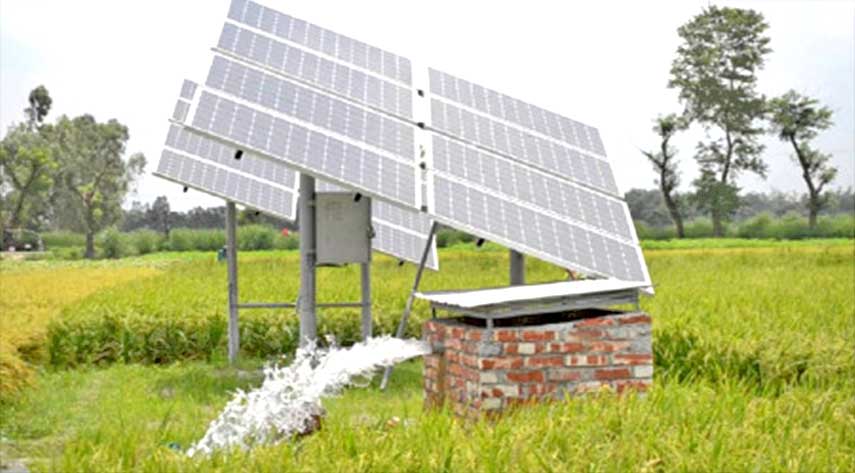
Farmers dependent on diesel or electric pumps are facing serious challenges due to higher fuel costs and frequent power outages. In contrast, Afzal Hossain, a farmer from Fulpukuria village in Gobindaganj upazila of Gaibandha, remains unaffected. He cultivated Boro paddy on six bighas of land this season using a solar-powered irrigation system.
"I am not worried about irrigation," he said. "My neighbours who depend on diesel or electric pumps are struggling due to the fuel crisis and power shortages."
Bangladesh requires more than 4 million tonnes of diesel annually, a large portion of which is used to operate over 1.2 million irrigation pumps, according to data from the Asian Development Bank (ADB) and government agencies. In addition, more than 430,000 electric pumps are used for irrigation. The Department of Agricultural Extension (DAE) reports that the country has 754 diesel-powered deep tube wells, more than 1.03 million shallow tube wells, and nearly 184,400 low-lift pumps in operation. This heavy dependence on fuel-based irrigation has left farmers vulnerable to global energy shocks. In Rangpur Division alone, where more than 509,000 hectares of Boro paddy have been cultivated this season, around 35 to 40 percent of farmland depends entirely on diesel-powered pumps. The recent fuel price hike has forced service providers to increase irrigation and harvesting charges, placing additional financial pressure on farmers.
Solar-powered irrigation systems, however, are emerging as a reliable alternative. According to Hussain Mohammad Altaf, executive engineer at the Rangpur office of the Bangladesh Agricultural Development Corporation (BADC), 596 solar-powered irrigation pumps were active in the division during the last irrigation season. These systems generated approximately 5.9 megawatts of electricity and saved around 7.5 million litres of diesel over a four-month period.
At the local level, farmers are already experiencing the benefits. In Lalmonirhat's Hatibandha upazila, Atiar Rahman manages a solar-powered deep tube well supplying water to about 15 bighas of farmland. "Even if diesel is unavailable or prices rise, farmers do not have to worry because this system runs on solar power," he said. He added that solar panels remain unused for much of the year after the irrigation season and suggested that connecting surplus electricity to the national grid through net metering could bring additional benefits.
Solar irrigation is also transforming previously uncultivated land. In the riverine areas of Kurigram, farmer Meher Jamal said land that once remained unused due to lack of irrigation is now being cultivated regularly.
"For the past few years, many areas are now producing crops because of solar irrigation," he said.
Farmers using solar systems also report better yields and lower costs. Sudhan Chandra Sen from Rangpur said solar irrigation ensures a steady water supply without the uncertainties of fuel or electricity interruptions.
"There is no concern about fuel. Water is always available, and costs are lower," he said.
In Bogura, farmer Abdul Hamid said solar irrigation has reduced both his expenses and stress. Another farmer, Abu Hasan, noted that uninterrupted water supply has improved crop yields, with irrigation costs fixed and payable after harvest.
Private companies are also investing in solar irrigation. Salek Solar Power Limited operates 122 solar pumps across several districts, with capacities ranging from 5 to 20 horsepower. Larger systems can irrigate up to 120 bighas of land.
At the national level, Infrastructure Development Company Limited (Idcol) has financed around 1,523 solar irrigation pumps, covering approximately 15,000 hectares. The organization plans to install 10,000 solar pumps by 2030. However, progress has slowed due to technical challenges and a lack of spare parts, leaving some systems inactive.
According to the Sustainable and Renewable Energy Development Authority (Sreda), new solar irrigation installations have declined sharply from 12.88 MWp in 2019 to just 4.65 kWp in 2025. In Rangpur Division, no new projects have been launched since 2022.
Experts say expanding solar irrigation could significantly reduce costs and environmental impact. The ADB estimates that irrigation accounts for 43 percent of total agricultural costs in Bangladesh. Replacing diesel pumps with solar systems could reduce diesel consumption by 1 million tonnes annually and cut carbon emissions by 3 million tonnes.
Energy officials believe a transition to solar irrigation would also reduce pressure on foreign currency reserves by lowering fuel imports. They suggest that policies such as net metering could help integrate solar systems into the national power grid.
Experts and rights groups emphasize that expanding solar irrigation is essential for ensuring food security and supporting farmers, particularly in a climate-vulnerable country like Bangladesh.
As fuel uncertainty continues to challenge traditional farming, solar irrigation is increasingly seen as a sustainable and practical solution for the future of agriculture in Bangladesh.