Bangladesh's industrial sector has long been the backbone of the country's economic transformation. From powering exports and generating millions of jobs to attracting foreign investment and supporting urbanization, industry has remained the primary engine of growth over the past two decades. However, the latest data from the Bangladesh Bureau of Statistics (BBS) signals that this engine is rapidly losing momentum-and the consequences could be far-reaching.
The industrial sector contracted by 0.28 percent during the January-March quarter (Q3) of FY2025-26, marking one of the weakest performances in recent history. Manufacturing output declined by 0.34 percent, while electricity, gas and water supply dropped by 3.56 percent, highlighting structural weaknesses that go beyond temporary business cycles. Industrial growth for the entire fiscal year slowed to 2.86 percent, the lowest in a decade, while overall GDP growth moderated to 4.14 percent, with quarterly growth falling sharply from 4.96 percent in Q1 to 2.22 percent in Q3.
These figures should not merely be viewed as statistical disappointments. They represent a warning signal that Bangladesh's economic foundation is under severe pressure.
Industry: The Heart of Bangladesh's Economy: Industrialization has played a decisive role in Bangladesh's remarkable economic success story. The sector contributes more than one-third of GDP, accounts for nearly all merchandise exports, and directly or indirectly supports millions of livelihoods. The ready-made garment (RMG) industry alone employs over four million workers, while thousands of small and medium enterprises supply products ranging from pharmaceuticals and plastics to engineering goods and agro-processing. When industry slows, its impact spreads across the entire economy. Factories reduce production, workers face layoffs or shorter working hours, suppliers lose orders, logistics companies experience declining business, banks witness rising loan defaults, and government tax revenues weaken. In other words, industrial weakness quickly transforms into a broader economic challenge. The current slowdown is therefore not simply about lower factory output-it is about the health of Bangladesh's entire development model.
Energy Crisis Continues to Cripple Production: Among the most serious challenges facing industrial producers is the persistent shortage of reliable energy.
Manufacturers across industrial zones continue to report irregular gas supply, lower pressure, and periodic electricity disruptions. These problems reduce production efficiency, increase operating costs, and discourage investment. Industries such as textiles, steel, ceramics, cement, glass, chemicals, and engineering rely heavily on uninterrupted energy. Even brief interruptions can halt production lines, damage machinery, delay export shipments, and increase production costs.
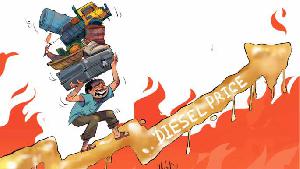
Many factories have been forced to rely on diesel generators to maintain operations, significantly increasing energy expenses at a time when global competition has become even more intense.
Without reliable energy, Bangladesh cannot realistically expect industries to remain competitive against regional rivals. High Borrowing Costs Are Discouraging Investment: The monetary tightening adopted to combat inflation has resulted in significantly higher lending rates.
Although controlling inflation remains essential, expensive credit has reduced the willingness of businesses to expand production or invest in new machinery.
Manufacturers now face multiple financial pressures simultaneously: Higher interest payments, Rising raw material costs, Expensive imports due to exchange rate volatility, Increasing wage and compliance expenses. Many businesses have postponed expansion plans while others are operating below capacity to preserve cash flow. Small and medium enterprises (SMEs), which generally have limited access to affordable financing, have been particularly vulnerable. Investment hesitation today risks becoming slower industrial growth tomorrow.
Weak Domestic Demand Ads Further Pressure: Industrial production ultimately depends on demand. Unfortunately, household purchasing power has weakened considerably due to prolonged inflation. Higher food prices and rising living costs have forced many consumers to reduce spending on non-essential goods. Consequently, industries producing consumer products have experienced weaker domestic sales. Businesses that once relied on strong local demand now face shrinking order books. The slowdown in domestic consumption has become another important factor limiting industrial recovery. Export Markets Are Becoming More Challenging: Bangladesh's export sector continues to face growing uncertainty. Although global demand has improved in some regions, international buyers remain cautious due to slower global growth, geopolitical tensions, shipping disruptions, and changing sourcing strategies. Export-oriented manufacturers now face stronger competition from countries including Vietnam, India, Indonesia, and Cambodia. These competitors continue investing aggressively in technology, logistics, energy reliability, and product diversification. Bangladesh, meanwhile, risks losing competitiveness if industrial productivity continues to decline. Export growth can no longer rely solely on low labour costs. Productivity, innovation, energy security, and infrastructure have become equally important. Manufacturing Slowdown Should Concern Everyone: Manufacturing remains the largest contributor within Bangladesh's industrial sector. A contraction of 0.34 percent may appear numerically small, but its implications are significant. Manufacturing creates employment across every skill level-from factory workers and technicians to engineers, managers, transport operators, warehouse employees and retailers. Lower manufacturing output means: Reduced factory utilization, Lower overtime income, Delayed recruitment, Slower wage growth, Rising risks of layoffs.
Young people entering the labour market could find fewer employment opportunities precisely when Bangladesh needs stronger job creation. With thousands joining the workforce every month, sustained industrial weakness could gradually transform into a labour market challenge.
Financial Sector Risks Could Intensify: Industrial slowdown also poses significant risks for Bangladesh's banking sector. When businesses earn less revenue, loan repayment becomes increasingly difficult. Banks already burdened by elevated levels of non-performing loans (NPLs) could experience additional stress if industrial profitability deteriorates further. Higher default risks may encourage banks to tighten lending standards, making financing even more difficult for productive sectors. This creates a dangerous cycle: Lower production leads to weaker profits. Weaker profits increase loan defaults. Higher defaults reduce bank lending.
Reduced lending further slows industrial investment. Breaking this cycle requires coordinated economic policy rather than isolated interventions. Investors Need Confidence: Investment decisions depend heavily on confidence. Domestic entrepreneurs and foreign investors both seek predictable operating environments. Persistent uncertainty regarding energy availability, financing costs, inflation, exchange rates, and policy implementation reduces investor confidence. Foreign direct investment (FDI), already below Bangladesh's potential, could remain subdued unless industrial conditions improve.
International investors compare Bangladesh with competing destinations across Asia. Countries offering reliable infrastructure, stable policies, efficient logistics, and uninterrupted utilities naturally become more attractive. Maintaining investor confidence should therefore remain a national priority.
Structural Reforms Cannot Wait: Bangladesh's industrial slowdown reflects not only cyclical pressures but also deeper structural issues. Several reforms deserve urgent attention. First, energy sector planning must prioritize uninterrupted industrial supply while accelerating investments in domestic gas exploration, LNG infrastructure, renewable energy, and transmission networks.
Second, financial sector reforms should improve access to productive credit while strengthening banking stability. Third, logistics efficiency must improve through faster customs clearance, better port operations, modern transport networks, and digital trade facilitation.
Fourth, industrial diversification should receive greater policy support. Bangladesh cannot rely indefinitely on garments alone. Emerging sectors such as pharmaceuticals, electronics, agro-processing, information technology, medical equipment, shipbuilding, and light engineering offer significant opportunities for higher value-added growth. Diversification would reduce vulnerability to external shocks.
LDC Graduation Makes Industrial Strength Even More Important: Bangladesh's upcoming graduation from the Least Developed Country (LDC) category will reshape the country's trade landscape.
Graduation will gradually reduce preferential market access currently enjoyed by exporters. As tariff advantages decline, productivity gains become even more critical. Industries will need to compete based on efficiency, innovation, product quality, and delivery reliability rather than preferential trade treatment. A weak industrial sector entering the post-LDC era would face even greater competitive pressure. Strengthening industrial competitiveness today is therefore an investment in Bangladesh's future economic resilience. Policy Coordination Is Essential: The industrial slowdown cannot be addressed by any single ministry or institution. It requires coordinated action involving: Bangladesh Bank, Ministry of Finance, Ministry of Industries, Ministry of Power, Energy and Mineral Resources, National Board of Revenue, Bangladesh Investment Development Authority (BIDA), Export Promotion Bureau (EPB). Monetary policy, fiscal policy, energy policy, trade policy, and investment policy must reinforce one another rather than work in isolation. Short-term relief measures should be complemented by long-term structural reforms.
The latest industrial data should serve as a national wake-up call rather than a reason for pessimism. Bangladesh has demonstrated remarkable resilience before. The economy has overcome global financial crises, natural disasters, supply chain disruptions, and pandemic-related shocks through pragmatic policymaking and entrepreneurial dynamism.
However, today's industrial slowdown demands equally decisive action. The Daily Industry believes restoring industrial momentum must become one of Bangladesh's foremost economic priorities. Policymakers should ensure uninterrupted energy supplies, improve access to affordable productive financing, accelerate infrastructure development, simplify regulations, and strengthen investor confidence. At the same time, businesses must continue investing in productivity, technology, workforce skills, and export diversification to remain globally competitive.
Industrial growth is far more than a measure of factory output-it is the foundation of employment, exports, investment, fiscal stability, and long-term prosperity. Allowing this sector to weaken further would jeopardize Bangladesh's broader development aspirations. The current slowdown should therefore be treated not as a temporary setback but as a red alert requiring swift, coordinated, and forward-looking policy action before today's industrial squeeze evolves into tomorrow's broader economic crisis.
Author: Columnist and a private banker