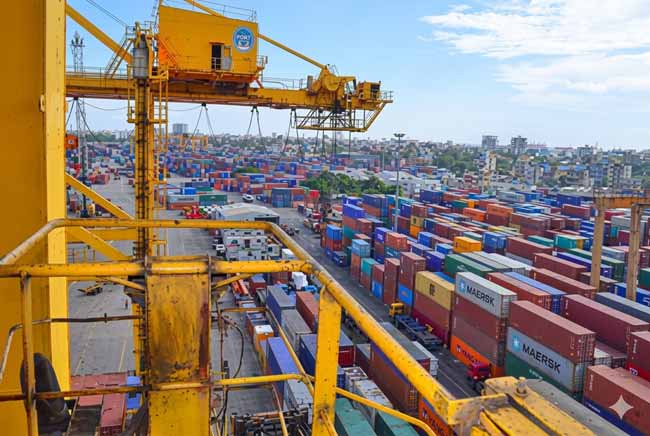
Chattogram Port has been operating with nearly 40% of its capacity tied up by long-stranded import cargo, causing severe congestion, longer vessel turnaround times, and billions of dollars in economic losses.
As of 30 June 2026, 9,330 TEU containers remained stuck in the port, occupying 22% of the yard. The Chittagong Port Authority (CPA) estimates that over $2 billion worth of goods are stranded, while total economic losses—including storage charges, container costs, and lost revenue—have exceeded $5 billion.
In a letter to the National Board of Revenue (NBR), the CPA urged immediate disposal of auctionable cargo and destruction of unusable goods, arguing that clearing the backlog could boost the port's handling capacity by about 40% without new infrastructure.
Business leaders blame customs delays, prolonged legal disputes, valuation issues, and slow auction processes for the crisis. More than 600 court cases are reportedly preventing the release or disposal of thousands of containers.
Trade bodies have called for faster customs clearance, alternative dispute resolution, and structural reforms to reduce congestion. Experts also recommend dedicated storage facilities for disputed cargo and specialized customs courts to speed up case resolution.
Customs officials say many containers cannot be auctioned because they are tied to legal proceedings, although more than 1,000 containers have been disposed of through auctions since 2025.
Business groups warn that unless urgent reforms are implemented, the continued cargo backlog will further undermine Bangladesh's trade competitiveness, increase costs for importers, and pose growing safety risks from long-stored hazardous materials.