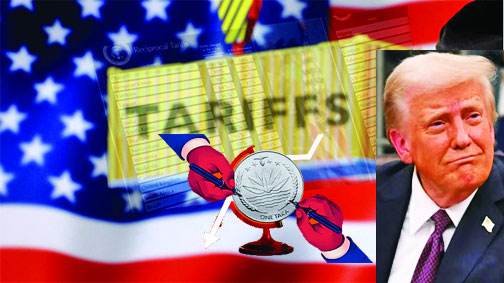
The global economy continues to face turbulent times as the trade war between the United States and China escalates, with the latest chapter being the imposition of Donald Trump’s counter-tariffs. These tariffs, effective from April 9, 2025, have sent shockwaves through global markets, triggering a series of economic repercussions that are felt far beyond the shores of the US and China. The Asian stock markets have once again plummeted, and experts are concerned about the ramifications for smaller economies, including Bangladesh. According to the Asian Development Bank (ADB), Trump’s counter-tariffs could have a serious and negative impact on Bangladesh’s economic growth, which is already facing numerous challenges.
Trump’s Counter-Tariffs and Global Economic Turmoil: Donald Trump’s counter-tariffs are part of his ongoing trade war strategy to pressure China into complying with US trade demands. These tariffs, which have seen an increase of up to 104 percent on certain Chinese goods, are not only affecting China but are also rippling through the global economy. In a move to retaliate against China’s tariffs on American products, Trump has extended his trade war to a wider range of countries, which will undoubtedly influence global markets in ways that were not anticipated earlier.
The Asian stock markets, which have been volatile in recent months, experienced another sharp decline on the morning of April 9, 2025. For instance, Japan’s Nikkei index saw a drop of 3.5 percent, while Taiwan’s TWII index fell by 1.7 percent. Additionally, the US S&P 500 futures index dropped by 1.7 percent, reflecting the investor panic that has ensued since the imposition of the counter-tariffs. Experts believe that these tariffs are pushing the global economy toward an uncertain future, with nations that rely heavily on exports now facing potential economic slowdown.
Bangladesh’s Economic Forecast and the ADB’s Concerns: Bangladesh’s economy, which has been enjoying relatively high growth rates in recent years, is now facing a significant risk due to the ongoing trade tensions. The Asian Development Bank (ADB) has forecast a 3.9 percent growth in Bangladesh’s Gross Domestic Product (GDP) for the current fiscal year, as per their Asian Development Outlook report. However, this projection was made before the imposition of the counter-tariffs by the US. According to Chandan Sapkota, an economist at the ADB’s Dhaka office, if the full impact of the US tariffs is felt, it could undermine Bangladesh’s economic progress. The country, which is heavily reliant on exports and foreign trade, is particularly vulnerable to shifts in global trade policies.
Sapkota emphasized that the counter-tariffs could introduce significant uncertainty into the economy. He explained that while Bangladesh has been able to maintain steady economic growth, factors such as rising tariffs could disrupt trade flows, slow down industrial production, and cause inflation to rise. The ADB report further stated that inflation could average 10.2 percent for the current fiscal year, which would severely affect the purchasing power of consumers and lead to higher living costs. This, in turn, could exacerbate existing socioeconomic issues in the country.
The Impact of Trump’s Tariffs on Bangladesh’s Export Sector: One of the primary concerns raised by the ADB is the potential impact on Bangladesh’s export-driven industries. The country’s garment sector, which is one of the largest contributors to its economy, is particularly vulnerable to these tariffs. The US is one of Bangladesh’s largest export markets for textiles and apparel, and any slowdown in demand due to higher tariffs on goods could hurt this vital sector.
Moreover, other sectors, such as pharmaceuticals, could also face challenges in the long term. While the pharmaceutical sector remains somewhat outside the scope of the current tariffs, as Trump has yet to target it, experts warn that future tariffs on pharmaceutical goods could disrupt the supply chain and harm the industry. Bangladesh’s pharmaceutical exports have been growing steadily, with the sector becoming a significant contributor to the country’s foreign exchange earnings. If the US imposes tariffs on these products, it could reduce the competitiveness of Bangladeshi pharmaceuticals in the global market, hurting both exports and domestic companies’ bottom lines.
The Global Ripple Effects of Trump’s Tariffs: The imposition of the tariffs has already triggered a ripple effect across global markets. As the tariffs on Chinese goods increased to 104 percent, stock markets around the world took a significant hit. The US stock market saw one of its largest reversals in recent memory, with the S&P 500 index dropping 4.2 percent after opening the day with a 2 percent rise. This dramatic fall in the US stock market was felt globally, with European stock indices such as Euro Stoxx 50 and FTSE futures also experiencing declines.
The effects of these tariffs are not limited to just stock markets. Oil prices, which had been rising in recent months, saw a dramatic drop, with Brent crude prices falling by 3.9 percent and WTI crude prices dropping by 4.4 percent. This decline in oil prices, however, could be beneficial for Bangladesh in the short term, as the country is highly dependent on oil imports to meet its energy needs. A decrease in global oil prices would lower the cost of fuel in Bangladesh, which would, in turn, reduce transportation costs and ease some pressure on consumers. However, the broader economic challenges posed by the tariffs could overshadow these short-term benefits.
The Pharmaceutical Sector: A Growing Concern: The pharmaceutical sector, both in Bangladesh and neighboring India, is another area of concern in the wake of Trump’s tariffs. While pharmaceutical goods are currently exempt from Trump’s counter-tariffs, experts predict that this exemption may not last long. The US has a significant stake in the global pharmaceutical market, and any disruptions to trade in this sector could have far-reaching consequences.
The Indian pharmaceutical industry, in particular, stands to lose a considerable amount if Trump imposes large tariffs on pharmaceuticals. India is a major supplier of generic drugs to the US, and the Indian pharmaceutical sector could face reduced demand for its products if these tariffs are enacted. While Bangladesh’s pharmaceutical sector is smaller in comparison, it could still face significant challenges, especially if US tariffs start affecting other Asian markets in the region.
Bond Interest Rates Rise as Investors React to Market Uncertainty: In a notable development today, long-term bond interest rates in the US market have seen a slight uptick. This increase is primarily attributed to a wave of bond sales, as investors seek to cover losses in other sectors. The trend has led to a notable shift in the bond market, with both long-term and short-term interest rates on the rise. This is signaling increasing market uncertainty as investors adjust their portfolios in response to shifting economic conditions.
Long-Term Bond Interest Rates Climb: The interest rate on the 10-year US Treasury bonds rose by 5 basis points, reaching 4.33 percent today. This marks a significant shift, as the 10-year bond interest rate has increased by a total of 34 basis points over the past three days. Analysts suggest that the rise in bond yields is largely driven by investor behavior, particularly the selling of long-term bonds to mitigate losses from other parts of the financial market.
The 10-year bond yield is often viewed as a benchmark for interest rates, and its increase indicates a shift in investor sentiment. The growing uncertainty in the markets has prompted many to move away from long-term securities, potentially due to concerns over economic growth or other global market risks. These shifts could signal a cautionary approach as investors brace for possible future volatility in the financial landscape.
Meanwhile, interest rates on shorter-term bonds have also experienced an uptick. The 2-year bond yield rose by 6 basis points to reach 3.66 percent. This increase reflects growing optimism among investors that the Federal Reserve may soon take steps to reduce interest rates, a move that could help stabilize financial markets.
Optimism Surrounds Federal Reserve’s Potential Rate Cut: The recent increase in short-term bond yields is tied to investor speculation regarding the Federal Reserve’s upcoming monetary policy decisions. Many market participants are hopeful that the central bank will implement a rate cut soon, as the global economy continues to show signs of stress. A reduction in interest rates by the Federal Reserve could provide some relief to the financial markets by making borrowing cheaper and potentially boosting economic activity.
While the outlook remains uncertain, the possibility of a rate cut has encouraged some optimism in the market, leading to a rise in short-term bond yields. However, this optimism is tempered by ongoing concerns about inflation and global economic conditions, particularly in the wake of continuing trade tensions and geopolitical risks.
The Dollar Faces Pressure, Safe-Haven Currencies Gain: In the currency markets, the US dollar has experienced a decline against several major currencies today. Notably, safe-haven currencies such as the Japanese yen and the Swiss franc have appreciated against the dollar. The dollar fell by 0.6 percent against the yen, while it gained 0.5 percent against the Swiss franc. The fluctuations in the dollar’s value reflect growing uncertainty in the global markets, as investors seek stability in traditionally safer assets.
The appreciation of the yen and Swiss franc is indicative of investors turning to currencies considered more stable amid market volatility. The demand for these currencies has risen as a result of concerns about global trade disruptions and economic slowdowns, further compounding the current atmosphere of financial uncertainty.
Meanwhile, the New Zealand dollar, also known as the Kiwi, gained 0.3 percent against the US dollar after the Reserve Bank of New Zealand (RBNZ) cut its policy interest rate by 25 basis points. Despite the rate cut, which was designed to stimulate the country’s economy, the RBNZ warned that the New Zealand economy could face challenges due to the ongoing disruptions in global trade. These concerns are reflective of broader fears that global trade tensions could continue to hurt export-driven economies.
The US Dollar’s Strength against the IndianRupee: While the US dollar weakened against some currencies, it strengthened against others. The Indian rupee, for instance, has depreciated against the dollar. The rupee rose to 86.56 against the dollar today, marking a decline from 85.84 rupees on Monday. This represents a 1.32 percent drop in the rupee’s value over the past two sessions. It is the first time since March 20 that the Indian rupee has crossed the 86 rupee mark.
This weakening of the rupee is partly driven by the broader weakening of the Chinese yuan, which has been under pressure in recent months due to the US-China trade a tension. The depreciation of the rupee against the dollar reflects the challenges that emerging market currencies face in the current global economic environment, where rising US interest rates and concerns over global growth weigh heavily on investor sentiment.
Gold Prices Rise amid Market Uncertainty: As the financial markets face heightened uncertainty, gold prices have surged today. The price of gold, often considered a safe-haven asset, increased by 1.34 percent, reaching $3,000 per ounce. This rise comes after a brief decline in gold prices following April 2. Today, the price of gold increased by $39.69 per ounce, signaling a renewed interest in the precious metal as investors seek to protect their wealth amid market volatility.
Gold is traditionally seen as a hedge against inflation and economic instability. The recent spike in its price underscores the growing concerns among investors about the stability of global financial markets. With rising bond yields, currency fluctuations, and ongoing geopolitical risks, many are flocking to gold as a store of value during this period of heightened economic uncertainty.
A Period of Uncertainty for Global Markets: The financial markets are currently navigating a period of significant uncertainty, as bond interest rates rise, currencies fluctuate, and commodity prices, such as gold, experience sharp movements. The US market is seeing a complex interplay of factors, with investors adjusting their strategies in response to global risks and the anticipated actions of central banks like the Federal Reserve.
While short-term optimism about rate cuts by the Federal Reserve is contributing to some positive movement in the market, the broader outlook remains cautious. Rising bond yields, a strengthening dollar against certain currencies, and the continuing volatility in global trade all suggest that the road ahead could be bumpy.As investors continue to respond to these challenges, it will be crucial to monitor how central banks around the world respond to these conditions. Whether the Federal Reserve moves toward a rate cut or continues to tighten monetary policy, the decisions made in the coming weeks will have far-reaching implications for the global economy.
For now, investors are advised to remain vigilant and to be prepared for further fluctuations as the market continues to grapple with the evolving economic landscape. The rise in bond interest rates, the fluctuations in the value of the dollar, and the continued demand for gold indicate that uncertainty will be a defining characteristic of the global financial environment for the foreseeable future.
The Uncertainty and Risks for Bangladesh: The global economic landscape has already been dramatically altered by Donald Trump’s decision to impose counter-tariffs. For Bangladesh, a country that has seen impressive economic growth in recent years, the consequences of these tariffs could be severe. The ADB’s forecasts for GDP growth, inflation, and trade are based on the assumption that the global economy would remain stable. However, with the added uncertainty of the trade war and the potential for more tariffs to be imposed in the future, these forecasts could quickly become obsolete.
Economists and policymakers in Bangladesh will need to carefully monitor the ongoing situation and explore strategies to mitigate the impact of these tariffs. Diversifying export markets, improving domestic industries, and strengthening trade relationships with other countries could be critical in helping Bangladesh weather the storm. Additionally, investing in infrastructure and developing new sectors could provide a buffer against the volatility in global markets. As Donald Trump’s counter-tariffs come into full effect, the ripple effects are being felt across the globe, with significant consequences for Bangladesh’s economy. While there are potential benefits, such as lower oil prices, the broader economic impact could be detrimental. With exports at risk, inflation expected to rise, and uncertainty clouding the future, Bangladesh must navigate these challenges carefully to sustain its growth trajectory and protect the livelihoods of its people. The coming months will likely be a critical period for Bangladesh as it seeks to adjust to the shifting global trade landscape.