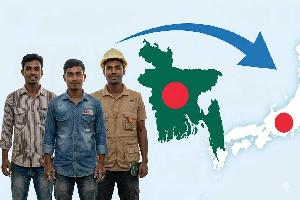
A growing number of Bangladeshi workers are returning home from Saudi Arabia empty-handed-victims of fraud and abuse by unscrupulous recruitment agencies. Promised lucrative jobs in the Gulf, many migrants instead faced illegal status, detention, and exploitation. Now, they find themselves homeless, jobless, and destitute. Disturbing Return Trends: In one poignant case, Russell Ahmed from Chandpur described his fall: “I’ve been illegal since I left. The agency I went through never verified anything… I ended up serving six months in jail. I came back with nothing but my clothes and a mobile phone.” Russell was among 19 Bangladeshis who returned on August 19, having endured tremendous suffering after being stranded or deported from Saudi Arabia.
Rubel Hossain of Gazipur, another returnee, endured two years in a Saudi prison after being sent on a false job contract. He recounted paying Tk 650,000 for a job in a hotel that never materialized. Out of this, he only received Tk 200,000 in salary, and no residence permit (Iqama) was ever provided. He came home empty-handed-and received just Tk 1,000 for his travel from the airport to his village.
These stories reflect a tragic pattern: workers are lured by false promises, then stranded without legal status-or worse, jailed and deported.
Alarming Numbers, Worsening Crisis: According to BRAC’s migration program, more than 50,000 Bangladeshi workers were deported from Saudi Arabia in 2024 alone; at least 25,000 more have returned by July 2025-a clear sign of a deepening crisis. The Bureau of Manpower Employment and Training (BMET) also highlights the scale of the problem:
In June 2025, BMET received 218 complaints related to worker fraud; 161 have been resolved, but a staggering 3,380 complaints remain pending. Of these, 1,860 involve Saudi Arabia, 1,324 Malaysia, and 196 other countries-demonstrating the preponderance of issues tied to Saudi employment.
Scholarly Context and Media Reports: A Guardian investigation from March 2024 revealed a harrowing picture: in 2022, approximately 70,000 Bangladeshi workers were deported from Saudi Arabia-most due to invalid residence permits (Iqama). Many returned with nothing but a thin blanket. They recounted enduring wage theft, abusive contracts, and inhumane detention conditions. One worker lamented paying Tk 400,000 for a job offer, only to be deported after nine months of unpaid labor.
Another report highlighted a “novel fraud”: some workers destroy their valid documents and surrender to police in Saudi Arabia, forcibly rendering themselves deportable in hopes of returning home at Saudi expense.
Further, Daily Messenger details how recruitment agencies charge high fees (Tk 500,000-600,000) and deliver misleading visa types or job descriptions, leading many to be detained or abandoned without support-even the Bangladeshi embassy’s intervention was reportedly ineffective.
Underlying Causes: Weak Oversight, Rogue Agents: Fakhrul Islam, former joint secretary general of the recruiting agencies’ group BAIRA, attributes the problem to widespread mismanagement: “Lack of coordination among agencies, insufficient oversight by the Expatriates’ Welfare Board, and poor employer verification.” He also points fingers at the Saudi government for issuing visas without ensuring actual jobs or worker Iqama-it becomes a “visa trading” scheme rather than legitimate labor placement. He stressed the need for diplomatic engagement and barring fraudulent companies through High Commission collaboration. Similarly, Al Amin Nayan, Manager of BRAC’s Migration Program, warns: “If this crisis is ignored, it threatens not only the labor market’s integrity but also Bangladesh’s international credibility.”
Systemic Failures in Compensation and Justice: Even when victims lodge formal complaints, redress is slow and inadequate. According to TBS, BMET handled migrant fraud claims in 2023, resolving about one-third-with total compensation amounting to just Tk 4.87 crore. The average payout per victim often falls far below their actual loss, which frequently ranges from Tk 350,000 to 500,000. Many victims lack documentation to substantiate their claims, further complicating justice.
Official Measures and Gaps in Protection: In mid-2024, Bangladesh’s Foreign Minister announced a joint task force with Saudi Arabia, aimed at improving transparency in labor recruitment and safeguarding job seekers from fraud. Yet, for many victims, the announcement rings hollow without swift implementation.
Moreover, BMET began requiring embassy attestation for Saudi-bound single visa applicants in 2024-a measure deemed necessary by the government, but criticized by recruitment agencies for slowing migration flows significantly. In February 2025, manpower exports plummeted 36% month-on-month, largely attributed to this new bureaucracy.
Broader Humanitarian Consequences: Reports reveal that many returnees suffer compounded trauma: Returned individuals often arrive with bare essentials and no financial ability to return home from the airport. According to one source, nearly 200-250 such workers arrive daily, with very little practical support available. In 2023, over 86,000 workers came home empty-handed from various destinations; this included almost 3,000 women-many victims of fraud and abuse.Daily Post
Concluding Observations: These stories-Russell’s, Rubel’s, and thousands more-reflect a devastating crossroads for the nation’s migrant workforce. Recruitment scams, illegal status, joblessness, and inadequate state protection have turned the dream of overseas labor into a nightmare for many.
To change course, Bangladesh needs: Stronger regulation of recruitment agencies, with real enforcement and penalties. Diplomatic engagement with destination countries, especially Saudi Arabia, to secure worker rights and job legitimacy. Faster, fairer compensation systems, paired with awareness campaigns for prospective migrants. Better in-country support systems for returning workers-including rehabilitation, job training, and social assistance. Without such measures, Bangladesh risks continuing cycles of vulnerability-undermining both its labor economy and humanitarian standing.