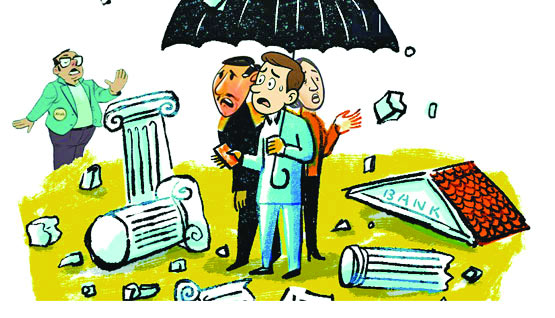
Bangladesh’s banking sector is facing a deepening structural crisis marked by rising non-performing loans (NPLs), liquidity shortages, and sluggish credit growth, creating severe pressure on businesses and slowing overall economic momentum, according to experts and recent financial assessments. As of April 2026 data, private sector credit growth has fallen to its lowest level in nearly two decades, reflecting a tightening financial environment that is increasingly constraining investment, employment generation, and industrial expansion. “The sluggish performance of the banking sector is having a severe negative impact on business activity and the overall economy,” analysts said, citing The Daily Industry.
Credit Crunch Deepens Across Economy: The financial sector’s weakness is being driven primarily by a surge in bad loans and declining liquidity across commercial banks. Non-performing loans have now crossed 35.7%, significantly eroding the lending capacity of the banking system. According to sector analysts, this deterioration has created a credit crunch that is directly affecting both large industries and small enterprises.
“With such a high level of defaulted loans, banks are unable to extend fresh credit. This has brought investment activity to a near standstill,” experts told The Daily Industry. Industrial expansion projects, new factory setups, and business scaling efforts are increasingly being delayed or cancelled due to lack of financing.
Investment Stagnation and Industrial Slowdown: The tightening of credit conditions has led to a sharp decline in new investment flows, particularly in manufacturing and export-oriented industries.
Small and medium enterprises (SMEs), which form the backbone of Bangladesh’s industrial base, are among the worst affected. High interest rates, limited access to working capital, and stricter lending conditions have significantly reduced their operational capacity. The crisis has also been compounded by rising energy costs and import expenses, further squeezing profit margins.
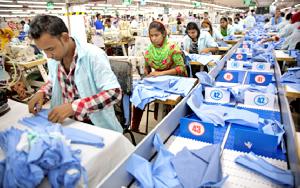
Export-driven sectors such as ready-made garments, leather goods, and light manufacturing are experiencing slower growth due to rising production costs and limited access to affordable financing.
“SMEs are struggling to survive under current financial conditions. Many are unable to secure even short-term working capital,” analysts said, quoting The Daily Industry.
Employment Generation Under Pressure: One of the most immediate consequences of weak banking sector performance is the slowdown in job creation. With new investments declining, employment opportunities in both formal and informal sectors have stagnated.
Economists warn that this trend could worsen if credit growth does not recover soon. “When investment dries up, employment creation automatically slows. This is already visible in multiple sectors,” experts noted.
The situation is particularly concerning for young job seekers entering the labor market, as industries delay expansion plans and hiring freezes become more common.Business Confidence Erodes: The persistent rise in default loans and instability in the financial sector has significantly undermined investor confidence. Business leaders are now increasingly cautious about making long-term investment commitments.
Uncertainty surrounding the broader macroeconomic environment, including political transitions and regulatory unpredictability, has further amplified risk perceptions. “Business confidence is weakening due to instability in the banking sector and concerns over financial discipline,” economists told The Daily Industry. This cautious investment climate is contributing to slower capital formation and reduced entrepreneurial activity.
Macro-Economic Impact and Growth Outlook: The weakening banking system is also affecting Bangladesh’s overall macroeconomic stability. According to projections cited by global financial institutions, the country’s GDP growth may slow to between 4.6% and 4.7%, down from earlier expectations.
The World Bank has warned that financial sector fragility, combined with inflationary pressures and external vulnerabilities, could continue to weigh on growth prospects.
Experts argue that without urgent reforms, the economy risks entering a prolonged phase of low investment and subdued expansion. Expert Analysis: Structural Weakness at the Core: Global financial expert Dr. Enayet Karim said the crisis reflects deep-rooted structural weaknesses in the banking system rather than temporary shocks.
“Bangladesh’s banking sector is operating under severe structural stress. High non-performing loans and weak governance are choking credit flow, which directly affects productivity and growth,” Dr. Karim told The Daily Industry.
He emphasized that the situation is not just a financial problem but a broader macroeconomic risk. “When banks fail to perform their core function of efficient credit allocation, the entire economy suffers. This is what we are witnessing today,” he added.
Dr. Karim warned that unless urgent reforms are implemented, the country could face long-term stagnation in investment and industrial growth.
Liquidity Pressure and Banking Fragility: Liquidity shortages have become another critical issue in the banking sector. Many banks are struggling to maintain adequate cash flow due to rising defaults and poor recovery rates.
This has forced banks to become increasingly risk-averse, further restricting lending to productive sectors. Financial analysts say this cycle of low lending and weak recovery is reinforcing the sector’s fragility. “Banks are stuck in a liquidity trap where they cannot lend due to high risk and cannot recover due to weak borrowers,” experts explained.
Role of SMEs and Export Sector: SMEs, which contribute significantly to employment and GDP, are facing acute financing constraints. Many small businesses report difficulty accessing even basic working capital loans.
At the same time, export-oriented industries are under pressure from global demand fluctuations and rising production costs, making access to affordable finance even more critical. However, the banking sector’s current condition has limited its ability to support these industries effectively.
Calls for Structural Reform: Economists and policy experts are calling for urgent structural reforms in the financial sector, including stricter control over loan defaults, improved banking governance, and enhanced regulatory oversight.
Key recommendations include: Stronger enforcement against loan defaulters, Improved credit risk assessment systems. Recapitalization of weak banks. Enhanced autonomy of the central bank. Digitalization of banking operations for transparency. Experts argue that without these reforms, the banking sector will continue to underperform, dragging down the broader economy.
Central Bank Capacity Under Scrutiny: The role of the central bank is also under scrutiny, with experts calling for greater institutional independence and stronger supervisory mechanisms.
Weak oversight has been identified as one of the contributing factors to rising default loans and poor financial discipline.
The Bottom Line: Bangladesh’s banking sector crisis is no longer an isolated financial issue-it has become a systemic challenge affecting investment, employment, and overall economic growth. With credit growth at historic lows and non-performing loans at alarming levels, experts warn that urgent reforms are essential to restore stability. As Dr. Enayet Karim and other economists emphasize, without decisive action, the country risks prolonged economic stagnation driven by a weakened financial backbone.