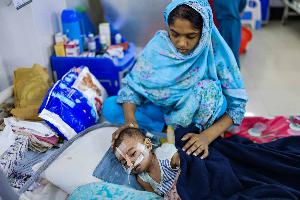
Poverty in Bangladesh is on the rise, with millions of families facing increasing financial hardships due to economic instability, high inflation, and declining purchasing power.
Economists and policy experts argue that these trends are linked to a combination of insufficient investment, lagging employment growth, and rapid population increases. Dr. Sadik Ahmed, Vice Chairman of the Policy Research Institute (PRI), told The Daily Industry, “The number of educated unemployed in Bangladesh is alarmingly high. Growth and employment must be prioritized in any reform agenda. Without creating meaningful jobs, rising incomes will remain unattainable for a large segment of the population.”
Meanwhile, the World Bank’s latest Bangladesh Development Update projects that the country’s poverty rate will reach 21.2 percent in 2025, up from 20.5 percent in 2024, marking the highest level in the four years since the COVID-19 pandemic. According to the report, labor force participation has declined from 60.9 percent in 2023 to 58.9 percent in 2024, resulting in nearly three million people losing employment opportunities. Of these, approximately 2.4 million are women, highlighting the disproportionate impact of economic stress on female workers. Consequently, the ratio of employment to working-age population has fallen to 56.7 percent, further straining household incomes. The report highlights a concerning decline in labor force participation, which fell from 60.9 percent in 2023 to 58.9 percent in 2024. This translates to nearly 3 million people losing jobs, of whom approximately 2.4 million are women. Consequently, the ratio of employment to the working-age population has dropped by 2.1 percentage points to 56.7 percent. Historical data from the World Bank indicates a steady rise in poverty over the past three years: 18.7 percent in 2022, 19.2 percent in 2023, and 20.5 percent in 2024. The organization stresses that planned economic reforms, restructuring the banking sector, expanding investment, controlling inflation, and maintaining remittance inflows could stabilize the economy and reduce poverty rates by 2026-2027.
Prior to the World Bank’s update domestic research organizations such as the Policy and Population Research Center (PPRC) and the Bangladesh Bureau of Statistics (BBS) had already highlighted rising poverty trends. BBS data showed that in January 2025, the poverty rate was 19.2 percent, up from 18.7 percent in 2022. PPRC’s survey, meanwhile, estimates poverty at 27.93 percent in 2025, with extreme poverty reaching 9.35 percent.
However, not all experts agree on the measurement of poverty. Economic advisor Salehuddin Ahmed, speaking to journalists at the Secretariat, cautioned, “Conducting phone interviews with just 5,000 people cannot fully capture the national poverty trend. Measuring poverty is a complex process, and results must be interpreted carefully.”
Policy Measures Could Reduce Poverty: The World Bank report notes that implementing effective economic reforms could reduce poverty to 19.1 percent by 2026 and 18.1 percent by 2027. Key measures include expanding productive sector investments, stabilizing the banking sector, controlling inflation, and encouraging remittance inflows. Achieving these goals, however, depends on political will, coordinated policy execution, and creating a favorable economic environment.
The report also projects Bangladesh’s GDP growth at 4.8 percent for the current year. Controlling inflation and increasing remittance inflows would boost private sector consumption, generating a positive ripple effect across the economy. Nevertheless, the World Bank cautions that the recovery process is fragile, with its success contingent on sustained reforms, banking sector stability, and an enabling business environment.
Sectoral Impact and Employment Challenges: The World Bank highlights that employment opportunities have not kept pace with population growth. Dr. Francisca Onserz, Chief Economist for South Asia at the World Bank, told The Daily Industry, “To transform South Asia’s economies, countries must embrace open trade policies and leverage artificial intelligence (AI) in production. Bangladesh can expand investments and create jobs in productive sectors through well-structured policy reforms.”
According to the World Bank, over the past year, labor force participation declined significantly, particularly affecting women. Nearly 80 percent of the newly unemployed were women, underscoring the disproportionate impact of economic shocks on female workers. Policy analysts warn that failure to address these disparities could exacerbate social inequality and slow overall economic development.
Domestic Observations Support Global Findings: Bangladesh’s local research organizations corroborate the World Bank’s findings. PPRC’s 2025 survey reports a 27.93 percent overall poverty rate, significantly higher than official estimates. Extreme poverty, representing the most vulnerable segment of the population, has surged to 9.35 percent. Rising living costs, stagnant wages, and limited access to employment are primary contributors.
PRI Vice Chairman Dr. Sadik Ahmed stressed, “The government must prioritize policies that increase employment, stimulate investment, and control inflation. Without these interventions, poverty will continue to rise, disproportionately affecting women and low-income households.”
Economic Reforms: A Path Forward: Experts agree that Bangladesh must undertake comprehensive reforms to mitigate poverty. Key areas of focus include: Banking Sector Restructuring - Strengthening financial institutions to increase credit access for small and medium enterprises (SMEs).
Investment Expansion - Encouraging both domestic and foreign investment in productive sectors to create jobs. Inflation Control - Stabilizing commodity prices and protecting real wages, particularly for low-income workers. Remittance Facilitation - Supporting expatriate workers to ensure steady inflows, which can bolster household consumption.
Dr. Francisca Onserz emphasized, “Technological adoption, especially AI, along with open trade policies, can transform production efficiency. Bangladesh has an opportunity to harness these tools to create meaningful employment and sustainable growth.”
The Human Dimension of Poverty: Beyond numbers and statistics, the human impact of rising poverty is profound. Families are forced to reduce spending on education, health, and nutrition, threatening long-term development outcomes. Women, in particular, face increased vulnerability, as they often bear the brunt of income shocks in household budgets.
Economic consultant Salehuddin Ahmed cautioned that while data collection methods vary, the lived experience of many Bangladeshis reflects growing financial insecurity. “People are struggling to meet basic needs. Even if official statistics differ, the economic reality for the majority cannot be ignored,” he said.
Urgent Action Needed: Bangladesh’s rising poverty rate is a wake-up call for policymakers, businesses, and development partners. Without immediate and targeted interventions-ranging from structural reforms to support for low-income households-the country risks reversing its hard-won economic gains.
Experts argue that a multi-pronged strategy is essential: fostering private sector growth, stabilizing the financial system, controlling inflation, and leveraging technology for productive investment. These steps, combined with a supportive policy framework, could bring poverty rates down to pre-pandemic levels by 2026-2027. Dr. Sadik Ahmed summarized, “Poverty reduction is achievable, but only if growth is inclusive, investment is prioritized, and employment opportunities are expanded. The time for policy action is now.”