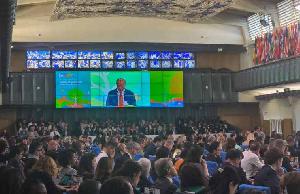
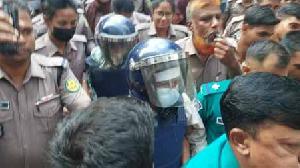
To curb such a situation, law enforcement agencies have proposed strict measures including the formation of a joint task force, increasing content filtering and algorithmic surveillance. Recently, the government’s Ministry of Posts, Telecommunications and ICT, Bangladesh Telecommunication Regulatory Commission (BTRC), Bangladesh Bank, Directorate General of Defense Intelligence (DGFI), National Security Intelligence Service (NSI), National Telecommunication Monitoring Center (NTMC), Cyber Security Agency, law enforcement agencies, mobile operators and mobile financial service providers have also taken into account the issue of online gambling-betting and money laundering through it in a high-level meeting held with the participation of representatives of the government to close online gambling, betting and pornography sites.
Free entry of online gambling into the country’s network, youth in the trap
The investigation found that the country’s internet users can now easily access numerous online gambling sites. Despite government restrictions and law enforcement surveillance, international betting sites are easily active in Bangladesh through new domains, VPNs and social media links. Tempting offers are being given on various Telegram channels, Facebook groups and YouTube videos - ‘Bet just 10 taka, win a thousand’. Alternative means such as mobile financial services (MFS) and cryptocurrencies are being used for money transactions on these sites. As a result, many young people addicted to gambling are unknowingly getting involved in international money laundering rings.
On the other hand, online gambling sites operating in Bangladesh are now using cutting-edge technology to continue their operations. They are not just operating as ordinary websites, but are also regularly changing their servers and addresses using ‘dynamic links’, ‘mirror sites’ and ‘AI-based captcha systems’. As a result, even if law enforcement or internet service providers block a domain, these sites return to the new address within a short time.
To complicate matters further, many betting sites encode transaction information within a Jason body, which is visible only on the user’s screen but not captured by typical web monitoring systems. This makes it difficult to track transactions or identify financial routes. In addition, when cybercriminals try to access these sites, their ‘crawlers’ or tracking tools are often blocked. This is because gambling sites are specifically able to detect IP addresses and VPNs to prevent unauthorized access. Even if the same login information (credentials) is used more than once, that account is permanently closed. This also hinders searches.
A government intelligence official, speaking on condition of anonymity, said, “While testing our data call system, we found that a link that was active an hour ago suddenly became inactive. Then, an hour later, it became active again under a new name. This is how these sites dynamically avoid blocks.”
He further said that currently, this online gambling activity is so technology-dependent and rapidly adaptable that it is not possible to prevent it from the technical side alone. This requires an integrated regulatory and functional framework, where law enforcement agencies, technology experts, social organizations and the financial sector work together.
Most gambling sites are operated from Dubai-Malaysia
A recent inter-agency meeting has revealed shocking information. Investigators said that most of the gambling sites are being operated from Dubai-Malaysia and the Middle East. This gang is operating online gambling activities targeting rural and urban users of Bangladesh through remote operations from abroad. Expatriate workers and the general public are being lured into gambling traps through various methods from call centers hosted in Malaysia.
Moreover, gambling transactions are no longer limited to conventional large sums of money. Where once betting in 100, 200 or 1000 takas was prevalent, it is now seen that transactions of 1 taka, 50 paisa or even ‘41 paisa’ are also being used effectively.
An investigating officer of the country’s intelligence agency explained the matter, saying, “At first, it seemed that small transactions were insignificant. But we have seen that through these small transactions, criminals are trapping people with weak financial and social security. We have also received information about transactions as small as 41 paisa in recent times. This is a technique known as ‘micro betting’, which is also very difficult to detect.”
The official added that these small transactions are dynamic and fast-moving, meaning links can be blocked in an instant but reactivated within minutes, making them difficult for traditional financial surveillance systems to effectively detect.
He cited the example of a call center operating in Malaysia that makes users make one ‘micro bet’ at a time. Initially, transactions start at just a few paisa. At some point, the user becomes addicted and is forced to bet large amounts. The method is becoming most effective among the rural or less educated population in our country.
Gambling money is laundered through a complex web of mobile banking
Operators involved in online gambling are no longer using direct banking channels to launder money. They have built a multi-layered and complex payment network for financial transactions, centered around mobile banking, foreign e-wallets, and cryptocurrency platforms.
Investigations revealed that the process begins with a small bait, where the user is fraudulently instructed to register on a website or app and send a nominal amount (50 paisa, 41 paisa or 1 taka) to mobile money or a local MFS app.
Then comes the second stage. In this stage, the collected small sums of money are deliberately spread across multiple accounts of different consumers, in order to obscure and complicate the origin of the transaction. And through ‘multi-accounting’, the same group controls numerous fake accounts, making the process even more difficult to understand. In the third and final stage, this spread of money is combined into a large sum, which is then ready for international trafficking.
And in this final stage of the laundering, two main routes are used. First, the combined money is transferred from local accounts to foreign e-wallets through peer-to-peer transactions. Second, the money is converted into cryptocurrency. Finally, it is sold on international exchanges and converted into legal tender.
Officials at the regulatory body BTRC say that to control these, cross-platform audits of not only banking logs but also MFS operators, peer-to-peer exchangers and crypto-networks are needed. The main challenge is that while conventional anti-money laundering systems are usually able to detect large transactions, small and numerous transactions of 50 paisa or 1 taka remain outside this surveillance.
The impact of this multi-layered system is profound and two-fold. First, it continues to launder money through the country’s financial system, which not only erodes revenue but also undermines the transparency of the entire sector. Second, it creates a strong addiction to gambling among the user, starting with small amounts, which gradually completely destroys his personal, family, social and financial stability.
Technologist Tanvir Joha says blocking websites is not an effective solution to prevent online gambling. To get rid of this problem, mobile banking accounts and individuals used for gambling transactions should be brought under strict punishment.
He told Dhaka Post, “Recently, there has been a serious rise in online gambling in Bangladesh. It has spread like an epidemic. Although the government has taken various steps, including blocking more than 5,000 sites, it cannot be stopped. In fact, there is no implementation of punishment. Money is being transacted through fake MFS accounts. These numbers must be identified and stopped, and the person who registered, whether real or fake, must be brought under the law and jailed and fined. If we can create just 10 examples like this, we will get rid of this problem.”
Calling the BTRC’s efforts to block the website ‘ineffective’, he said, ‘If you block a site, it will be redirected to a new address with a dot or different symbols at the beginning and end. Most of the sites are operated from Malaysia. So, there will be no benefit by just blocking the site. The place where money is sent must be closed. The responsibility here lies with our local banks and MFS providers.’
“Only by effectively closing the MFS channel will the main flow of money to online gambling be stopped. And this will be the key to solving this problem,” he added.
What the representatives said at the inter-agency meeting
Recently, a meeting was held with the government to stop online gambling with the participation of representatives of various organizations and institutions of the country. According to sources from the Bangladesh Financial Intelligence Unit (BFIU), 58,000 MFS numbers have already been closed. Initiatives have been taken to provide unique identification numbers to those who have accounts in various MFS banks and financial institutions. At the same time, the BFIU also informed the government about the need to create a platform jointly by BTRC and Bangladesh Bank for verifying MFS accounts through NID and SIM matching.
Representatives of mobile operators said that they have increased their capacity to block online gambling, pornography and betting sites with the help of NTMC. Numerous betting and porn sites have already been blocked. However, since gambling sites are very secure and have different names, they have to work in a multilayered manner. For this, BTRC, Election Commission, Bangladesh Bank, mobile handset manufacturing companies and mobile financial service providers have to work in a coordinated manner.
A representative of the National Telecommunication Monitoring Center (NTMC) told the meeting that NTMC is providing information to all stakeholders concerned. 123 gambling apps have already been closed and numerous web links or URLs related to them have been blocked.
On the other hand, the Directorate General of Defence Intelligence (DGFI) has proposed to introduce an IMEI blacklisting system for mobile handsets, so that as soon as a blacklisted SIM is activated, the signal from the tower reaches the concerned operator.
The National Security Intelligence Agency (NSI) has advised mobile and ISP operators to increase content detection capabilities and social awareness to prevent gambling and betting.
The CID Cyber Police Center has reported that in the last two months, more than 2,000 SIM cards involved in online betting have been identified, 600 sites and 50 apps used for betting have been identified. It is also reported that many of the apps are operated from outside the country.
Govt getting stricter in banning online gambling
The government is taking a tougher stance to stop online gambling and betting in the country, said Faiz Ahmed Tayyab, Special Assistant to the Honorable Principal Advisor on Posts, Telecommunications and Information Technology. He recently said that with the help of the Bangladesh Financial Intelligence Unit (BFIU) and BTRC, 4,820 mobile financial service accounts (MFS) and 1,331 portals have been closed since May this year.
Faiz Ahmed Tayyab said that a list of accounts transacting gambling money is being prepared and the portals on which gambling advertisements are being broadcast will be closed. When one site is closed, criminals create multiple sites and after closing the MFS account, they start gambling through apps-based methods. For this, the law enforcement agencies should be proactive and mobile operators should take initiatives to block pop-ups by packaging them. Traffic classifiers should be designed in such a way that pop-ups can be blocked. In addition, mobile financial institutions should stop gambling and betting by using active crawlers. At the same time, he commented that content filtering and algorithmic surveillance have also been increased than before.