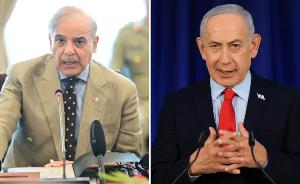
Pakistan has emerged as the main mediator between Iran and the United States to secure a temporary ceasefire and facilitate talks to end the war in the Middle East. Pakistani Prime Minister Shehbaz Sharif said on Wednesday that his government's mediation has led to a ceasefire between the United States, Iran and their allies “at all points”.
Shahbaz Sharif said the next round of talks would be held in the Pakistani capital Islamabad, following the two-week ceasefire announced by Trump and Tehran earlier. In a post on social media, South Asia expert Michael Kugelman said, “Pakistan has achieved one of the biggest diplomatic victories in the last few years.”
“It proves wrong the skeptics and naysayers who thought Pakistan was incapable of carrying out such a complex and high-stakes task.”
o How are Pakistan's relations with Iran?
“Pakistan has a strong reputation for being the only country in the region that maintains good relations with both the United States and Iran,” said Asif Durrani, Pakistan's former ambassador to Tehran.
Pakistan shares a 900-kilometer (560-mile) border with Iran to its southwest, and has deep historical, cultural, and religious ties with the country.
Pakistan is the country with the second largest Shia Muslim population in the world, after Iran.
Iran was the first country to recognize Pakistan after it gained independence in 1947. Pakistan reciprocated by recognizing the Islamic Republic in the same way after the 1979 revolution.
Pakistan represents some of Iran's diplomatic interests there, as Tehran does not have an embassy in Washington.
o How is Pakistan's relationship with the United States?
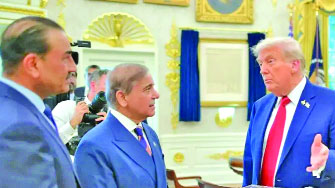
Pakistan's powerful army chief, Field Marshal Asim Munir, has developed a personal rapport with US President Donald Trump. He visited Washington last year with Prime Minister Shehbaz Sharif amid heightened tensions between Pakistan and India over the divided Kashmir. At that time, the Pakistani army chief was seen in a Western suit instead of military uniform.
Shahbaz Sharif praised Donald Trump's “bold and farsighted” intervention during the India-Pakistan conflict, while Asim Munir said the US president deserved the Nobel Peace Prize for mediating an end to the conflict between the two nuclear-armed neighbours.
On the issue of conflict with Iran, Trump said that Pakistan knows the country “better than anyone else.” While shifting strategic interests often strain bilateral relations, personal ties have long helped strengthen them.
Even as a non-NATO ally in the post-9/11 “war on terror,” Pakistan faced accusations from the United States that it was harboring militants involved in attacks on NATO troops in the region bordering Afghanistan.
Bilateral relations with Washington deteriorated sharply after US troops killed al-Qaeda chief Osama bin Laden in a raid on Pakistani territory without informing Islamabad in 2011. At the time, Washington accused Pakistan of harboring the fugitive al-Qaeda leader.
o What is the role of other regional parties?
Pakistan and Saudi Arabia signed a strategic mutual defense agreement in 2025. While the agreement strengthened long-standing ties, it also placed limits on Islamabad's ability to support Iran.
Sharif and his government are keen to keep Riyadh on their side, and the Pakistani prime minister recently visited the country for talks with Crown Prince Mohammed bin Salman. Pakistan also has close ties with Beijing. President Donald Trump told AFP that Beijing helped bring Iran to the negotiating table.
Pakistani Foreign Minister Ishaq Dar held a meeting with the foreign ministers of Saudi Arabia, Turkey and Egypt last month to discuss a resolution to the conflict, before traveling to Beijing for detailed discussions.
China, Iran's largest trading partner, then joined longtime South Asian ally Pakistan in calling for a plan to end the Middle East war, supporting Pakistan's “unique and important role in calming the situation.”
o What is Pakistan's benefit from mediation?
It makes economic sense for Pakistan to remain neutral, as it depends on oil and gas imports through the Strait of Hormuz and wants to avoid a new conflict on its doorstep.
If the Iran-US-Israel conflict continued, it would worsen the energy supply situation, increase prices, and impose further austerity measures on the cash-strapped Pakistani government. A permanent end to the war would not only enhance regional stability but also improve Pakistan's standing in the international arena. But the mediation has become crucial at a time when the country is embroiled in an armed conflict with neighboring Afghanistan and less than a year after a series of counterattacks with arch-rival India.
o What will be Pakistan's next role?
Pakistani Prime Minister Shehbaz Sharif has said he will welcome US and Iranian representatives to the capital Islamabad from April 10.
“Iran will feel more comfortable in Islamabad. That is why they have accepted Pakistan's mediation. Pakistan can help the two sides resolve their unresolved differences,” said Durrani, the country's former ambassador.
He said that if direct talks are held and there is an impasse, Pakistan can help all parties refine the language of the talks. If the two sides do not agree to meet directly, Pakistani officials can act as mediators.
Pakistan does not officially recognize Israel. However, Israel has supported Trump's decision to halt bombing as a ceasefire brokered by the country takes effect. However, Israel has said the two-week truce does not include Lebanon, where the Israel Defense Forces are conducting ground and air operations against the Iran-backed Hezbollah.
Israel's position, however, contradicts previous statements by Pakistani Prime Minister Shehbaz Sharif, who had said the ceasefire would apply “everywhere, including Lebanon.”