Bangladesh’s fiscal position is facing renewed pressure as rising government expenditure continues to strain budget management and weaken fiscal discipline, economists warn. According to The Daily Industry, “rising spending pressures are undermining fiscal discipline, making budget management increasingly difficult.” The report highlights that expanding subsidy needs, development commitments, and social protection programs are pushing overall expenditure higher at a time when revenue growth remains limited.
Experts say the widening gap between income and spending is increasing reliance on borrowing, raising concerns about long-term debt sustainability and macroeconomic stability.
Dr. Enayet Karim, a global financial expert and President of the Global Economist Forum, said unchecked spending growth could pose serious risks. “Without stronger expenditure control and revenue reforms, fiscal stability will come under increasing threat,” he noted.
Economists have urged the government to prioritize efficient spending, improve revenue collection, and focus on targeted development programs to maintain fiscal balance.
They caution that if current trends continue, budget strain could intensify further, limiting the government’s ability to manage inflation and support economic recovery.
Bangladesh’s economic managers are grappling with a difficult fiscal reality where rising expenditure pressures collide with limited resources, widening revenue gaps, and growing demands from political commitments and global uncertainties. Policymakers now face the central question of how to rein in spending without derailing development, investment, and employment generation.
According to The Daily Industry, “taming expenditure has become the biggest challenge at a time of unlimited demand and limited resources, amid a deepening global crisis.” The report highlights that fiscal policymakers are under simultaneous pressure from election promises, inflation control needs, and external shocks driven by geopolitical tensions. Rising Pressure on Public Spending: The government is preparing a new budget for the 2026-27 fiscal year under conditions of severe fiscal stress. Officials acknowledge that expenditure demands are expanding rapidly while revenue collection continues to lag behind expectations.
The Daily Industry notes that “a massive revenue shortfall and pressure to implement election promises are forcing the government to rethink its fiscal strategy.” At the same time, global energy disruptions and war-related economic instability have further complicated budget planning.
Sources from the Ministry of Finance indicate that the government’s primary objectives include fulfilling election commitments, strengthening social protection, restoring macroeconomic stability, and boosting investment and employment.
Dr. Selim Raihan, Executive Director of the South Asian Network on Economic Modeling (SANEM), told The Daily Industry, “The fiscal challenge Bangladesh faces today is not just about spending more or less. It is about spending efficiently in an environment of limited fiscal space and rising external shocks.”
Expanding Budget Despite Calls for Austerity: Despite discussions about expenditure restraint, the government is reportedly planning to increase the size of the upcoming budget significantly. Officials suggest that the 2026-27 budget may expand by around 18 percent, reaching nearly Tk 9.2 trillion.
This comes after a rare contraction in the 2025-26 budget, which was reduced compared to the previous year under an interim fiscal consolidation effort.
The Daily Industry reports that “while fiscal discipline was attempted in the previous budget cycle, rising political commitments and global instability are forcing a return to expansionary fiscal policy.”
Dr. Ahsan H. Mansur, Executive Director of the Policy Research Institute (PRI), explained, “Bangladesh is now in a situation where both fiscal consolidation and expansionary pressures exist simultaneously. This creates a policy contradiction that is difficult to manage.”
Revenue Shortfall and Fiscal Stress: One of the most pressing issues is the widening revenue gap. The government is currently facing an estimated shortfall of around Tk 60,000 crore, which is significantly affecting budget implementation capacity.
The Daily Industry highlights that “a large revenue deficit is severely constraining the government’s ability to execute development programs effectively.”
Economists warn that unless revenue mobilization improves, reliance on borrowing will increase, further tightening fiscal space. Dr. Zahid Hussain, former Lead Economist of the World Bank’s Dhaka office, said, “The core issue is weak revenue performance. Without strengthening tax administration and expanding the tax base, fiscal pressures will continue to mount.”
Global Shocks and Energy Crisis: External shocks, particularly geopolitical tensions and energy market volatility, are further complicating the fiscal outlook. The ongoing global conflicts involving major powers have disrupted energy supplies and increased import costs.
The Daily Industry reports that “war-induced energy shocks are affecting every segment of the economy, forcing governments to adjust fiscal strategies.”
These disruptions have increased subsidy pressures, particularly in energy and essential commodities, adding further strain on public finances.
Dr. Mustafizur Rahman, Distinguished Fellow at the Centre for Policy Dialogue (CPD), told The Daily Industry, “Energy price volatility is one of the biggest external risks facing Bangladesh. It directly impacts inflation, subsidies, and fiscal balance.”
Inflation Control vs Growth Support: The government is also attempting to strike a delicate balance between controlling inflation and supporting economic recovery. While inflation remains elevated, there is pressure to stimulate growth through higher public spending.
According to the Bangladesh Bureau of Statistics (BBS), inflation remains above 8.7 percent, while wage growth is lower, reducing real incomes. The Daily Industry notes that “the government aims to reduce inflation while simultaneously boosting investment and employment.”
However, economists caution that excessive spending could worsen inflationary pressures. Dr. Selim Raihan explained, “There is always a trade-off between fiscal expansion and inflation control. If spending is not carefully targeted, it could undermine macroeconomic stability.”
New Social Programs and Election Commitments: The upcoming budget reportedly includes several new social protection initiatives, including family cards, farmer cards, health cards, and a canal excavation program aimed at rural development and employment generation.
These programs are designed to directly deliver support to citizens while fulfilling election commitments.
The Daily Industry reports that “new social programs are expected to increase fiscal pressure but are central to the government’s political and economic agenda.”
Revenue vs Expenditure Gap Widens: Despite efforts to increase revenue, expenditure growth continues to outpace income. Analysts warn that this structural imbalance could lead to persistent budget deficits. Dr. Enayet Karim, global financial expert said, “When expenditure growth consistently exceeds revenue growth, the fiscal deficit becomes structural rather than cyclical. This creates long-term debt sustainability risks.”
GDP and Inflation Targets Under Pressure: The government has set ambitious macroeconomic targets for the 2026-27 fiscal year, including GDP growth of 6.2 percent and reducing inflation to around 7 percent.
However, economists question whether these targets are realistic given current global and domestic conditions. The Daily Industry notes that “the government aims to restore high growth while simultaneously reducing inflationary pressures.” Dr. Zahid Hussain remarked, “Achieving both high growth and low inflation in the current environment will require highly disciplined fiscal and monetary coordination.”
Fiscal Policy at a Turning Point: The government is reportedly considering an expansionary fiscal stance after a brief period of austerity. Officials argue that cutting development spending could negatively impact employment and investment recovery.
However, experts warn that unchecked expansion could worsen macroeconomic instability. Dr. Mustafizur Rahman explained, “Development spending is important, but it must be prioritized and efficiently allocated. Otherwise, fiscal expansion can become counterproductive.”
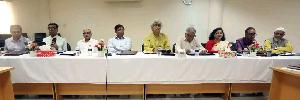
Coordination and Policy Management: A high-level coordination meeting recently reviewed fiscal risks and budget planning for the upcoming fiscal year. Officials discussed strategies to manage expenditure, improve revenue collection, and stabilize macroeconomic indicators. The Daily Industry reports that “fiscal, monetary, and exchange rate coordination has become essential to managing the current economic environment.”
A Budget Under Pressure: As Bangladesh prepares for its 2026-27 budget, experts agree that this will be one of the most challenging fiscal exercises in recent years. The government must balance political commitments, global uncertainties, inflation control, and development needs-all within limited fiscal space.
Dr. Selim Raihan summed up the situation, “This budget will be a major test of economic management. The challenge is not just about numbers-it is about policy coherence, prioritization, and long-term sustainability.”
Conclusion: Walking a Fiscal Tightrope: Bangladesh’s fiscal policymakers are walking a tightrope between competing demands. Rising expenditure pressures, global shocks, and domestic political commitments are pushing the budget toward expansion, while revenue constraints and inflation risks call for caution.
As The Daily Industry concludes, “the challenge of controlling expenditure amid unlimited demand and global uncertainty will define the success of the new fiscal strategy.” Experts agree that without careful prioritization and structural reform in revenue and spending systems, the fiscal strain could intensify further-making the upcoming budget not just a financial plan, but a critical test of economic governance.