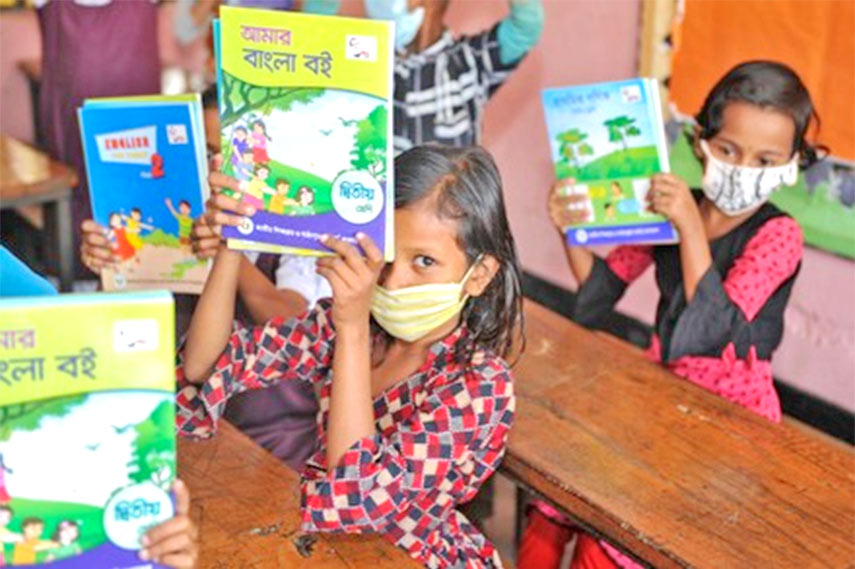
A long-standing allegation of irregularities in Bangladesh's free textbook distribution programme has now come into sharp focus after a nationwide verification drive uncovered significant discrepancies in demand estimates for the 2027 academic year.
According to preliminary findings by the National Curriculum and Textbook Board (NCTB), several upazilas submitted unusually inflated demand figures, in some cases showing up to 40 percent higher requirements than actual need. The revelations have triggered widespread concern over possible financial mismanagement and systemic manipulation within the textbook supply chain.
The issue came to light after field-level inspections conducted jointly by the Ministry of Education and NCTB between April 15 and 16, when 34 monitoring teams were deployed across the country to verify reported demand figures.
A senior official involved in the review told The Daily Industry, "The initial verification clearly indicates that demand was overstated in a large number of cases. In total, nearly 4 million books were found to have been inflated in the submitted requirements before correction."
Over One Crore Excess Books Initially Reported: NCTB sources revealed that the original demand submitted for the 2027 academic year was nearly one crore books higher than the previous year's requirement. This sharp increase raised suspicions at the central level, prompting the government to launch a detailed field verification exercise.
After the initial rounds of inspection across 110 upazilas, officials found that the inflated figures were systematically reduced following scrutiny, preventing what could have resulted in significant financial losses. Education analysts say the corrected figures demonstrate how unchecked administrative processes can lead to large-scale inefficiencies in public resource distribution.
Evidence of Systematic Overstatement: Field verification reports showed striking inconsistencies in multiple districts. In one notable case, Madhabpur upazila in Habiganj initially reported a requirement of 24,895 secondary-level textbooks. After verification, the figure was revised downward to 20,690 copies. Similar discrepancies were identified in both Ebtedayi and Dakhil levels, where thousands of books were added without justified student enrollment data. Some upazilas were found to have increased their textbook demand by as much as 179 percent compared to the 2026 academic year, while others reported increases of around 47 percent without corresponding changes in student numbers. Officials say such anomalies triggered the nationwide verification campaign.
Allegations of Collusion and Financial Irregularities: Investigators suspect that an organised group may be involved in manipulating demand figures. According to preliminary assessments, certain local education officials may have colluded with intermediaries to inflate textbook requirements.
A source familiar with the investigation told The Daily Industry, "There is a strong indication that a vested group is operating within the system. Inflated demand figures appear to have been submitted deliberately, possibly to facilitate financial irregularities or misallocation of printed books."
There are also allegations that excess books were either diverted into unofficial channels or used to generate unaccounted financial gains. Authorities, however, have yet to confirm any direct embezzlement but say the pattern of irregularities is "deeply concerning."
Government Orders Strict Action: Education and Primary and Mass Education Adviser Dr. A N M Ehsanul Haque Milon has directed strict punitive measures against those responsible if wrongdoing is confirmed.
Speaking on the issue, he said, "There is no room for misuse of public resources. If irregularities are proven, strict action will be taken against all individuals involved, regardless of position."
His remarks signal a tougher stance by the government as it attempts to restore credibility to one of its flagship welfare programmes, which provides free textbooks to millions of students across the country.
NCTB Moves to Digitise and Verify Data: NCTB Secretary Professor Md. Sahtab Uddin acknowledged the severity of the discrepancies and said corrective measures are underway.
"We have identified significant inconsistencies through verification. Once data from all centres is compiled, we will be able to determine the actual demand accurately," he said in a statement quoted by The Daily Industry.
He further added that all 583 distribution centres across the country have been instructed to submit corrected data through an online system within the stipulated timeframe.
Officials believe that the digitisation of the demand submission process will help reduce human interference and minimise the risk of manipulation in the future.
Preventing Potential Financial Losses: Education sector experts estimate that the irregularities, if left unchecked, could have resulted in substantial financial waste involving printing, distribution, and logistics costs.
By correcting inflated figures at the verification stage, authorities believe they have already prevented significant misuse of public funds. A senior policy analyst noted, "This intervention is crucial. Without physical verification, the system would have continued to rely on paper-based estimates, which are highly vulnerable to manipulation."
Push for Greater Transparency in Education Distribution: The incident has reignited calls for deeper reforms in the textbook distribution system. Experts argue that while Bangladesh's free textbook programme is globally recognised for its scale and reach, its administrative backbone requires stronger oversight mechanisms.
Education researchers suggest introducing automated student database integration, real-time enrollment tracking, and third-party audits to prevent future discrepancies.
Civil society observers also stress the importance of accountability at the field level, where most of the irregularities are believed to originate.
A Turning Point for Accountability: While investigations are still ongoing, officials say the current findings could mark a turning point in improving transparency in one of the country's largest education support programmes.
The Ministry of Education has assured that further investigation teams will be deployed if required, and disciplinary action will follow once final verification reports are submitted.
As one senior official told The Daily Industry, "This is not just about numbers. It is about restoring trust in a system that directly impacts millions of students. The reform process has already begun." For now, the exposure of inflated textbook demand has raised serious questions about governance, oversight, and accountability in Bangladesh's education supply chain-while also highlighting the potential for reform through stricter monitoring and digital transformation.