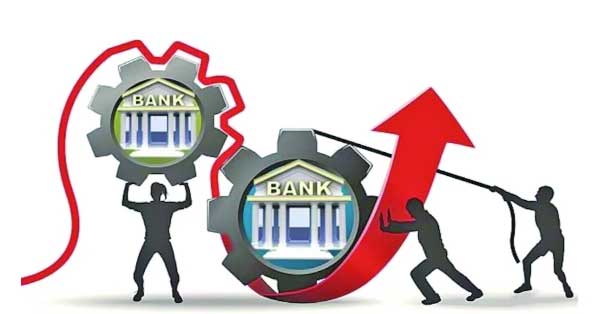
The phrase “bank looting,” once confined to political rhetoric and social media debates, is increasingly being echoed in mainstream discourse-reflecting a deepening public concern over the state of Bangladesh’s banking sector.
Economists and analysts say the widespread use of the term is not merely emotional exaggeration, but rather a manifestation of growing frustration among citizens who feel that systemic weaknesses, poor governance, and lack of accountability have allowed large-scale financial irregularities to persist unchecked.
“The term ‘bank looting’ may sound dramatic, but it reflects a perception rooted in reality,” said Dr Enayet Karim, a globally reputed financial expert, speaking to The Daily Industry. “For years, politically influenced lending, weak oversight, and selective enforcement have enabled certain groups to benefit disproportionately from the banking system.”
Rising Defaults Fuel Public Anger: At the core of this perception is the persistent rise in non-performing loans (NPLs), many of which are linked to large borrowers who have repeatedly failed to repay loans without facing significant consequences.
Industry insiders note that in numerous cases, loans were approved based on personal connections or political affiliations rather than financial viability. As these loans turned sour, the burden often shifted to banks-and ultimately to the public. “When people see thousands of crores turning into defaulted loans while ordinary borrowers face strict recovery measures, it creates a sense of injustice,” Dr Karim explained.
Bailouts and Moral Hazard: The government’s repeated recapitalization of weak banks has further fueled public discontent. While such measures are often necessary to maintain financial stability, critics argue that they also create moral hazard by shielding defaulters and mismanaged institutions from the consequences of their actions.
“Losses are socialized, but gains are privatized,” said a senior banking analyst. “This is why the idea of ‘bank looting’ resonates so strongly with the public.”
Over the years, state-owned banks in particular have required significant capital injections to offset losses from bad loans, raising concerns about the sustainability of such practices.
Trust Deficit Widens: The growing narrative around “bank looting” has contributed to a widening trust deficit in the financial system. Depositors, once confident in the safety of banks, are increasingly cautious. “There is a psychological impact,” said Dr Karim. “When people repeatedly hear about irregularities and lack of accountability, it undermines trust-even if the entire system has not collapsed.” Bankers say this erosion of confidence is already visible in slower deposit growth and a shift by some savers toward alternative assets such as gold or foreign currency.
Weak Governance Under Scrutiny: Experts argue that the roots of the problem lie in weak corporate governance and inadequate regulatory enforcement. (See Page-2)
(From Page-1)
Despite having rules and frameworks in place, implementation has often been inconsistent.
The role of Bangladesh Bank has come under scrutiny, with critics calling for stronger oversight and more decisive action against willful defaulters. “Regulation without enforcement is ineffective,” Dr Karim said. “The system needs transparency, independence, and accountability at every level.”
IMF Warning Signals: The concerns raised domestically are echoed by international institutions. The International Monetary Fund has identified Bangladesh’s banking system as vulnerable, citing high default loans and governance weaknesses as key risks. Analysts say that without meaningful reforms, these vulnerabilities could have broader implications for economic stability, investment, and growth.
Call for Structural Reforms: In response to the growing crisis, experts are calling for comprehensive reforms aimed at restoring discipline and accountability in the banking sector. Key recommendations include strengthening loan approval processes, ensuring independence of bank boards, enhancing regulatory enforcement, and taking strict action against habitual defaulters. “Restoring trust is the most important challenge,” Dr Karim emphasized. “People need to see that the system is fair, transparent, and accountable.”
Public Sentiment as a Warning Signal: For policymakers, the widespread use of the term “bank looting” should serve as a warning signal rather than being dismissed as rhetoric, experts say. “It reflects a breakdown of confidence,” Dr Karim noted. “Ignoring it would be a mistake. Addressing the underlying issues is essential not just for the banking sector, but for the credibility of the entire economic system.”
As Bangladesh navigates economic pressures from inflation, global uncertainties, and fiscal constraints, the health of its banking sector remains a critical pillar. The growing public perception of “bank looting” underscores an urgent need for reform-before mistrust deepens into a more serious financial and institutional crisis.