Climate change is increasingly affecting countries around the world, with rising temperatures, extreme rainfall, cyclones, droughts, melting glaciers, and rising sea levels highlighting the long-term consequences of excessive carbon emissions. Scientists warn that immediate action to cut emissions is essential to avoid more severe environmental crises for future generations.
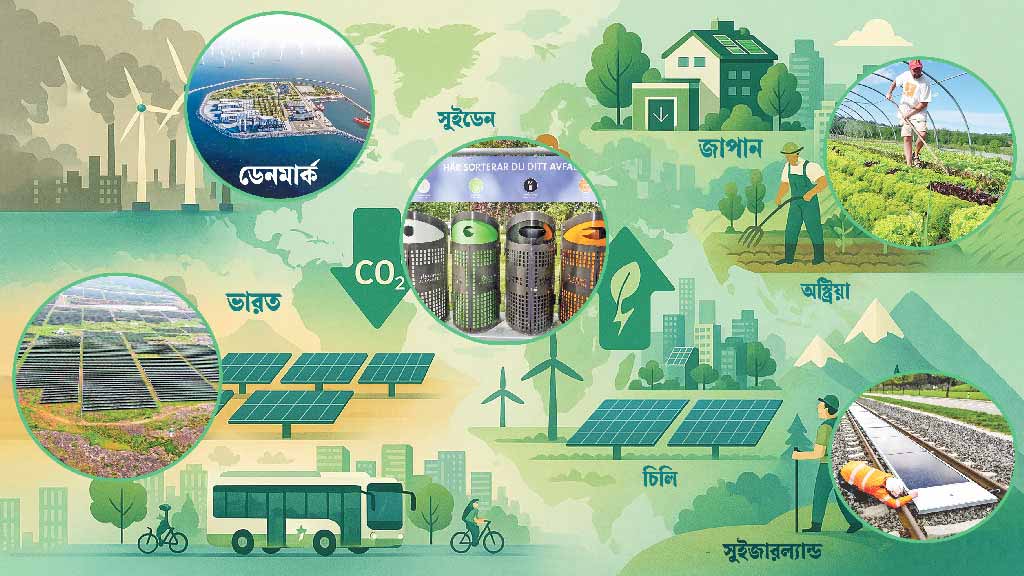
Environmental experts say carbon emissions can be significantly reduced by decreasing reliance on fossil fuels, expanding the use of renewable energy, preventing deforestation, increasing tree plantation, promoting eco-friendly public transportation, and adopting cleaner technologies in industry. They also stress the importance of reducing single-use plastics, conserving electricity and fuel, and improving waste recycling to help combat climate change.
For climate-vulnerable countries such as Bangladesh, experts emphasize that reducing emissions must be accompanied by stronger climate adaptation measures. Protecting rivers, expanding coastal green belts, promoting sustainable agriculture, and conserving wetlands are considered vital for maintaining ecological balance and strengthening resilience against climate impacts.
Across the globe, young people are leading a growing number of environmental initiatives, including tree-planting campaigns, community clean-up drives, environmental education programs, climate awareness campaigns, and grassroots green movements. These efforts are helping to inspire positive environmental action at the local level.
Experts underline that addressing the climate crisis is not solely the responsibility of governments or international organizations. They say every individual has a role to play, and that adopting low-carbon habits today can help ensure a safer, greener, and more sustainable planet for future generations.